TechCut — Technical Case Study · 7-Eleven Live Commerce & SFV SDK Project
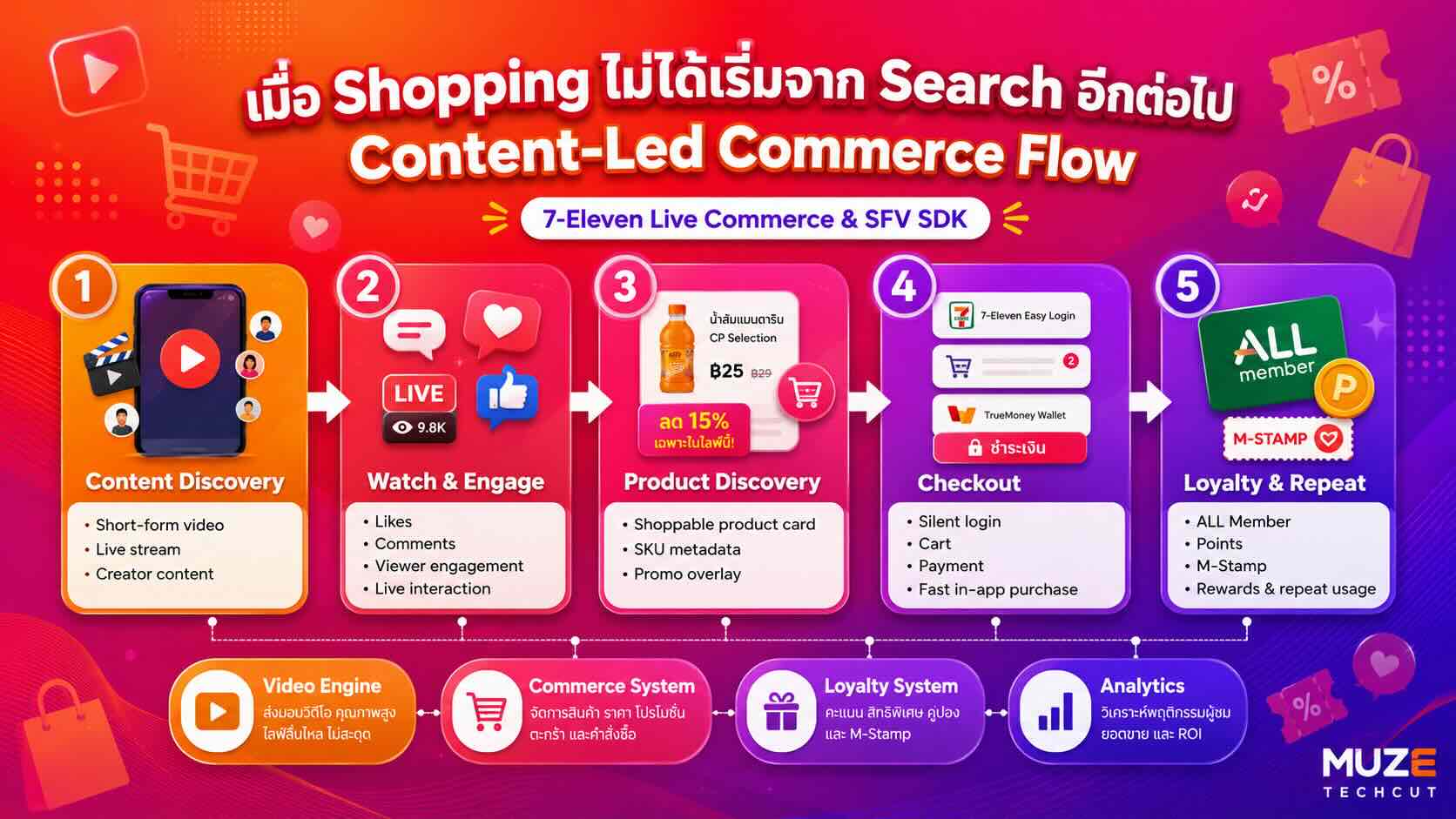
Traditionally, online shopping started with intent.
Open the app. Search for a product. Compare prices. Decide to buy.
But what TikTok proved to the world over the past decade is that another purchasing behavior exists entirely.
Users don’t start from search — they start from discovery. They come across a product in a video, see it during a live stream, feel interested in that exact moment, and buy immediately — without ever planning to.
This is the concept of Content-Led Commerce — and it’s become one of the most contested battlegrounds for large retail platforms worldwide.
For 7-Eleven — one of the most widely installed apps in Thailand — the challenge wasn’t simply “add a video tab to the app.” It was about building an experience that connected content, commerce, and loyalty inside a single seamless flow, without disrupting a platform already serving tens of millions of users.
This is the problem Muze worked on with True Digital Group.
Why This Was Harder Than It Looked
When people hear “Live Commerce,” many imagine it’s about “adding a video feature.”
From a Product Engineering perspective, though, video in this context doesn’t function as “media” — it functions as a new kind of storefront.
In a single video screen, the system needs to handle multiple things simultaneously: smooth video playback, seamless swipe-to-next-clip navigation, product overlay rendering, commerce data connections, user authentication from the parent app, loyalty system integration, and event tracking for gamification — all of this running in parallel, on a live app with an existing user base, without slowing down or destabilizing the host platform.
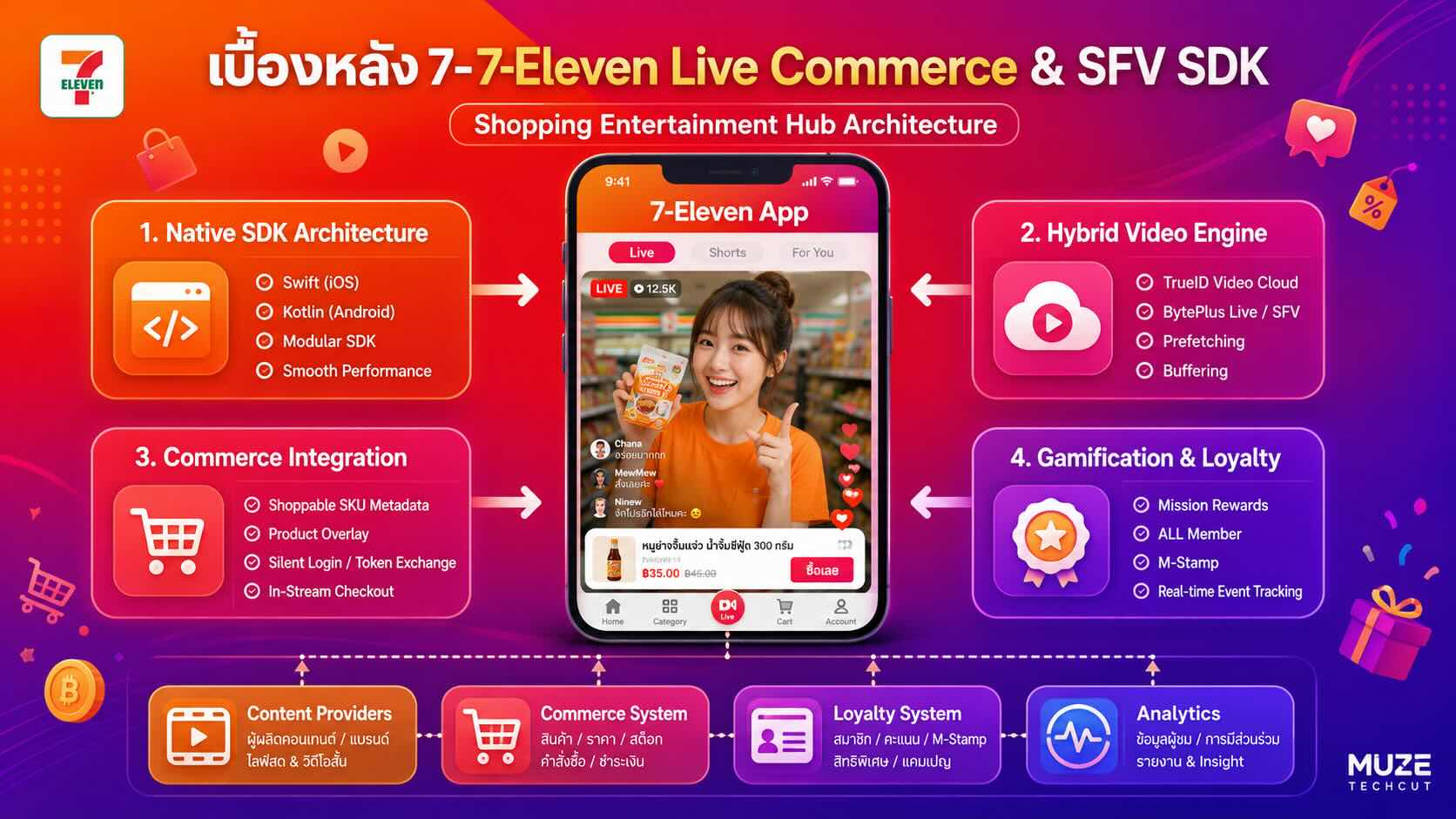
This complexity is exactly why the architecture had to be thought through from scratch.
1. Native SDK: When Performance Is Part of the Experience
The first and most consequential decision of this project was developing a Native SDK separately for iOS (Swift) and Android (Kotlin), rather than using WebView or a cross-platform framework.
The reason wasn’t primarily about technology — it was about user expectations.
Anyone accustomed to TikTok or Instagram Reels has a high bar for short-form video. Swipe to the next clip and it must be instant. Loading must be imperceptible. The device shouldn’t heat up. If the experience stutters even once, users leave immediately.
In a system like this, performance isn’t a technical requirement — it is the product experience.
Native development gives the system direct access to device resources: video rendering, memory management, gesture handling, and platform-specific app lifecycle — in ways that a cross-platform abstraction layer simply cannot match.
The other equally critical dimension was Modular Architecture — the SDK was designed as a module that can be embedded into the parent app, allowing the parent app team and the SDK team to work entirely independently.
For large organizations with multiple teams, complex dependencies, and release cycles that must be carefully controlled — this isn’t about convenience. It’s a necessity. The risk of affecting a platform already serving tens of millions of users is too high to treat lightly.
2. Hybrid Video Engine: BytePlus, TrueID, and the Abstraction Layer
The next challenge was making the system support video content from multiple sources while letting users feel like they’re inside one unified experience.
This project needed to integrate with two primary providers — TrueID for general video content, and BytePlus for live streaming and short-form video requiring high interactivity.
BytePlus is an enterprise platform that ByteDance separated from the same infrastructure that powers TikTok — which means the live streaming and video feed technology on offer is the same grade that runs one of the world’s largest platforms.
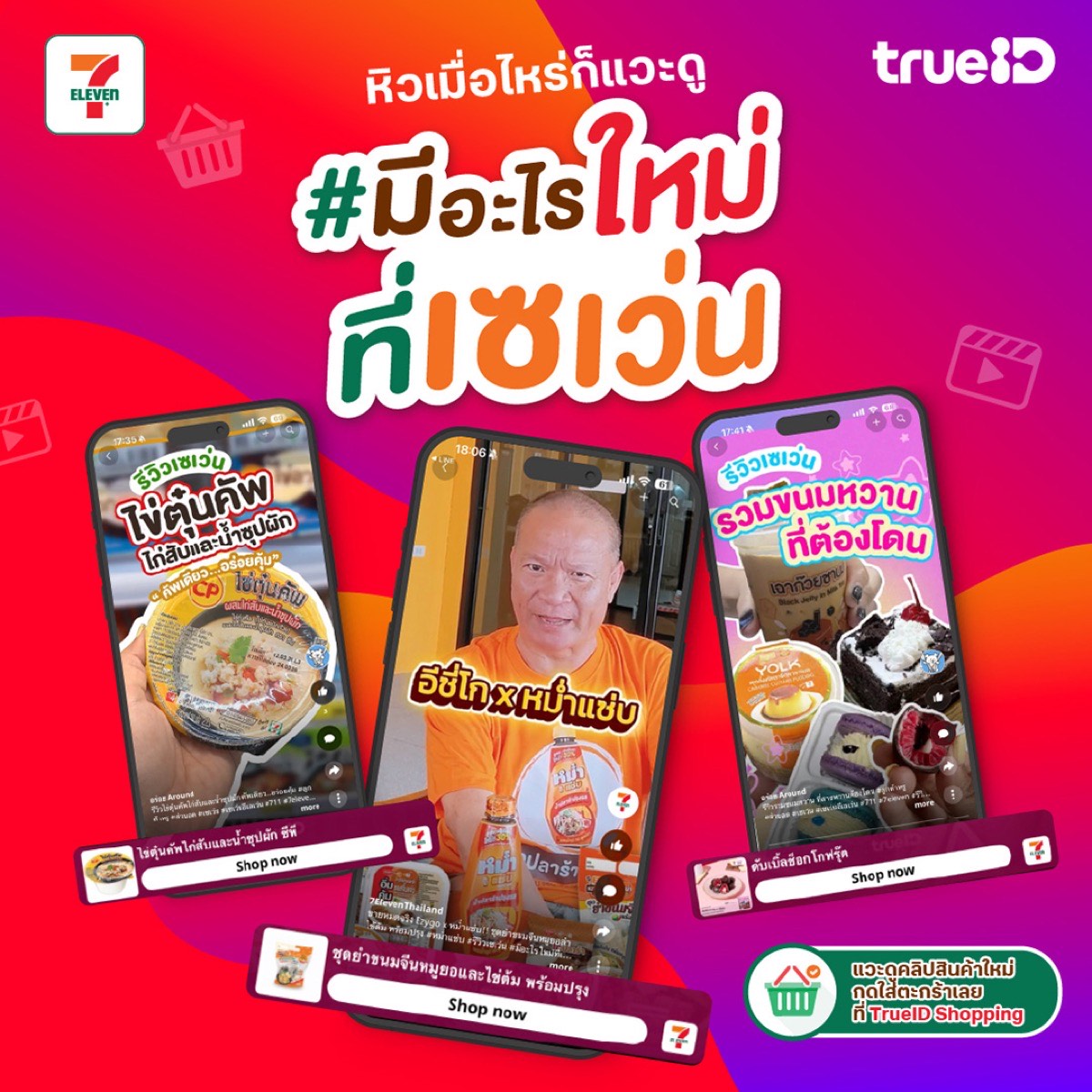
But both providers have different SDKs, APIs, player behaviors, metadata structures, and event models.
The team’s solution was building an Abstraction Layer that acts as a middleware between the app and each provider. The parent app doesn’t need to know which provider a given video comes from — it just calls through a single interface the SDK defines.
The result: the system supports both short-form video and live streaming within a single unified experience, while opening a path to add new providers in the future without touching the app’s core.
3. Buffering & Prefetching: Smoothness the User Should Never Have to Think About
For short-form video, what creates a great experience isn’t just video quality — it’s the moment between clips.
If a user swipes to the next video and has to wait even one second, the momentum breaks instantly.
The system needs to anticipate what users are likely to watch next, and prefetch the right amount of data in advance — while simultaneously unloading assets that have already scrolled past, managing memory usage, and adjusting behavior based on network conditions.
The challenge is finding the right balance between “smoothest possible video” and “not consuming enough resources to affect the overall Super App performance.”
And this is where an engineering decision directly affects business outcome — the longer a user stays inside the video flow, the higher the likelihood they’ll see a product, become interested, and convert.
4. Commerce Integration: Watch and Buy — Without Breaking the Experience
The heart of Live Commerce isn’t just watching a live stream — it’s being able to purchase in the moment interest is felt.
If a user sees a product in a video and then has to exit the video screen, search for the item elsewhere in the app, or log in again — the purchase opportunity disappears immediately. Impulse buying doesn’t wait.
This project was designed so that each video can carry product data embedded in its metadata. When a user shows interest, the system surfaces a product overlay immediately — without them ever leaving the video screen.
But the hardest part of the entire project was Token Exchange — making it possible for a user who’s already logged into the parent app to seamlessly access the SDK without ever feeling like they’re authenticating into a separate system.
Because everything required to complete a purchase — delivery address, payment method, ALL Member loyalty points, coupons — lives in the parent app, not in the SDK.
Designing the “seam” between these two systems so it feels invisible is what makes the flow from watching a video all the way through to completing payment feel like one system — even though the underlying complexity is far greater than it appears.
5. Loyalty & Gamification: Turning Content into an Engagement Loop
On a platform at this scale, getting users to return repeatedly matters just as much as converting the first purchase.
The SDK was designed not just to play video, but to support event tracking and gamification that can be extended into missions and rewards.
Events like play, pause, complete, link click, and other engagement actions aren’t just for analytics — they’re part of the product mechanic. Watch a video all the way through, follow a live stream per campaign conditions, or engage with specific content, and users can instantly unlock M-Stamps or ALL Member benefits.
When content, commerce, and loyalty are woven together, the app stops being just another channel for transactions — it becomes a space users have ongoing reasons to engage with.
6. Engineering Discipline: Building for What Comes After Launch
A project like this doesn’t end at feature launch.
An SDK embedded inside a Super App serving tens of millions of users, with dependencies across multiple systems, that must support future updates — needs versioning, CI/CD pipelines, code quality standards, and security scanning designed in from the beginning.
In many enterprise projects, the real difficulty isn’t shipping the feature. It’s shipping a feature that can be maintained, scaled, and evolved without becoming a burden to the team that comes after.
Lesson: Modern Retail Tech Competes on Connected Experience
The 7-Eleven Live Commerce project reflects what commerce platforms today must be able to answer.
Not just “do we have an online selling system?” — but: How do users discover products? How do they engage with the brand? At what moment do they decide to buy? And how seamlessly can the system make all of that happen?
Because the future of shopping may not start from search. It may start from one video clip, one live stream, or one piece of content that makes a user feel like buying right now.