AI is reshaping the world in ways no technology has before. But to understand where AI is taking us, we first need to understand how it got here. In this episode of TechCut, Bee (Peeranat Thoonsaengngam) from Muze decodes AI’s evolution — from its foundations to the future rapidly approaching.
1. The Foundations: Machine Learning and Deep Learning
Before Generative AI existed, programmers made computers work by writing If-Then-Else rules — if an email contains “free” and “click here,” mark it as spam. But new spam constantly found ways around those rules.
Machine Learning changed the entire approach — instead of writing rules, you provide data and labels, and let the AI find the patterns itself. A system that learns from examples rather than being programmed with fixed instructions.
Deep Learning took things further, using multi-layered Neural Networks that mimic the human brain — enabling AI to recognise images, sounds, and language with remarkable accuracy.
Then came LLMs (Large Language Models), which did something previously impossible — understanding semantic meaning, not just individual words. “Bank” next to “fish” means a river bank. “Bank” in the context of money means a financial institution. LLMs distinguish this from context alone — and that breakthrough is what opened the door to Generative AI.
2. From Discriminative AI to Generative AI
Older AI (Discriminative AI) could only classify — telling you whether an image showed a cat or a dog, but unable to create anything new.
Generative AI is the great leap forward — using LLMs trained on vast datasets to create things that didn’t exist before: text, images, code, music. Not by searching a database, but by reasoning forward from everything it has learned.
The next frontier researchers and leading technology organisations are actively working toward is AGI (Artificial General Intelligence) — systems that learn and solve problems across domains like humans do, without needing to be retrained each time. If that threshold is reached, the change will be far bigger than productivity alone.
3. Prompt Writing: The Critical Skill Most People Overlook
Getting the most out of Generative AI comes down to the quality of your Prompt.
“Writing a good Prompt means specifying commands that are precise and specific.”
The clearer and more contextual your Prompt, the more accurate the output — think of it like communicating with a brilliant new hire who’s highly capable but still needs clear direction.
From Prompt to Workflow: How Muze Uses AI Systematically
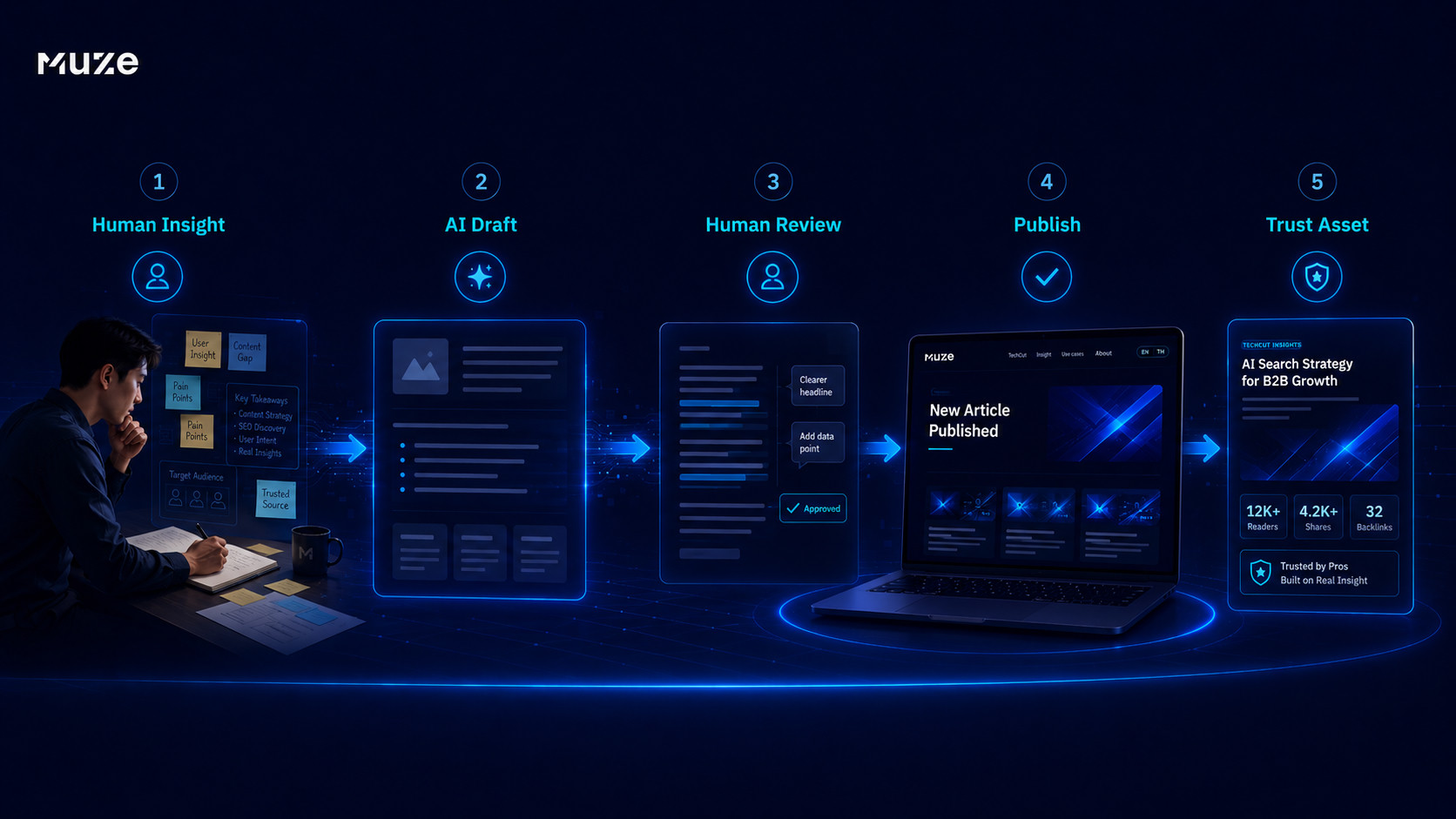
Writing good Prompts is a skill — but turning Prompts into reusable workflows is an entirely different level.
At Muze, we don’t use AI ad-hoc — asking a question and taking the answer. We design workflows where AI plays a distinct role at each stage:
- Content Strategist — Analysing what potential clients are searching for and what content should be created to answer those questions
- Writer & Editor — Drafting the first version, adjusting structure and maintaining a consistent tone across multiple articles
- Developer Assistant — Helping configure CMS, frontmatter, and multilingual setup without writing repetitive boilerplate
- Quality Reviewer — Scoring content against criteria to determine which articles should be published first
None of this comes from sending one Prompt at a time — it comes from designing AI to work continuously as a single, integrated workflow.
A good Prompt isn’t just a good instruction — it’s a system designed for the outcome you need.
Software is a tool — AI is an intelligence layer — Solution is the combination of both with process and people to answer a real business problem. The most common mistake is organisations having AI tools without a Solution designed for actual use.
4. Why AI Isn’t Just the New Metaverse
Many people wonder whether AI is just another passing trend, like Metaverse.
The answer lies in a fundamental difference. Metaverse asked people to change their behaviour — put on a headset, enter a virtual world, separate from real life. Most people had no compelling reason to do that. Metaverse offered a new space, but never answered the question of how it would make life or business meaningfully better.
AI did the opposite — it embedded itself into tools people already use:
- Product recommendation engines in e-commerce
- Spam filters in email
- Google Search and Maps
- Fraud detection in banking
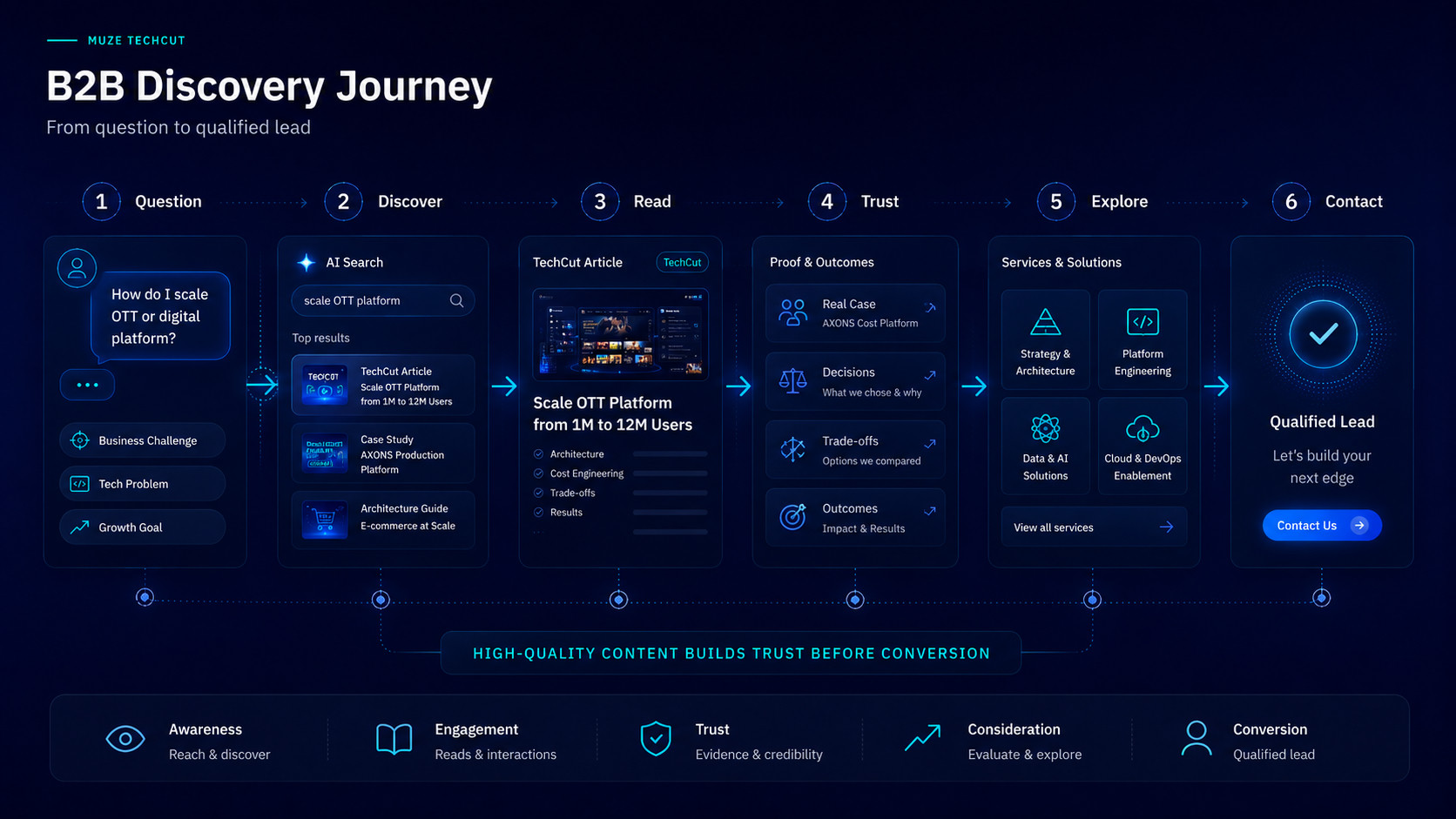
But the most profound shift in the past 2–3 years isn’t productivity tools — it’s that AI is now changing the infrastructure of how people search for knowledge itself.
In the past, if someone searched “how to build an OTT platform for 10 million users,” Google would display a list of websites and let the person decide what to click. Today, if you ask an AI the same question, it reads information from multiple sources, synthesises a response, and cites the content with the deepest knowledge — without the user having to visit any website first.
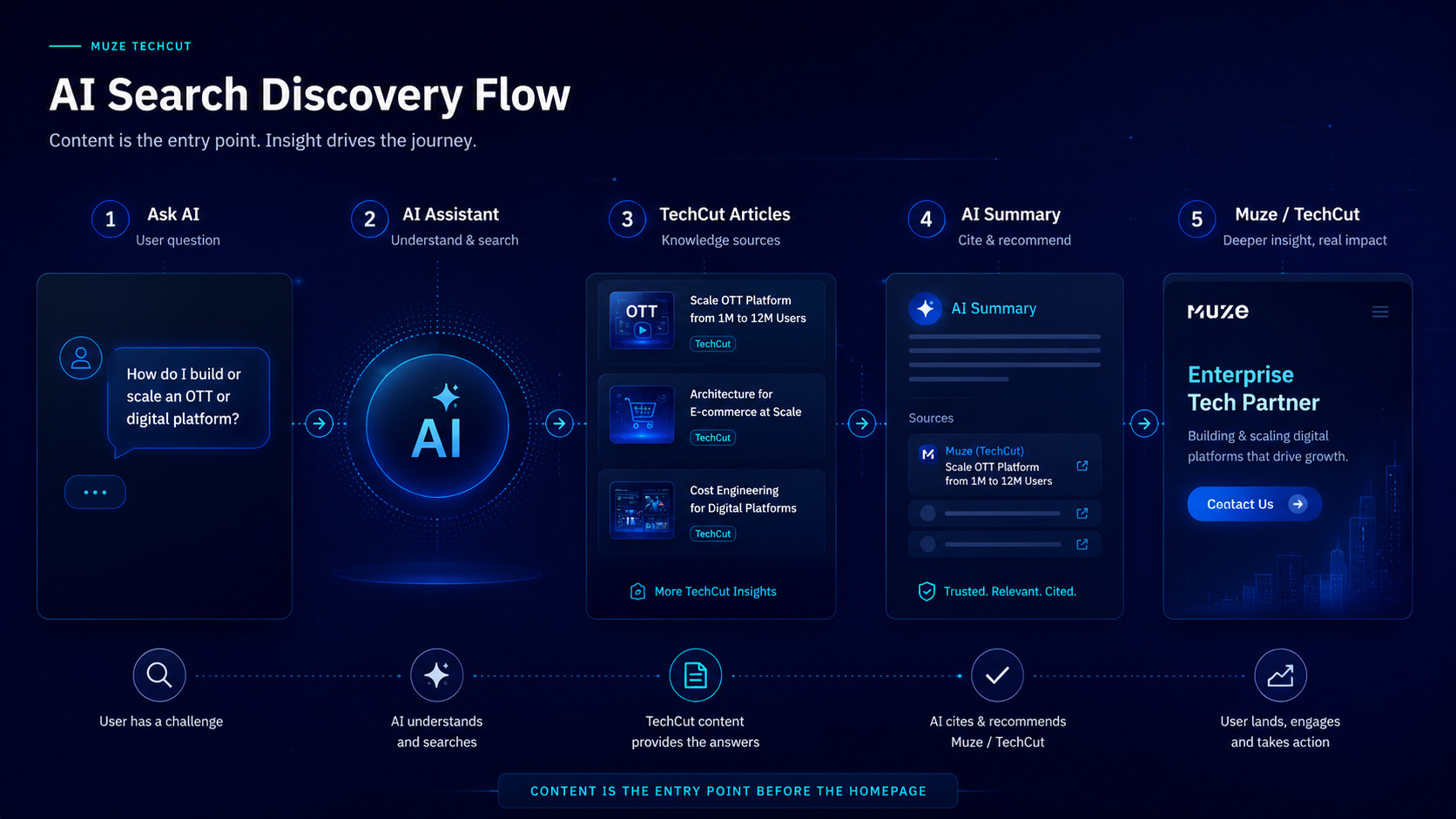
That’s why AI isn’t the new Metaverse — Metaverse tried to build a new world that few people went to. AI became part of the world everyone is already in.
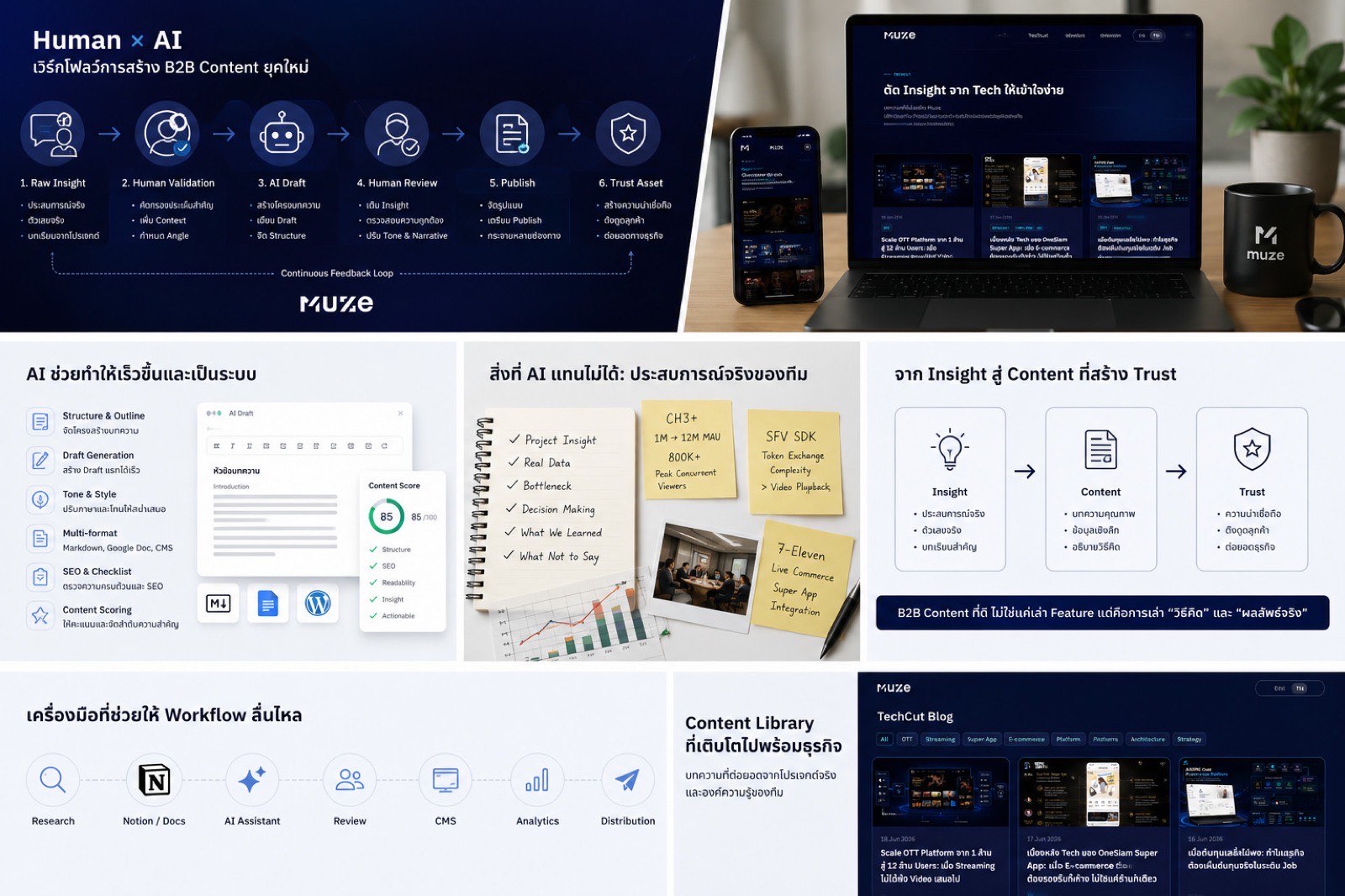
Muze AI Framework: Human as Source of Truth — AI as Publisher
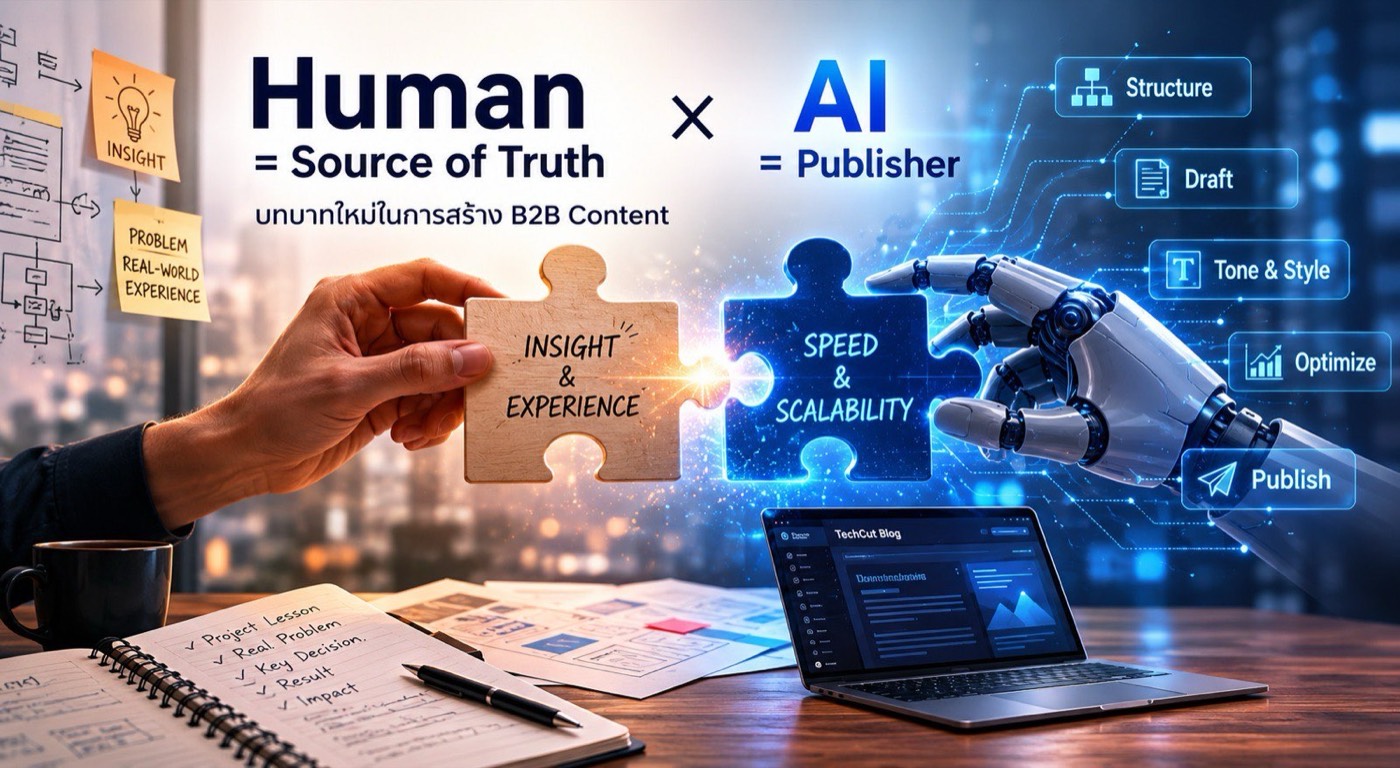
From everything discussed about AI’s foundations, what Muze has learned from real project work is this: the most common mistake organisations make when using AI isn’t a technology problem.
It’s the assumption that AI already knows everything.
AI doesn’t know that CH3+ needed to support 800,000 concurrent viewers on a hit drama night. It doesn’t know that token exchange is the hardest part of integrating an SDK inside a Super App. It doesn’t know how to migrate 10,000 content items while preserving years of SEO equity.
Those things come from doing the work — not from training data.
The framework Muze uses divides roles clearly:
Human is the Source of Truth — bringing real context, real decisions, and lessons from real projects.
AI is the Publisher — taking that input and organising it into a clear, structured narrative that’s ready to use.
These two roles are inseparable. If AI does everything without insider knowledge, the output is generic. If Human has the insight but no AI to help with pace, the output falls behind the speed of business.
Conclusion: From Foundation to Application
AI isn’t magic, and it isn’t a passing trend — it’s a technology with deep roots in Machine Learning, Deep Learning, and decades of evolution.
But understanding the foundations alone isn’t enough.
What matters is designing how your organisation will put AI to work for your actual business — defining clear roles between human and AI, knowing what AI does well, and knowing what must still come from real people.
For Muze, that means using AI as a collaborator with a defined role — not just a tool you ask questions of — from content strategy through to production and quality review.
Read more: Human as Source of Truth, AI as Publisher →
Key insights from TechCut — “The Future of AI: From First Principles to World-Changing Technology”