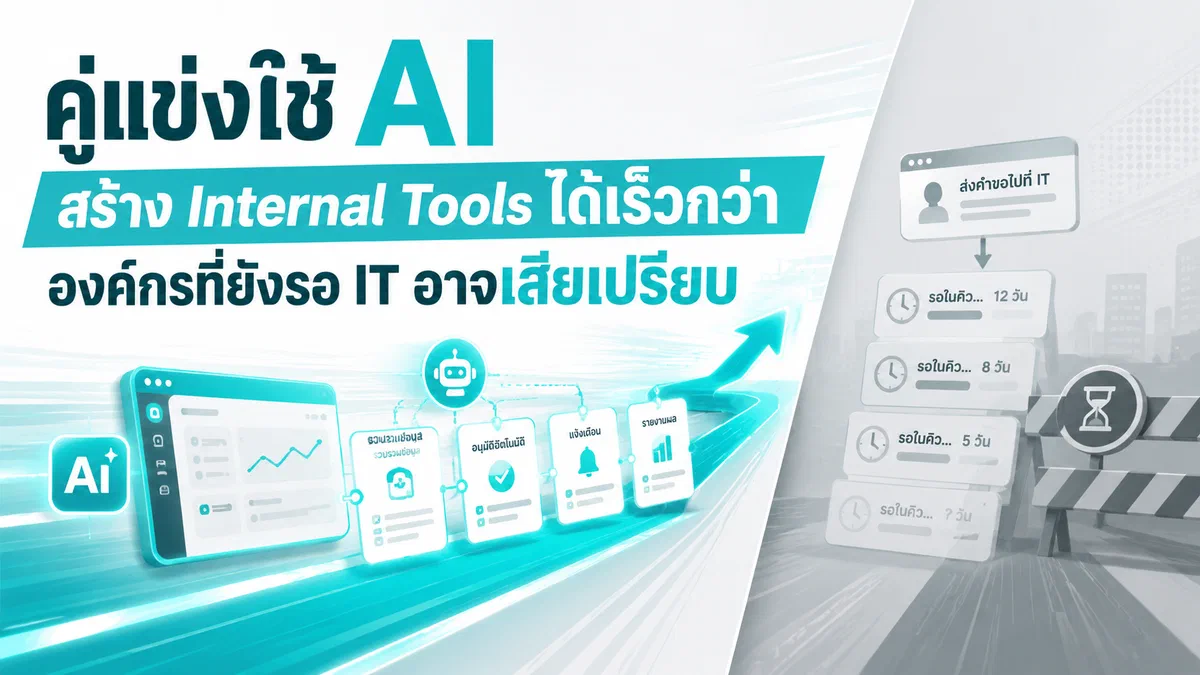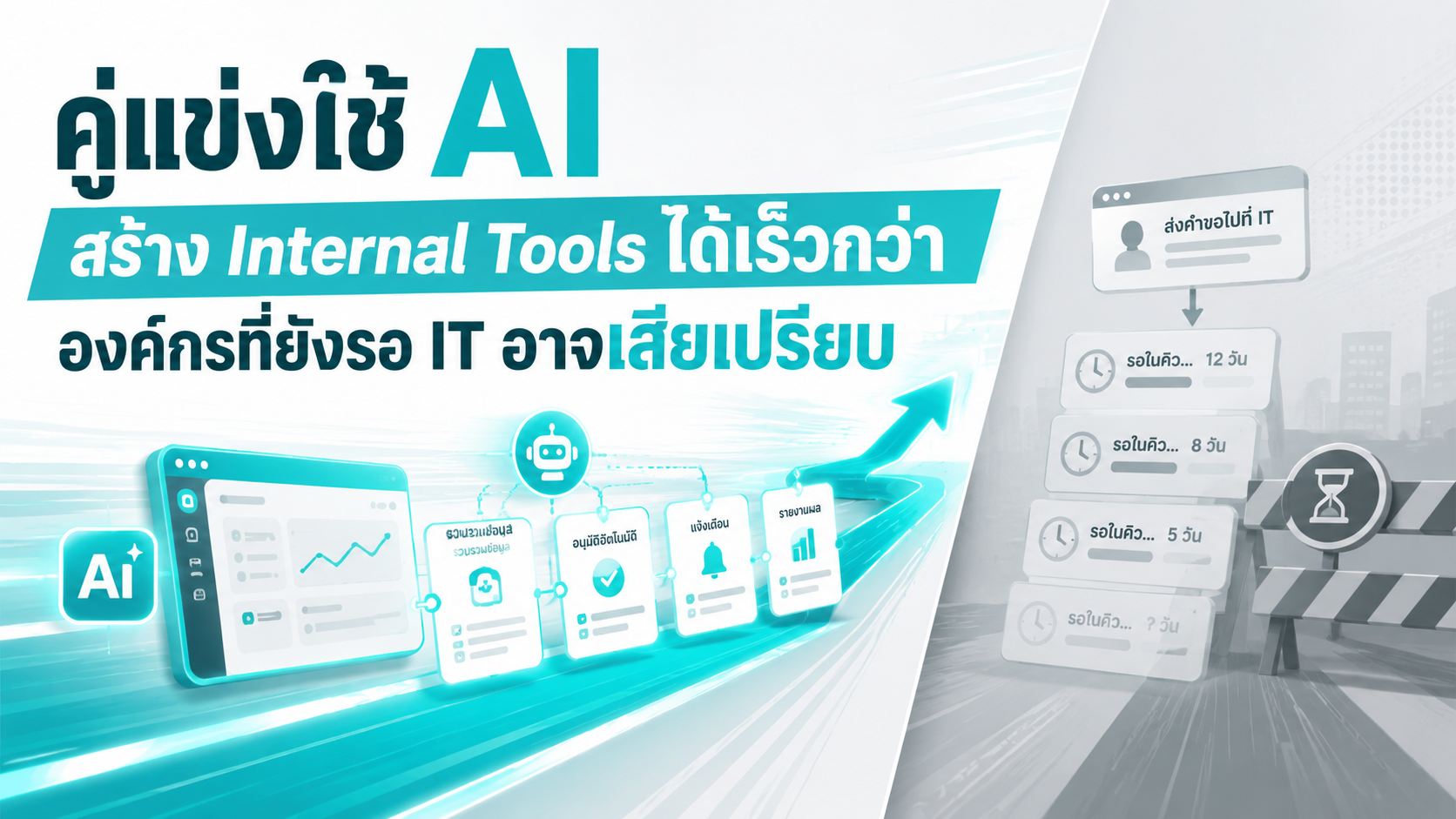
In an era where AI makes building internal tools and custom software easier, the speed at which organizations can adapt their internal processes is becoming a competitive advantage. Organizations that still route everything through IT may not just be falling behind on technology — they’re losing ground on speed, learning cycles, and the ability to turn pain points into working systems.
The Speed of Building Internal Tools Is Becoming a Competitive Advantage
When organizations think about competition, most look outward — new products, competitive pricing, sales channels, customer experience, marketing campaigns. But in the AI era, another important source of competitive advantage is increasingly coming from what happens inside the organization.
Specifically: the speed at which an organization can build tools and software to improve its own way of working.
Organizations that can turn internal pain points into working tools faster will be able to reduce manual work faster, experiment with new processes faster, fix bottlenecks faster, and help their teams work with data more effectively.
In the past, this speed was primarily a function of IT or software development team capacity. If a business team needed a small system to help with their work, they’d write requirements, hand them to IT for assessment, wait in the backlog queue, wait for a development sprint, wait for deployment — a process that’s necessary for large and critical systems, but for many daily pain points, it’s simply too slow.
When AI enters the picture, this equation begins to change.
Your competitors may no longer be waiting for IT to build everything from scratch. They may be arming business teams to use AI to build prototypes, automations, dashboards, or initial internal tools on their own — then selectively bringing the things that prove genuinely valuable to technology teams or partners for review, improvement, and a path to production.
If one organization can turn a frontline problem into a tool within days or weeks, while another waits months in the development queue, that difference will gradually compound into a durable long-term advantage.
The question is no longer just “does our organization use AI?” but “how much speed in adapting can our organization generate using AI?”
Organizations That Route Everything Through IT May Be Losing More Than Just Development Time
Waiting for IT isn’t wrong. In many cases, IT involvement is essential to ensure systems meet standards, are secure, and align with organizational architecture — especially for systems involving sensitive data, many users, or core business processes.
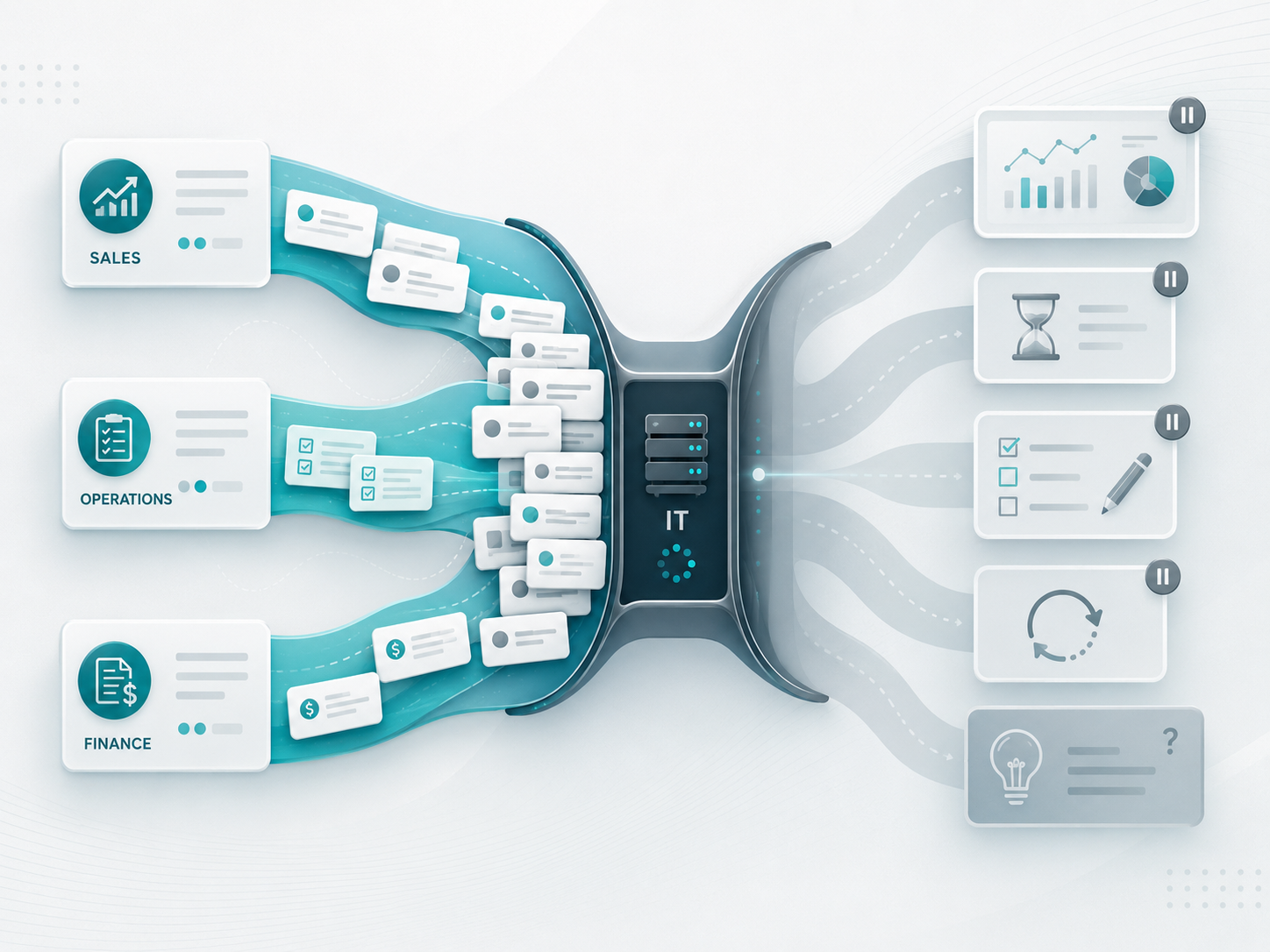
But the problem arises when every idea has to go through the same single queue, regardless of whether it’s an enterprise-level system or a small tool that could save one team an hour a day.
When everything waits for IT, the organization doesn’t just lose development time — it loses learning opportunities.
A sales team might have an idea for a tool to track leads falling through the pipeline. But by the time they can actually test it, some of those sales opportunities have already been lost.
An operations team might see a point where daily data checks could be automated. But if it takes months to get there, the team keeps working manually — and errors keep recurring.
A finance team might want to try a system that helps flag anomalies before month-end close. But without the ability to quickly prototype, they’ll never know if that approach would actually help.
In a world where business conditions change quickly, waiting doesn’t just mean slow delivery. It means the organization’s feedback loop slows down too. Organizations that experiment slowly learn slowly. Organizations that learn slowly adapt more slowly than their competition.
So when competitors use AI to build internal tools faster, it doesn’t just mean they have more software. It means they may have a shorter cycle for experimenting, improving, and optimizing how they work.
And that’s a more dangerous advantage than having any single tool.
AI Lets Business Teams Try Solutions on Their Own, Faster
One of AI’s most significant impacts is giving people on the business side a greater role in building solutions.
Previously, business team members may have understood frontline problems better than anyone, but couldn’t build systems on their own. They had to explain pain points to IT or a vendor, then wait for someone else to translate that into software. This process meant many ideas lost momentum before anything was built — because fully explaining the problem, waiting for assessment, and getting prioritized all took time.
Today, AI helps close some of this gap.
Non-developers can use AI to design workflows, build initial logic, write simple scripts, mockup interfaces, create dashboards, or build prototypes workable enough for the team to start testing. This doesn’t mean everyone should deploy systems on their own immediately — but it does mean business teams can test their own hypotheses much faster.
When business teams can experiment quickly, organizations don’t have to debate on assumptions for too long. Instead, they can use prototypes as learning tools: does this tool actually reduce working time? Do users understand the flow? Is the data needed available? What edge cases exist in the real process? And if we want to expand it, what would need to change?
This is the strategic value of AI-driven internal tools: it doesn’t just build software faster. It helps the organization learn from real experimentation faster.
Competitors who understand this won’t use AI only to write emails or summarize meetings. They’ll use AI to accelerate their cycle of experimentation and internal process improvement.
Internal Tools Are a Competitive Arena Many Organizations Are Still Overlooking
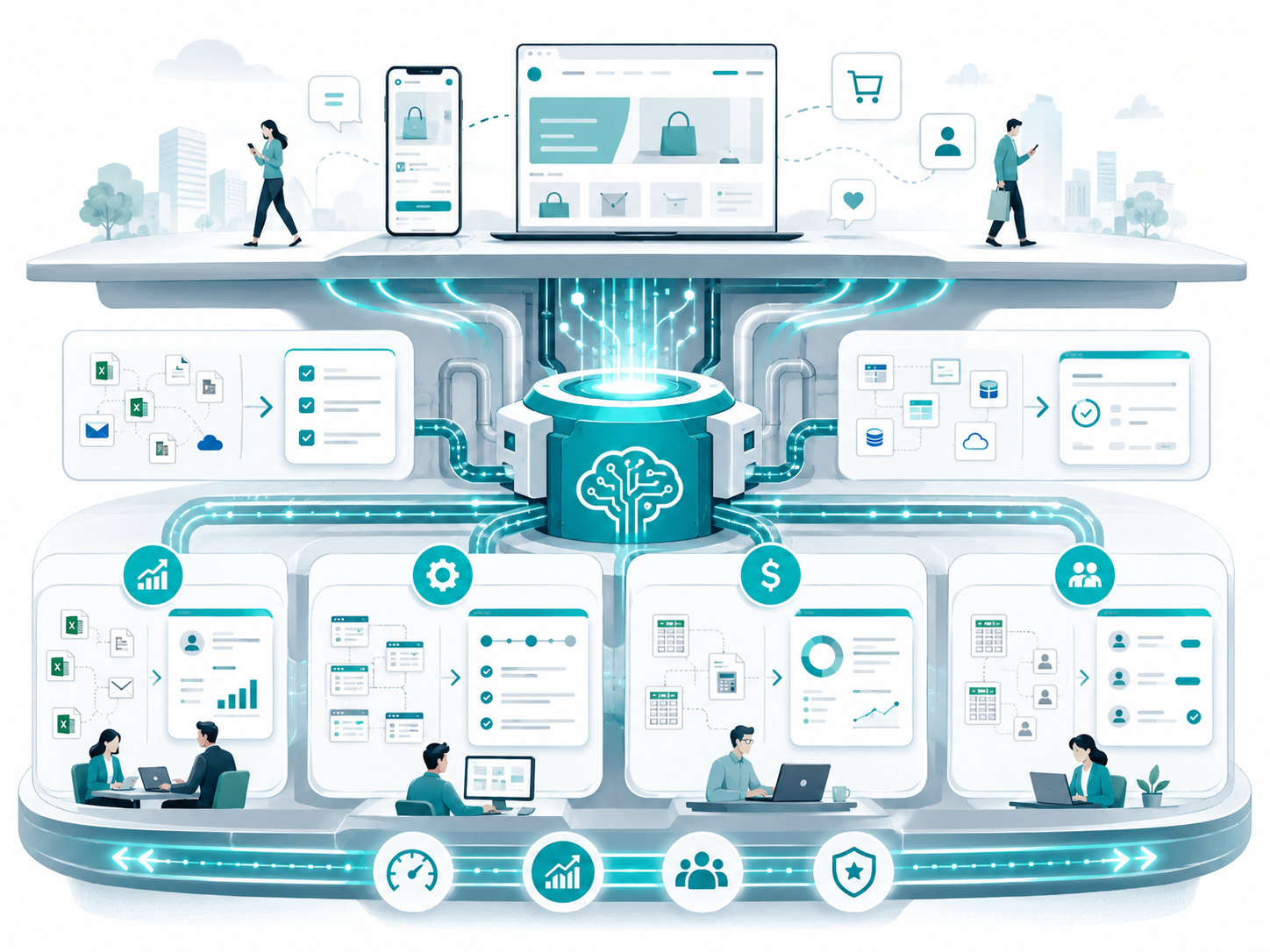
When organizations talk about digital transformation, most attention goes to customer-facing systems — mobile apps, websites, e-commerce, CRM, customer service platforms — because those are the things customers see directly.
But internal systems have just as much impact on competitive capability.
If the sales team still consolidates data from multiple files by hand every week, the speed of customer follow-up drops.
If operations still checks task status from multiple systems through manual processes, mistakes and delays will keep recurring.
If finance still spends significant time manually reconciling data, the time that should go to analysis is being consumed elsewhere.
If HR still manages onboarding or candidate tracking with multiple spreadsheets, the experience for both the HR team and new employees is worse than it should be.
None of these may feel large enough to classify as strategic projects. But when added up across the organization, they represent friction that slows the company down every single day.
AI makes it easier for organizations to address this friction, because many internal tools don’t have to start as large projects. They can begin as small prototypes serving a single team’s needs — and scale from there once the value is clearly demonstrated.
Organizations that recognize the value of internal tools will start treating this work as a source of competitive advantage, not just back-office work that can wait.
The Disadvantage of Applying the Traditional Software Delivery Model to Every Problem
Traditional software delivery models are necessary for complex and important systems. But applying the same model to every problem can create invisible bottlenecks.
The reality is that internal pain points exist at many levels. Some require serious development team involvement. Others are small internal workflow problems that need fast experimentation far more than they need a heavyweight process from day one.
When organizations apply the same process to everything, business teams feel that small ideas aren’t worth proposing — because they know they’ll have to wait, produce extensive documentation, and may not get prioritized at all. So those pain points keep living as manual work, spreadsheets, email threads, or workarounds nobody wants to touch.
Meanwhile, IT teams are overwhelmed — receiving large volumes of requirements from multiple departments, with limited capacity, while being expected to uphold standards across all systems.
The result: business wants things fast, IT has to control risk. The organization gets stuck between speed and control.
AI opens the door to a more balanced new model: let business teams prototype faster under appropriate guardrails, with IT or partners entering when the system begins to show real value and needs to be elevated to production.
This approach doesn’t reduce IT’s role — it changes it from building everything to setting standards, reviewing quality, and helping solutions with real value reach production faster.
Competitors Who Use AI Well Will Have Shorter Learning Loops
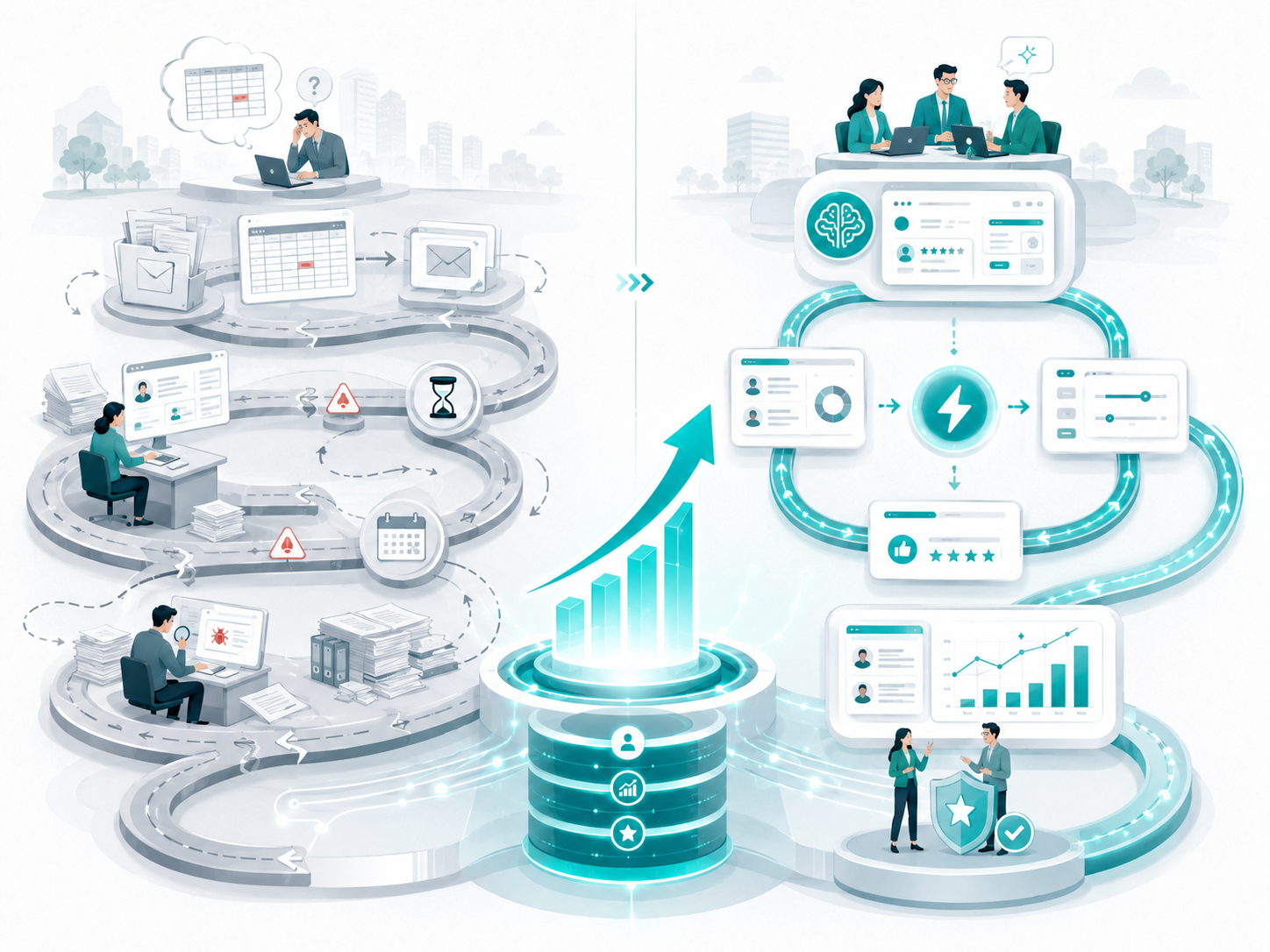
The advantage of using AI to build internal tools isn’t only about building faster. It’s about shortening the learning loop.
Organizations that build prototypes faster can test with real users faster.
Organizations that test faster see mistakes faster.
Organizations that see mistakes faster can adjust processes faster.
Organizations that adjust processes faster accumulate advantages from repeated learning faster.
Consider two organizations facing the same problem: the sales team needs a system to help prioritize leads.
The first organization waits for IT to assess and develop over 3 months. By the time the first version is ready, the sales team has continued with the old approach — and when the system arrives, they may discover that some of the logic doesn’t match how real work actually happens, requiring several more rounds of revision.
The second organization has the sales team work with an enablement team to use AI to build a prototype in days. They test it with mock data, refine the flow based on user feedback, then hand it off to the technology team to review and elevate once they can see the solution has real value.
The second organization doesn’t just get the tool faster. They understand the problem faster, know the constraints faster, and can make decisions faster.
This is the difference in learning loops. And in the long run, this difference may matter more than the software itself.
Speed Alone Isn’t Enough — You Need Governance That Lets You Scale Safely
Even though AI opens the door to faster internal tool creation, accelerating without structure carries real risk.
If every team builds tools on their own without standards, the organization may encounter a new form of shadow IT — fragmented systems using real data without data governance, no security review, no documentation, no long-term owner, and no support process when something breaks.
So organizations that want to use AI to accelerate internal tool creation can’t choose speed at the expense of control.
What’s needed is governance that’s practical enough to let people experiment quickly, but clear enough to manage risk when prototypes begin affecting real work.
Organizations should define clear levels for tools:
- Personal experiment — uses mock data, tested by the creator only; basic guidelines are sufficient
- Team tool — starts using real team data; requires data review and access control check
- Department / production system — involves multiple teams or important organizational data; must pass production readiness review before going live
The key principle is that good governance shouldn’t stop innovation — it should let innovation move forward faster in a safer path.
Where to Start If You Don’t Want to Fall Behind on AI-enabled Internal Tools
Organizations that don’t want to lose ground in this area don’t need to change everything at once. The right starting point is building an operating model that supports experimentation and structured elevation.
Step 1 — Survey internal pain points, especially work that is highly repetitive, relies on manual processes, draws from multiple data sources, or creates bottlenecks between teams. These are usually the best starting points for AI-powered internal tools.
Step 2 — Choose the right business teams to experiment first. Teams with clear pain points, good understanding of their own processes, and openness to trying new ways of working are ideal. Then train those teams to use AI to build prototypes correctly — not just prompt for answers, but understand how to translate problems into requirements and workflows.
Step 3 — Define guardrails around data, security, and technology from the start, so business teams know what’s allowed, what to be careful about, and when to escalate to IT or the governance team.
Step 4 — Build a review path for prototypes that start showing real value: production readiness assessment, remediation support, and deployment process — so things that work don’t stay stuck at demo.
Step 5 — Establish a care model for after go-live. Internal tools used every day need someone managing bugs, dependencies, minor changes, and system stability over the long term.
When these pieces work together, the organization can use AI to accelerate internal tool creation without letting risk escape control.
Conclusion: Competitors Who Build Internal Tools Faster May Learn and Adapt Faster Too
In the AI era, the advantage doesn’t come from having AI tools for employees to use. It comes from the ability to use AI to turn internal pain points into tools, automations, and custom software — and how fast that can actually happen.
Organizations that still route everything through IT won’t lose immediately. But the slowness will accumulate as friction over time — teams experimenting less, feedback loops getting longer, manual work persisting, and process optimization opportunities getting continually deferred.
By contrast, organizations that arm business teams to build prototypes quickly, under the right governance, with a clear path to bring valuable things into production, will be able to learn faster, improve faster, and build new capabilities faster than their competition.
The important question isn’t just whether your organization has AI. It’s whether your organization has the operating model that turns AI into actual speed in building software and changing how work gets done.
How Muze Helps Organizations Build AI-enabled Internal Tools
Muze believes AI will meaningfully change how organizations build internal tools and custom software. But speed only creates real value when there’s a framework that makes experimentation safe and a clear path to take prototypes to production.
We can help organizations design an AI Enablement Model that lets business teams use AI to turn frontline pain points into prototypes faster — with guardrails around data, security, technology, and production-readiness mindset built in from the start.
For prototypes or internal tools that start showing genuine value, Muze can help assess production readiness across security, data governance, architecture, code quality, and operational readiness dimensions; help remediate findings before deployment; and provide ongoing system care through an application care model after go-live.
For organizations that don’t want every process improvement idea stuck in a traditional development queue, Muze is ready to be the partner that augments IT team capacity and helps business teams build tools faster without adding unnecessary risk.
Contact the Muze team → muze.co.th/contact/