Many organizations begin AI Transformation by purchasing AI tools for employees. But real change doesn’t come from having more tools alone — it comes from enabling employees to apply their frontline knowledge to build tools, workflow automations, and custom software that create real business impact.
Buying AI Tools May Be Easier Than Changing How Work Gets Done
Over the past few years, many organizations have started investing in AI more seriously. Some have purchased AI chatbots for employees to use. Others have enabled Microsoft Copilot or AI tools connected to their productivity suite. Still others have bought platforms for creating content, analyzing data, writing code, or automating portions of their work.
All of this is a good starting point. These AI tools help employees begin experiencing AI’s capabilities faster — certain tasks get done more quickly, from summarizing meetings and writing emails to drafting proposals, translating documents, generating ideas, and handling basic data management.
But buying more tools doesn’t automatically mean the organization is transforming.
Many organizations have more AI tools than before, yet their work processes remain unchanged. Employees use AI as a personal assistant, but the team’s workflow still depends on the same manual steps. Information still gets passed around through files and email. Approvals are still slow. Reports still have to be made by hand. And many recurring pain points that happen every week still haven’t been addressed at a systemic level.
This makes AI nothing more than a productivity layer placed on top of the old way of working — not a tool that actually changes how the organization operates.
Real AI Transformation shouldn’t be measured by how many AI tools an organization has, or what percentage of employees use AI. The deeper question is whether AI has changed how people in the organization solve problems, build tools, and improve their own processes.
Because the bigger opportunity of AI isn’t just making existing work faster — it’s enabling employees to turn their own ideas and pain points into tools that create real business impact.
AI Transformation Shouldn’t Start From Tools — It Should Start From Pain Points
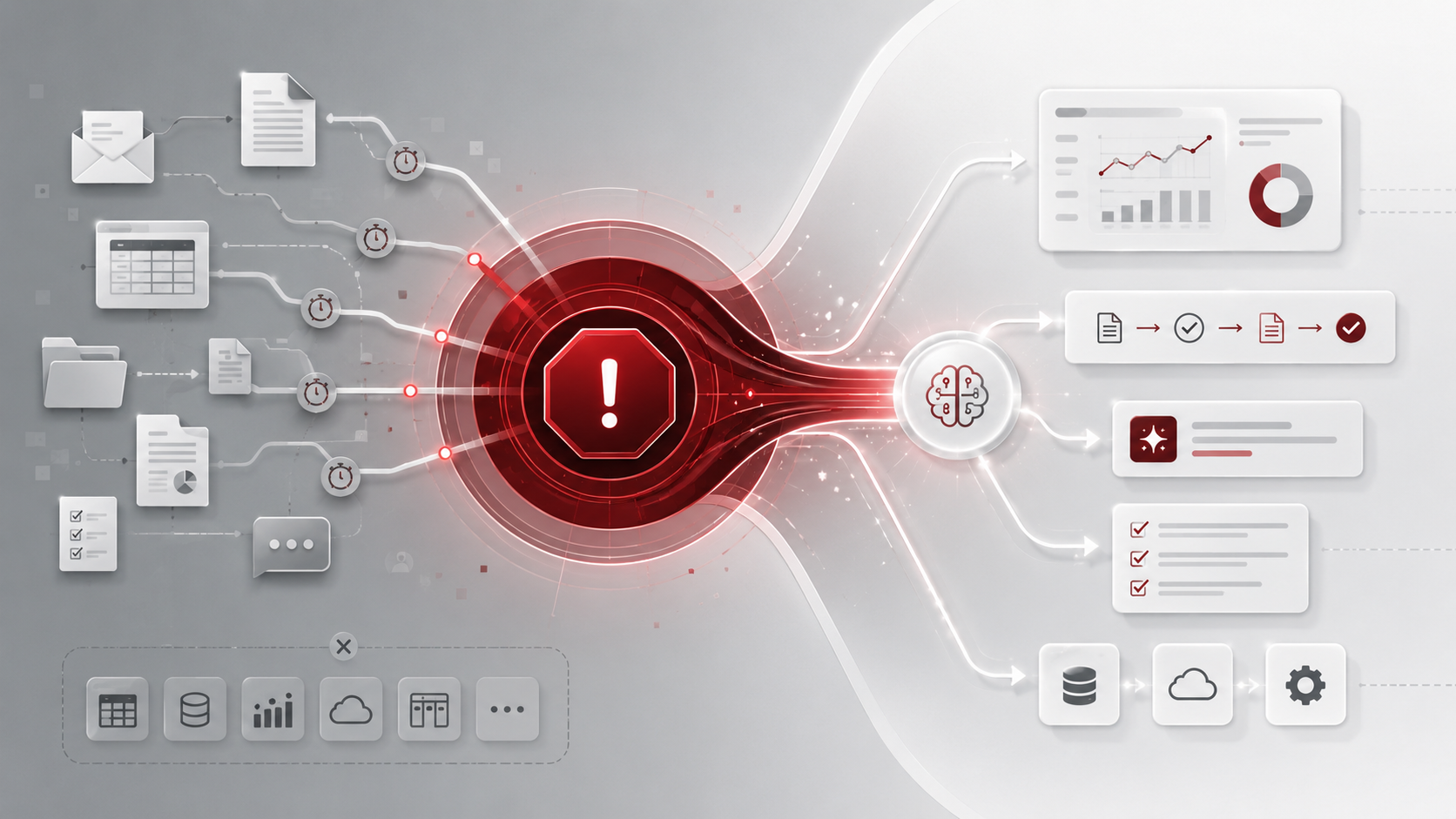
Many organizations begin their AI journey with the question “what tools should we buy?” But a more important question may be “what pain points do we have that AI could help us change the way we work?”
If you start from tools, you may end up with interesting-looking technology but no clear picture of how to embed it into real workflows. Employees might use the tool for some tasks but no systemic change occurs, or they gradually stop using it because it doesn’t fit their actual work well enough.
But if you start from pain points, the opportunities become clearer: the sales team spending too much time prioritizing leads, operations having to consolidate data from multiple systems every day, finance manually checking for anomalies, HR chasing onboarding documents across multiple channels, or customer service searching through large volumes of internal documentation to find answers.
These pain points may not rise to the level of enterprise-wide projects — but when they recur every day, they represent friction that steadily consumes the organization’s time.
AI makes it more possible to address these pain points faster, because employees who understand frontline problems can use AI to design initial solutions, build prototypes, experiment with workflows, or create small internal tools to prove whether a problem can actually be solved.
So good AI Transformation shouldn’t begin with buying tools across every category. It should begin by creating space for people in the organization to identify their own pain points and experiment with turning those pain points into measurable new tools or workflows.
Business-Side Employees Are the Closest Source of Software Ideas to the Problem
In many organizations, the people who best understand real work problems aren’t always the IT team — they’re the employees who live inside those processes every day.
Sales teams know what data helps them follow up with customers more effectively. Accounting teams know which parts of data reconciliation generate the most recurring errors. Operations teams know which steps slow processes down. HR teams know which coordination points create poor experiences for candidates or new employees. Customer service teams know which questions recur most often and take the longest to find answers for.
This knowledge is the essential raw material for good software.
In the past, business-side employees could only describe their problems to the IT team or a vendor and wait for someone else to translate those needs into a system. But as AI enters the picture, these employees can take on a greater role in building initial solution prototypes themselves.
They don’t need to become full developers. But they can use AI to think through flows, design screens, build initial logic, write simple scripts, create dashboards, or mock up tools that give the team a clearer picture much faster.
The key point is that AI means frontline ideas no longer have to stop at a meeting note or a spreadsheet. They can become something that’s actually testable in a short period of time.
When business-side employees participate in building tools from their own problems, the resulting solutions tend to fit real work better — because they start from real context, not from the assumptions of someone far removed from the process.
This is why organizations should see employees not just as AI users, but as the source of AI-enabled tools that can create real business impact.
From Individual Productivity to Organization-Level Business Impact
Giving employees AI to help with individual tasks is useful — but the impact tends to be scattered and hard to measure.
One employee might write emails faster. Another might summarize documents faster. Another might produce presentations faster. These improvements help each individual work better, but without follow-through, the organization may not be able to turn these productivity gains into organizational-level capability.
Deeper change happens when AI is used to build tools that teams can share.
For example: if a sales manager uses AI to analyze leads on their own every day, that’s one person’s productivity gain. But if the organization builds a tool that connects to CRM data, analyzes the pipeline, and recommends next actions for the entire sales team — that’s a capability of the sales team.
If a finance employee uses AI to check anomalies in certain files, that helps one person’s work. But if the organization builds an automation that systematically detects anomalies and alerts the finance team — that reduces risk and manual work for the entire team.
If an operations manager occasionally uses AI to summarize data from multiple files, that saves some time. But if the organization builds a dashboard that pulls data from multiple sources and displays real-time status — that changes how operations is managed.
This is the difference between using AI to assist with work, and using AI to change a workflow.
Real AI Transformation should move the organization from individual productivity to measurable business impact: reducing working hours, reducing errors, reducing cycle time, increasing conversion rates, increasing decision-making speed, or enabling teams to handle greater work volume without adding headcount at the same rate.
Tools Built From Employees’ Ideas Tend to Fit Business Needs Faster
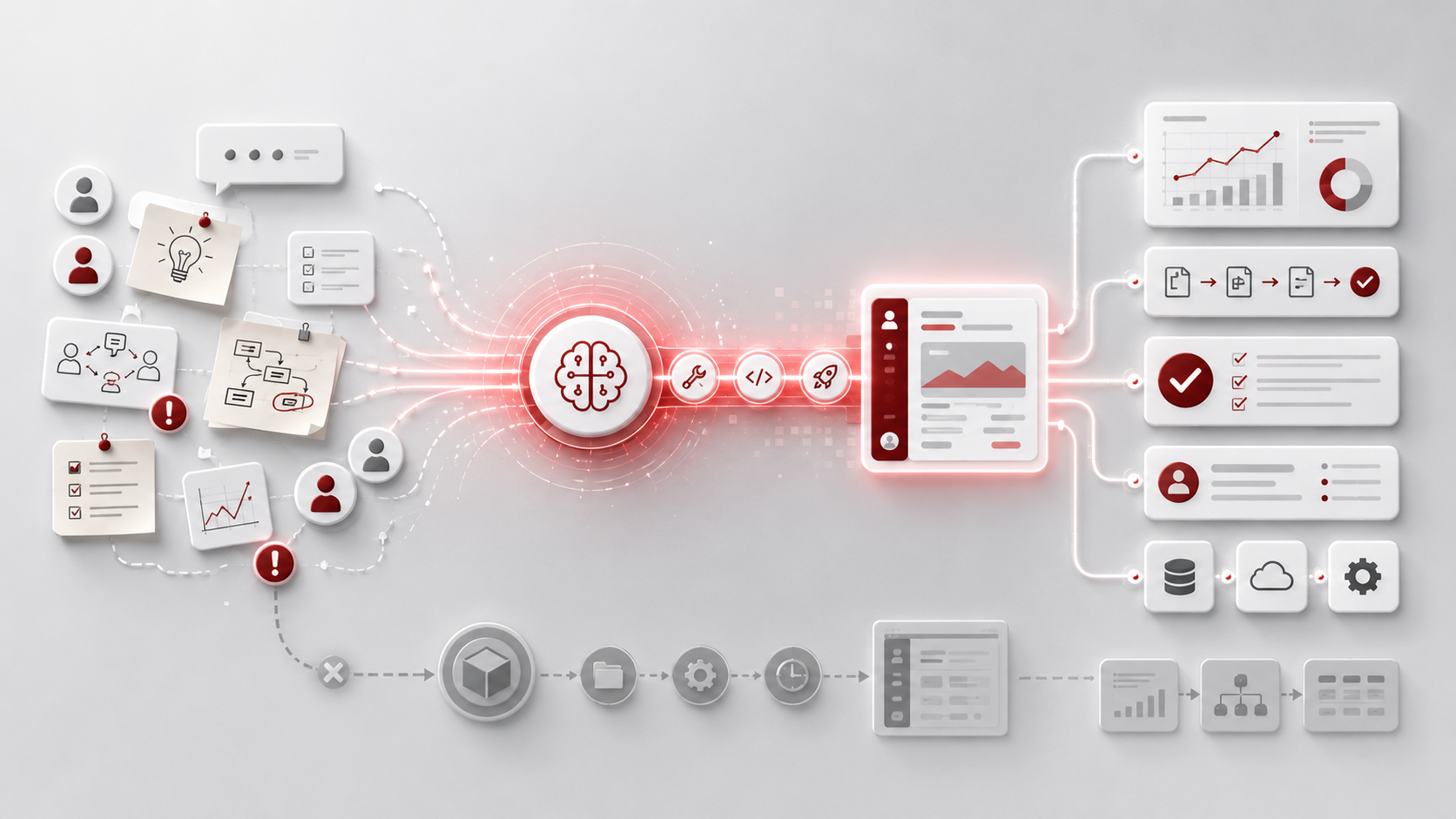
Many times organizations invest in large software projects, only to find upon delivery that parts don’t match how work actually happens, or that users have to adjust their way of working to fit the system too much. This problem often stems from the gap between the people who understand the process and the people who build the system.
AI can help close this gap — if the organization is designed to involve employees in building prototypes from the start.
When frontline workers can use AI to build prototypes, they can test ideas against real context faster, see mistakes sooner, and adjust solutions to fit real workflows before committing to full-scale development.
This changes the mental model of software creation — from starting with heavily fixed requirements to experimenting with multiple solution forms first, then selecting what has genuine value to develop further.
Organizations no longer have to guess which ideas might be good. They can let employees build small prototypes to prove it.
For example: the sales team might try three approaches to prioritizing leads from the actual data they have. The operations team might experiment with several dashboard layouts to see which helps them make decisions fastest. The HR team might try multiple onboarding checklist flows to see which reduces drop-offs most effectively.
When these prototypes come from the ideas of people who actually use them, and are tested against real context, the organization has a much better chance of building tools that impact business — more so than software designed from assumptions alone.
Organizations Must Create Space for Employees to Experiment — Not Just Tell Them to Use AI
If organizations want employees to participate in using AI to build tools with real impact, simply communicating “everyone should use AI” may not be enough.
Employees need space and structures that make experimentation something that can actually happen.
First, organizations should create space for employees to propose pain points and tool ideas from their own work — without necessarily starting from a large project. Small, clearly scoped problems are ideal starting points: repetitive tasks, manual work, frequent errors, or steps that lengthen cycle time.
Second, organizations should provide training that goes beyond prompt engineering — teaching people how to translate problems into solutions: how to describe a workflow, how to think through requirements, how to identify the relevant data, how to build prototypes safely, and how to assess what level of use a tool is appropriate for.
Third, organizations should have templates, approved tools, a recommended tech stack, or sandbox environments that let employees experiment without creating unnecessary risk.
Fourth, organizations should have a pathway for prototypes with genuine value to be handed off for review and elevation — not left as demos that gather dust or pushed into real use without standards.
When these elements are in place, employees stop being just AI users and become contributors to how the organization changes the way it works.
IT’s New Role: From Requirement Receiver to Guardrail Setter
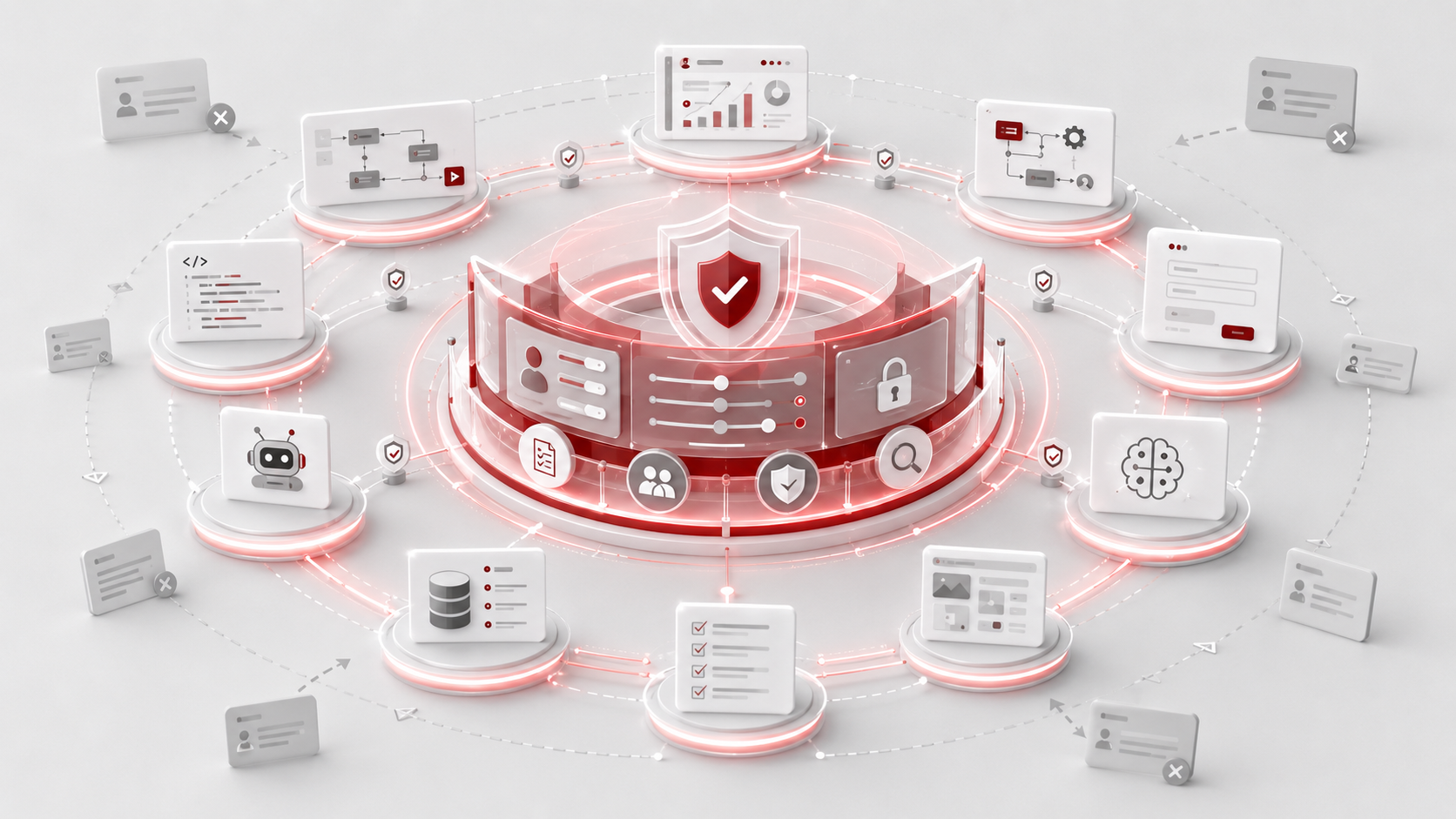
As business-side employees take on a greater role in building tools, the IT team’s role must evolve alongside them.
IT doesn’t need to be the team that builds every system from scratch — especially small tools or prototypes that require fast experimentation. But IT still has a critically important role in setting the standards and guardrails that make this experimentation safe.
IT’s new role is to define what’s safe to experiment with, what requires caution, which types of data must not be fed into external AI tools, which systems must go through review before real use, which technologies or cloud services fall within organizational standards, and what production-ready software must meet.
This approach gives business teams the freedom to experiment, while the organization maintains control when prototypes begin affecting real work.
This isn’t a reduction in IT’s importance — it’s an elevation of IT’s role, from receiving requirements and managing a backlog to building the platform, governance, and enablement model that lets the whole organization build software faster and more safely.
In the AI era, an IT team that functions as an enabler helps the organization get more from frontline workers’ knowledge — without letting shadow IT or fragmented, unmaintainable systems emerge.
Good Governance Must Help Employees Build Faster Within a Safe Framework
If organizations let employees use AI to build tools with no governance at all, risk follows quickly: using real data inappropriately, feeding internal data into external AI tools, building code with vulnerabilities, choosing technology the IT team can’t maintain, or putting prototypes into real use without owners or support processes.
But if governance is too heavy, employees won’t want to experiment — and the organization reverts to the old model where everything waits for IT.
So governance that fits AI Transformation must not be rules that slow everything down. It must be a structure that makes experimentation faster within a safe framework.
Organizations should define clear tool levels:
- Personal experiment — uses mock data, tested only by the creator; basic guidelines are sufficient
- Team tool — starts using real team data; requires data review and access control check
- Department / Production system — used across multiple teams or involves important organizational data; should go through a production readiness review before going live
The core principle is that not every idea needs to go through the same gate — but every idea should have a path that’s appropriate to its level of risk and business impact.
From AI Adoption to an AI-Native Operating Model
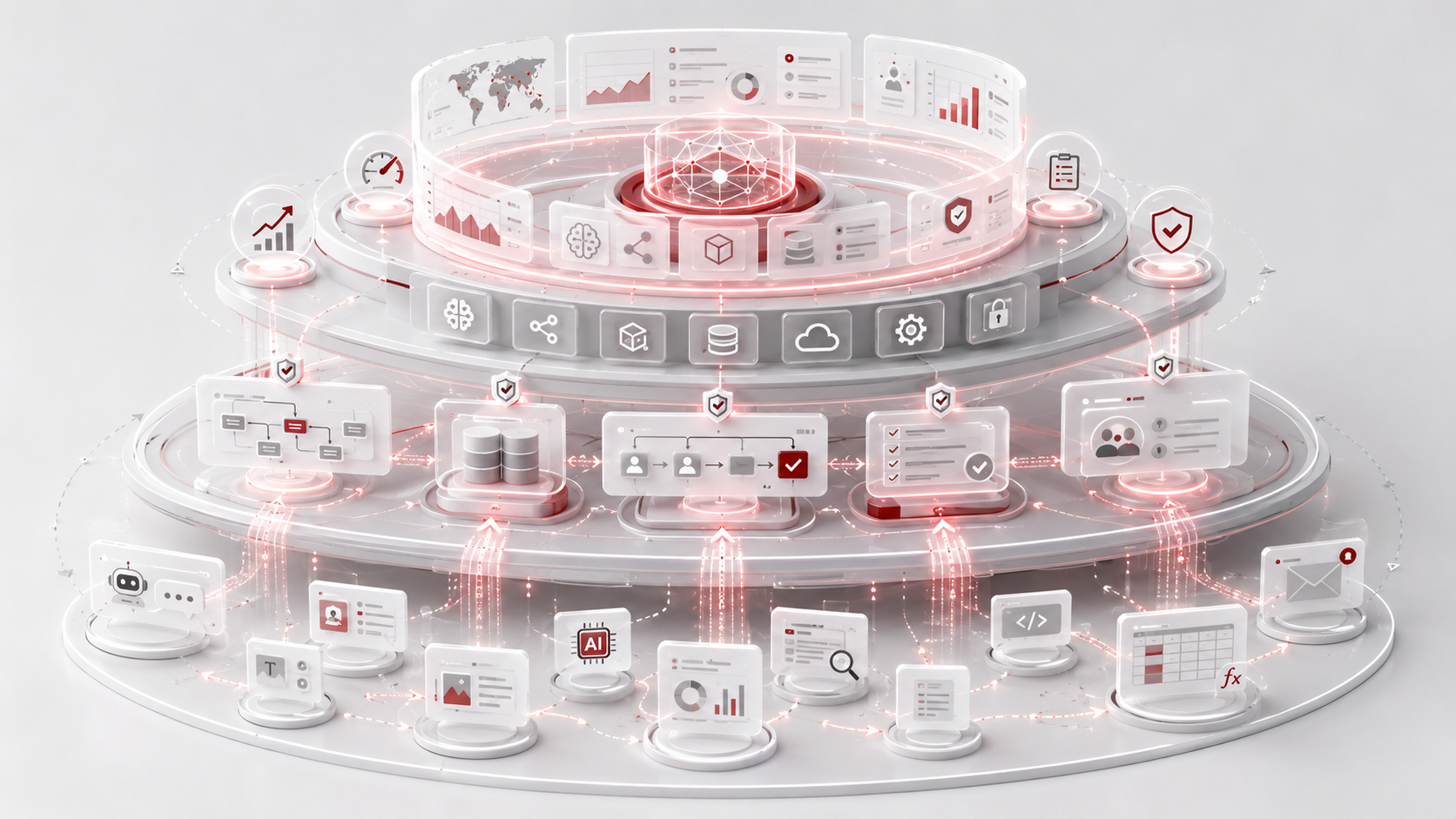
Many organizations start with AI adoption — opening up AI tools for employees to use. But the destination worth aiming for further ahead is an AI-native operating model.
An AI-native operating model doesn’t mean AI must be used in every step, or that people should be replaced by AI. It means designing a new way of working that treats AI as part of the organization’s fundamental capability.
In this kind of operating model, employees don’t just use AI to help them think or write — they use AI to propose solutions, experiment with prototypes, and improve their own workflows.
IT isn’t the bottleneck for every idea — it’s the team that sets guardrails and helps solutions with real value reach production.
Leadership doesn’t measure AI transformation by how many licenses were purchased — they look at how many pain points were resolved, how many workflows improved, how many manual steps were reduced, and what business impact came from new tools.
The organization doesn’t treat custom software as something big that only gets done for major projects — it begins to see that many small pieces of software solving real problems for various teams can collectively create enormous value.
This is the point at which AI Transformation starts shifting from “using new tools” to “a new way of working.”
Conclusion: Sustainable AI Transformation Requires Turning Employees From Users Into Co-creators of Work Tools
Real AI Transformation isn’t about buying more tools and hoping the organization changes on its own. Tools are just the starting point. What matters more is whether the organization can turn employees from AI users into co-creators of work tools.
Business-side employees have the deepest understanding of pain points — because they live inside real processes every day. If the organization can equip these employees to use AI to turn their own ideas into prototypes, workflow automations, or internal tools, it unlocks a massive source of innovation hidden within daily work.
But opening up tool creation to employees doesn’t mean letting everything happen without standards. What organizations need is a framework that allows experimentation to happen quickly, guardrails that help manage risk, production readiness review for systems that begin to have real impact, and ongoing care once those tools become part of real work.
In practice, organizations that want to move from AI adoption to an AI-native operating model may need to start by identifying pain points with clear business impact, creating space for business teams to prototype with AI, establishing data, security, and technology standards from the beginning, and building a path for prototypes with genuine value to be elevated into production-ready software.
How Muze Helps Organizations Move From AI Adoption to an AI-Native Operating Model
Muze believes sustainable AI Transformation doesn’t come from buying more tools — it comes from building an operating model that enables employees to turn ideas and pain points into tools that create real business impact.
Muze can help organizations design an AI Enablement Program, help business teams translate pain points into prototypes, establish governance and compliance-by-design practices, assess production readiness, support remediation before deployment, and provide ongoing system care after go-live.
For organizations that believe AI should be more than just a tool employees use to have conversations — but rather a new capability for building tools that impact the business — Muze is ready to be the partner that helps AI Transformation go beyond buying tools and become a genuine change in how the whole organization works.
Contact the Muze team → muze.co.th/contact/