TechCut — Technical Case Study · CH3+ OTT Platform Project
When Muze first started working with CH3+, the brief sounded straightforward:
“Build an OTT Platform that lets TV viewers move online — seamlessly.”
But once we got into the details, the challenge went well beyond “make video play.”
In the OTT world, a streaming system being ready doesn’t mean the platform is ready.
Many platforms invest heavily in video infrastructure — then stumble at the exact points users actually touch:
- App loads slowly
- Login fails when traffic spikes
- Campaign button freezes
- Payment system becomes unstable
- Player behaves differently across devices
- Front-end hammers the API so hard that the backend can’t keep up
For CH3+, what Muze went in to build wasn’t just “a video app.” It was the entire front-of-house experience of an OTT Platform — architected to serve users at national scale.
The Starting Point: 1M Users, Designed for 10×
When the project kicked off, CH3+ had around 1 million users.
That number wasn’t the hard part.
The harder part was designing a system ready for the day that user base might grow to tens of millions — without knowing exactly when that day would arrive.
And for an OTT Platform, the challenge isn’t average load. It’s peak load.
On a normal day, traffic looks manageable. But when a crucial drama episode drops, a live event goes out, a concert streams, or content a fanbase has been waiting for finally launches — a large volume of users arrive simultaneously within a very short window.
CH3+ has handled Peak Concurrent Viewers of approximately 800,000 people at once.
Design a system against average usage and it looks fine on an ordinary day. But it risks cracking precisely on the days that matter most for the business.
The OTT Challenge: It’s the Entire User Journey, Not Just Streaming
Most people frame OTT as a streaming problem.
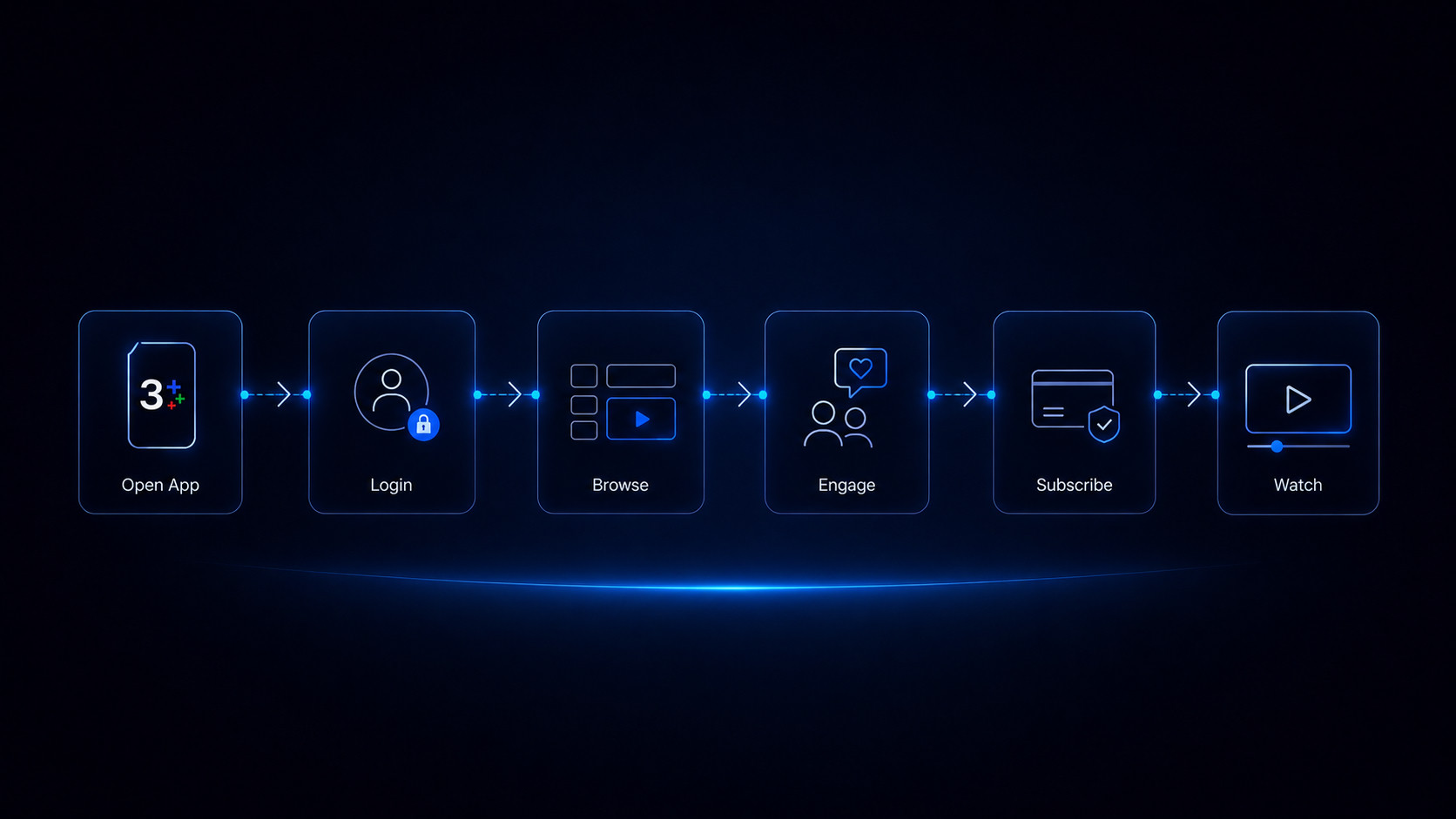
But from the user’s perspective, the experience starts before video ever plays.
A user opens the app, lands on a home screen, browses content, logs in, views a campaign, redeems a benefit, subscribes to a package, makes a payment, or joins an activity — all before they ever hit play.
If any of those steps break, the user feels like “the app is down” — even if the streaming infrastructure behind it is running perfectly.
This is where Muze had its primary role in CH3+.
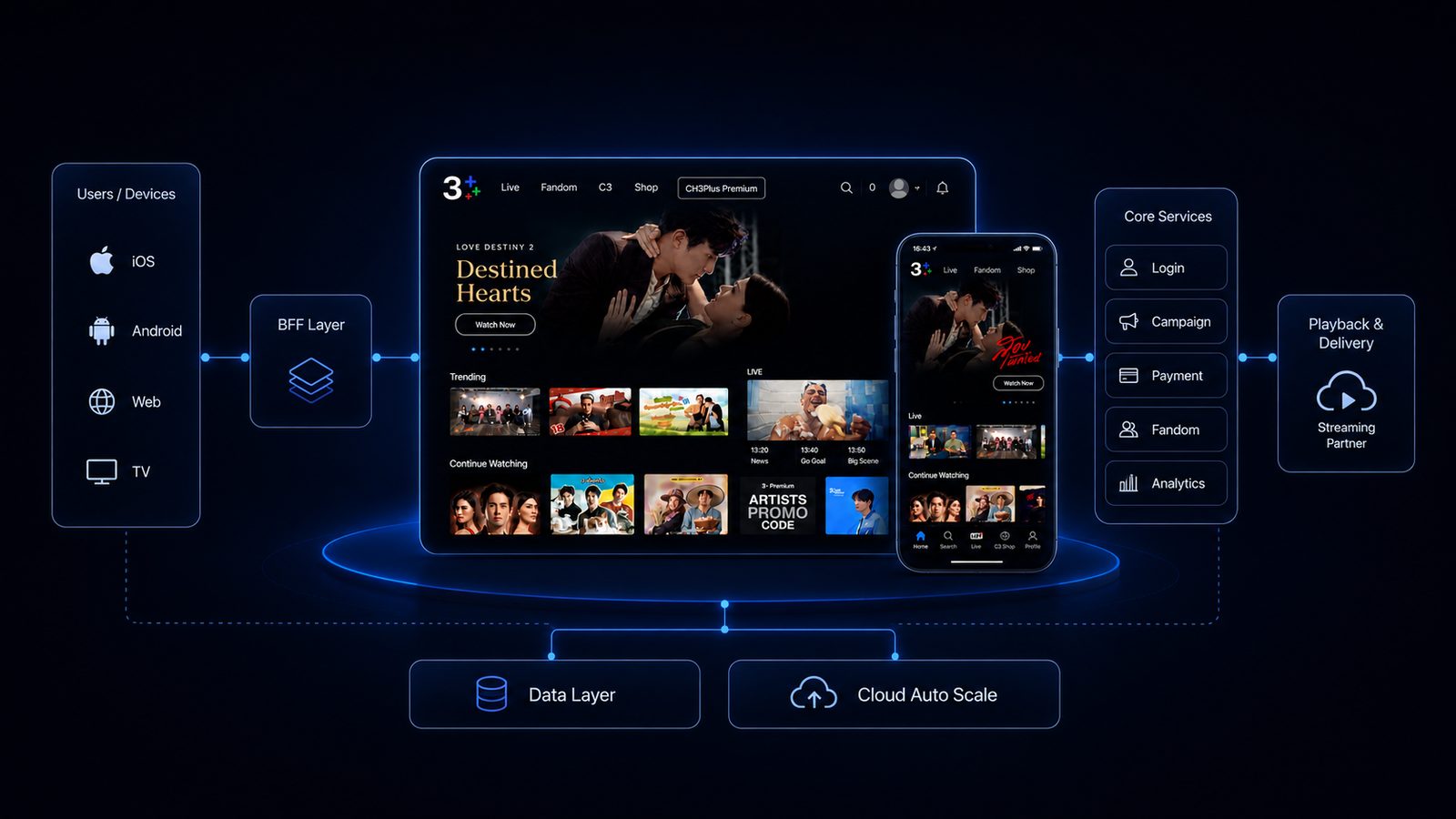
We weren’t the team building the core streaming backend end-to-end. We designed and built the critical components users directly experience:
- Front-end application and player experience across multiple devices
- BFF (Backend for Frontend) layer — formatting data correctly for each platform
- Login and user-facing flows
- Campaign and event engagement systems
- Payment flow integration
- The connective tissue between front-end, business logic, and backend services
All of it had to hold together on the days when hundreds of thousands of users arrive at the same time.
Why BFF Matters in an OTT Platform
When a Platform needs to serve iOS, Android, Apple TV, Android TV, Samsung TV, Android Box, and Web simultaneously, having every client hit backend services directly tends to create long-term problems.
Each device has different constraints:
- Mobile needs speed and minimal bandwidth usage
- Smart TV needs simple navigation and stable rendering
- Web needs to handle multiple browsers
- Each player has its own behaviour and limitations
BFF is the layer that gives each platform’s front-end exactly the data it needs — without loading complex logic onto the client itself.
In a system like this, BFF solves several things at once:
- Reduces the number of API calls from each client
- Aggregates data from multiple services into a single ready-to-use response
- Adapts data format to suit each device type
- Hides backend complexity from front-end teams
- Lets each platform’s dev team move faster
- Reduces the risk of clients over-requesting during high-traffic periods
For a High-Traffic Platform, this isn’t just about clean architecture — it’s directly about performance and reliability.
When a large number of users arrive simultaneously, even a small reduction in requests per user translates into a massive reduction in total system load.
Player Experience: The Detail That Affects Users Most
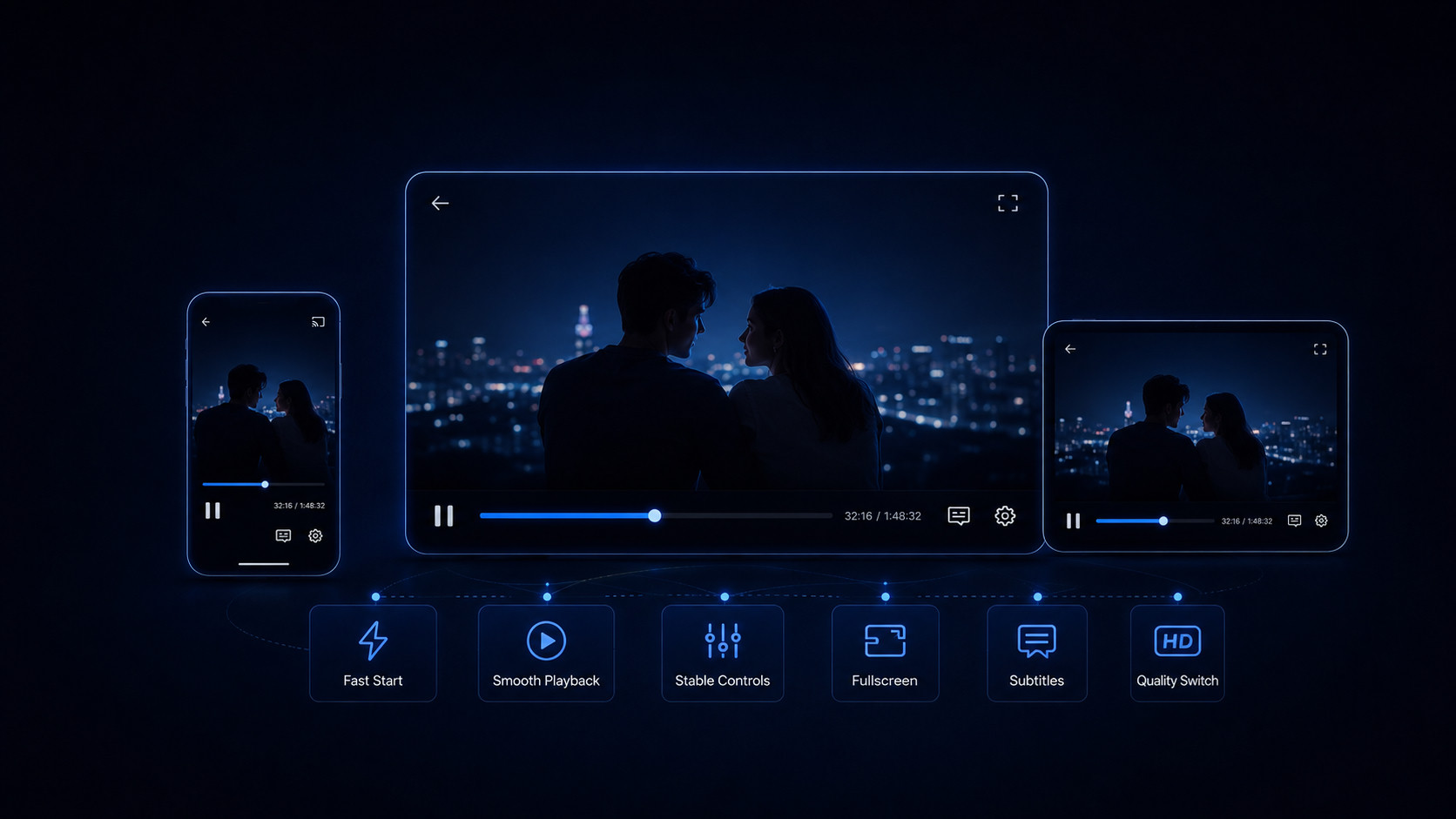
In any OTT Platform, the player is what users care about most.
If video starts slowly, stutters, acts up in fullscreen, or doesn’t switch quality smoothly — users don’t care whether the issue is network, device, CDN, DRM, or the application layer.
What they feel is: “I can’t watch this.”
Muze had to give player experience serious attention across every platform CH3+ supports — mobile, TV, and web.
The hard part of a player isn’t embedding a video component in an app. It’s making video playback work consistently across an ecosystem that varies enormously:
- iOS and Android players behave differently
- Individual Smart TV models have distinct performance limits
- Android Box carries high fragmentation risk
- DRM and playback policy differ by platform
- Remote control UX on TV requires completely different thinking than a touchscreen
Building a good OTT Platform requires understanding both software architecture and the real behaviour of actual devices.
Campaign, Login, and Payment: Where Platforms Often Fail
Another critical area of CH3+ was the infrastructure surrounding Streaming itself — especially campaign, login, and payment systems.
During a major event or content drop, users aren’t just watching video. They’re logging in, redeeming benefits, joining campaigns, subscribing to packages, and making payments — all at once.
This is a traffic pattern fundamentally different from a typical web application. Load doesn’t spread across the day. It clusters in short windows.
- If login service slows down, users can’t get in
- If the campaign system slows down, users can’t participate
- If payment flow stumbles, revenue disappears immediately
- If BFF handles requests poorly, the backend takes unnecessary load
Front-end architecture and the surrounding systems have to be designed for peak usage from the beginning — not patched once the user base grows large enough to expose the problems.
Fandom System: What Made CH3+ More Than Free TV Online
One of the defining decisions for CH3+ was refusing to build just another “broadcast TV online” platform.
Instead, the product was differentiated by putting artists and Fandom at the centre.
Users don’t just come to watch content. They come to engage with actors, shows, exclusive content, and activities tied to fan communities.
This gives CH3+ a product angle that streaming platforms built purely around a content library don’t have.
Technically, a Fandom System means the platform needs to support far more interaction than passive video consumption — campaigns, exclusive activities, fan engagement, and content experiences designed for specific audiences.
This is where technology has to work alongside product strategy rather than simply implementing requirements.
Results
From a platform of approximately 1 million users, CH3+ grew to over 12 million Monthly Active Users.
Peak concurrent viewership reached approximately 800,000 Concurrent Viewers.
The platform expanded from a handful of clients to a full multi-device ecosystem: iOS, Android, Apple TV, Android TV, Samsung TV, Android Box, and Web.
These numbers reflect one clear truth:
Scaling an OTT Platform isn’t just about having streaming infrastructure ready. It means designing the entire user journey — front-end architecture, BFF, login, payment, and campaign systems — to hold up on the days when a large number of users arrive at the same time.
Lessons from CH3+
What Muze learned from CH3+ is that High-Traffic Platforms don’t always break at the most obvious point.
Sometimes the video system is ready. The CDN is ready. The content is ready. Marketing is ready.
But users can’t get in because login can’t handle the load. Or a campaign crashes because too many people tap it at once. Or the payment flow breaks at the exact moment it should be generating the most revenue. Or the front-end over-requests the API and the whole system slows down.
Good architecture for an OTT Platform isn’t about asking “does video play?” It’s about asking:
When hundreds of thousands of users arrive simultaneously, does the entire path stay smooth?
That’s the difference between a system that “works” and a system that actually scales.
For Organisations Building a Streaming Platform or High-Traffic Digital Product
If your business is building a Platform that needs to serve large user volumes — whether Streaming, E-commerce, Campaign Platform, Super App, or any system with high peak traffic — the critical question isn’t only “which tech stack.”
It’s whether the architecture is designed around how your users actually behave.
Because the day traffic hits its highest point is usually also the most important day for the business.
Muze helps organisations design and build Digital Platforms ready to scale across technology, product experience, and business outcomes.
From the Client
“Muze is the partner we trust. Their expertise helped us develop an OTT Platform that truly responds to how our customers behave today.”
— Warut Leeruangsakul, EVP Digital and Tech · BEC World