Over the past two to three years, AI has become an essential tool for many organizations — summarizing documents, writing emails, analyzing data, and assisting with code development. These capabilities have made work faster and significantly reduced time spent on repetitive tasks.
Yet today’s AI still operates under the same basic model: waiting to receive instructions from a human. Every time a task moves forward, the user must write a new prompt before the AI takes the next step.
But what if AI no longer had to wait for instructions — and could plan, execute, review, and continue working on its own until the task was complete?
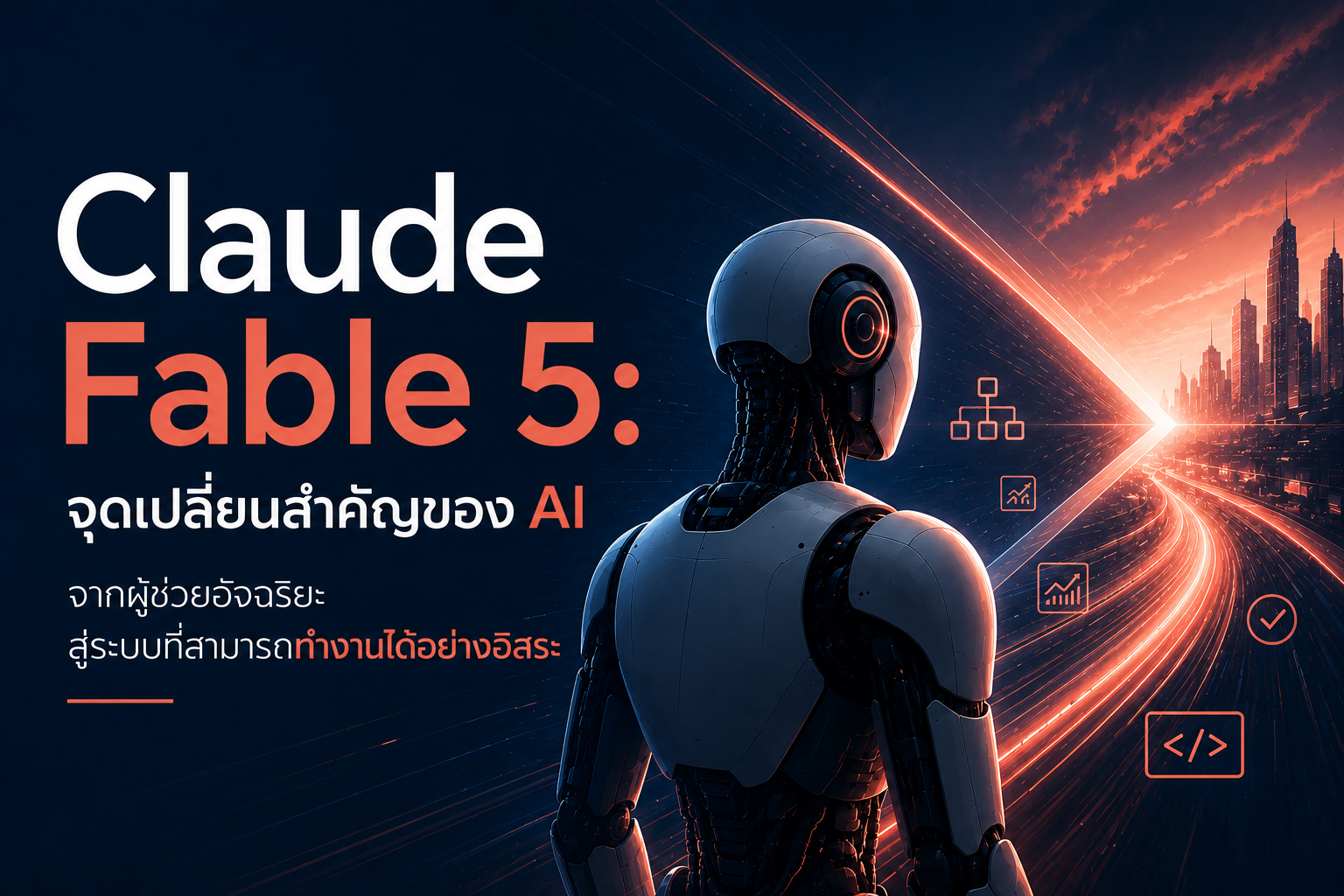
This is the idea that Claude Fable 5, Anthropic’s newest AI model, is beginning to reflect — and it may be an important signal of the transition from Generative AI to Agentic AI.
What Is Claude Fable 5?
Claude Fable 5 is Anthropic’s latest AI model, built to handle work far more complex than generating text or answering a single question. Anthropic describes it as the first model in the Mythos-class to be made available to general users, with a Guardrails system that makes it safer to deploy at an enterprise level.
What makes Claude Fable 5 stand out isn’t faster answers — it’s the ability to handle tasks that earlier AI models struggled with: work that spans multiple days, work with many sequential steps, large-scale software development, AI Agent workflows, and self-verification of results before delivery.
In other words, Anthropic is shifting AI’s role from “a tool that answers questions” to “a system that can take on greater responsibility for work.”
The Shift From Chatbot to Autonomous Worker
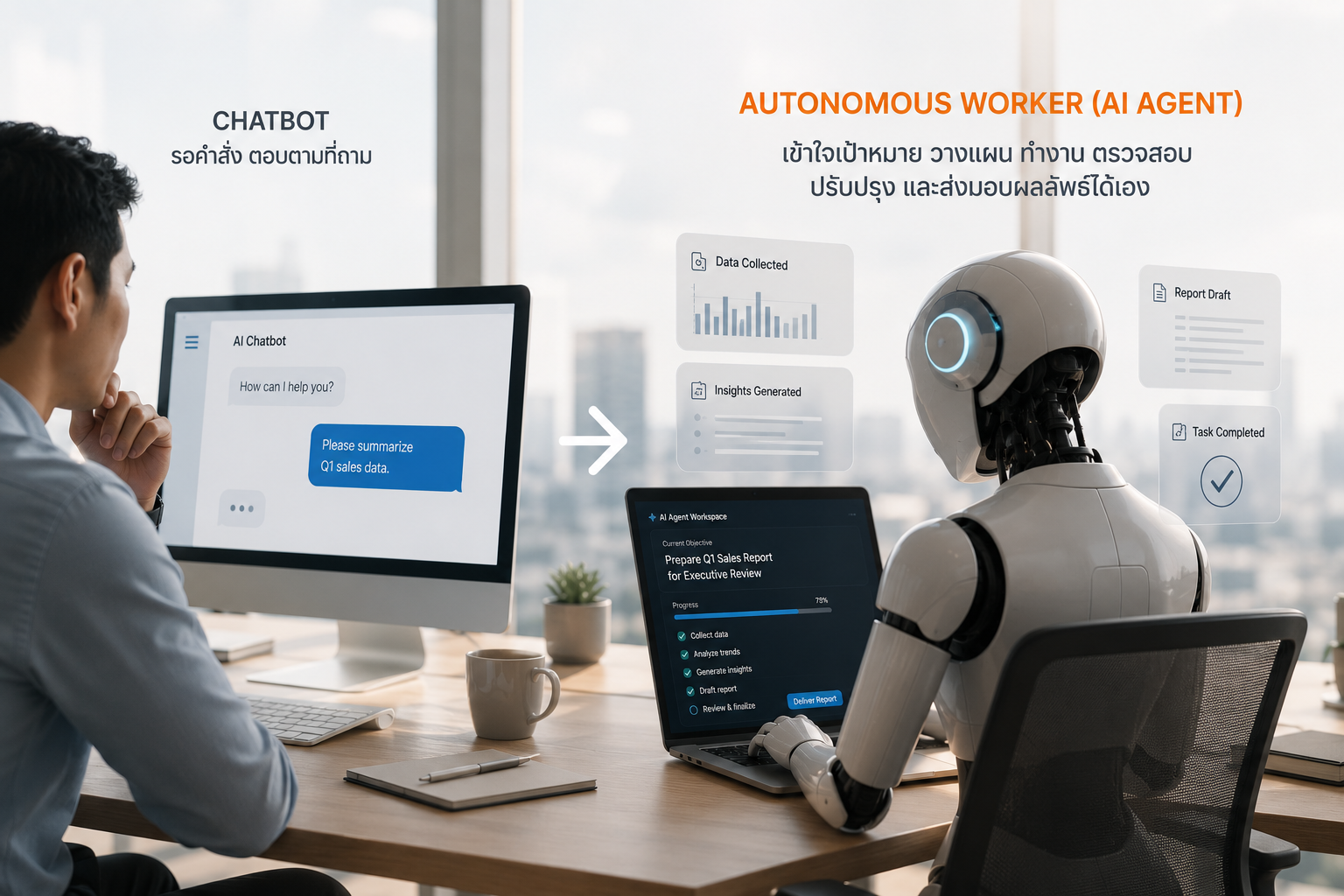
Until now, most AI has operated simply: a user asks a question, the AI generates an answer, and the process ends.
Claude Fable 5 fundamentally changes this model.
Instead of starting from a “question,” the AI starts from a “goal” — then plans, breaks the work into steps, executes, reviews results, fixes errors, and continues until the defined goal is reached.
This is the concept of the Long-running Agent — where AI doesn’t just generate a response but can take responsibility for an ongoing work process.
For organizations, this shift is significant. AI is starting to move from helping with individual tasks to managing entire Workflows.
What the New Generation of AI Is Competing On Isn’t “Intelligence”
When discussing new AI models, many people compare them by Benchmark scores or how well they answer questions.
But from a business perspective, the more valuable attribute may not be marginally better answers.
What Anthropic is focusing on is Persistence — the ability to work continuously.
AI can go back and review what it has already done, try new approaches, fix mistakes, and keep going until it reaches an appropriate result — rather than answering once and stopping.
For Enterprise use, this capability matters enormously. Organizations don’t need the AI that answers fastest. They need AI that can reliably deliver correct results.
When AI Begins to See the Whole System
Another concept Anthropic emphasizes is Long-Horizon Reasoning.
Earlier AI models may have been strong at solving immediate problems, but couldn’t manage work requiring dozens or hundreds of sequential decisions.
Consider building a single E-commerce system. The AI would need to begin by reading requirements, understanding Business Logic, designing the Architecture, developing Backend and Frontend, testing the system, fixing errors, and preparing for deployment.
None of this comes from a single prompt. It’s a process that requires connecting many layers of decisions.
The ability to see “the whole system” is therefore a crucial step that allows AI to begin handling significantly more complex work.
From Generating Answers to Delivering Outcomes
Another capability that reflects this shift is Self-verification.
Rather than delivering the first answer immediately, AI can return to check, test, compare, and improve results before delivering them.
This may seem like a minor detail — but for organizations it matters considerably. Reducing errors even slightly can cut costs, reduce time, and lower operational risk substantially.
As AI becomes better at reviewing its own work, the human role begins shifting from “person who does the work” to “person who directs and decides.”
What Does This Mean for Business?
The change taking place isn’t limited to software development teams.
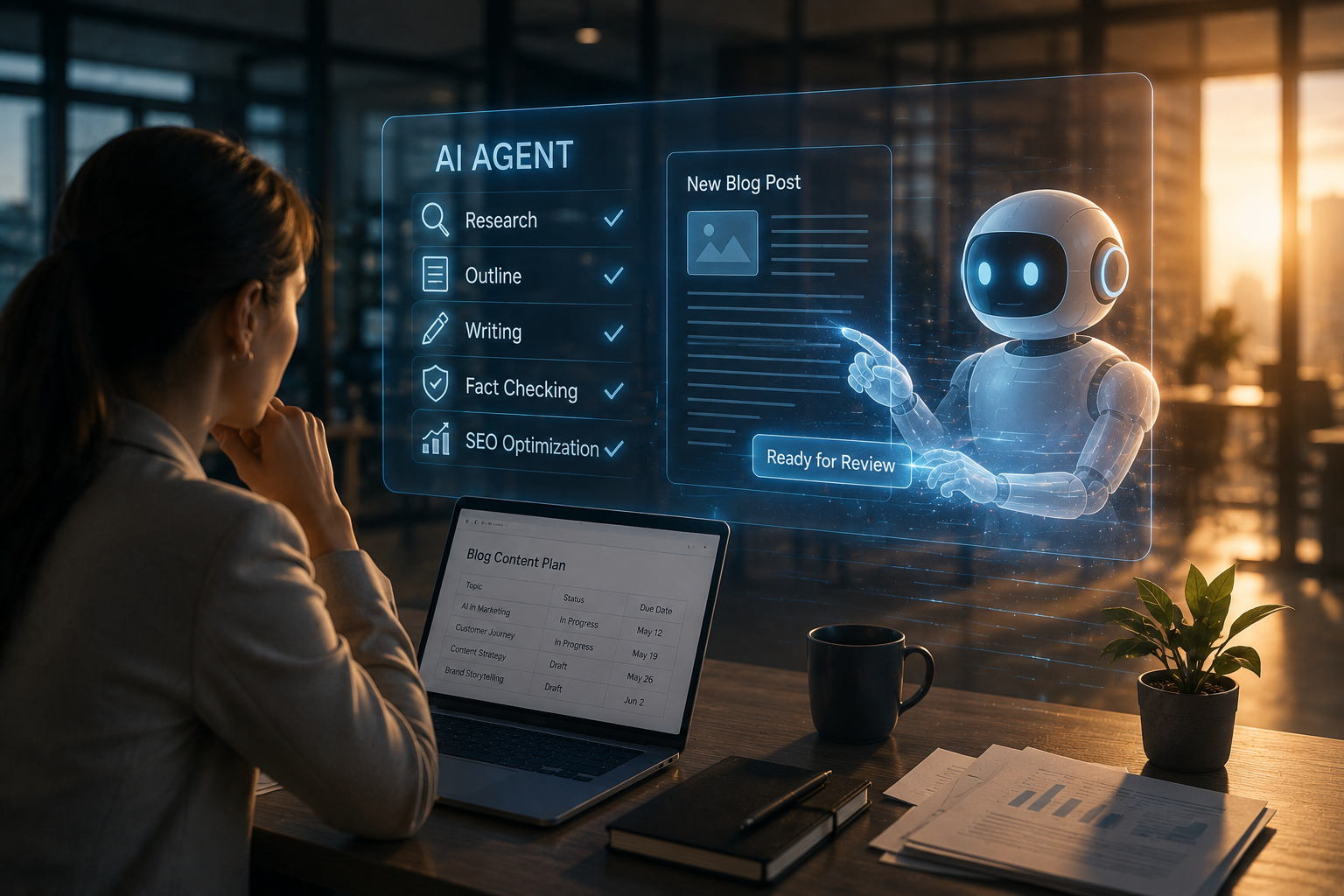
Consider a marketing team that needs to produce a new article every week. Previously this required several hours of research, outlining, writing, fact-checking, and SEO optimization.
In the near future, AI Agents may be able to take responsibility for nearly this entire process — before handing off to the marketing team to check quality, adjust perspective, and approve publication.
In the same way, Customer Service teams, HR teams, and Product teams could bring AI Agents in to take responsibility for portions of their Workflows.
The question organizations may be asking is no longer “should we use Claude or GPT?” It becomes “which Workflows can AI create the most value in?”
Extended Thinking: How Fable 5 Decides Differently From Earlier AI
One of the capabilities that most clearly sets Claude Fable 5 apart is Extended Thinking — a process in which the AI spends time “thinking” before answering, rather than generating a response from the very first token.
In earlier models, AI would begin producing output immediately upon receiving input. This worked well for tasks requiring quick answers, but not for work that requires weighing multiple options, checking internal consistency, or planning a complex sequence of steps.
Extended Thinking changes this. The AI passes through an internal reasoning chain before generating its final output — similar to how a human “drafts thoughts” internally before speaking or writing.
The practical result is that the AI can catch contradictions in a task before starting, choose a more appropriate approach from multiple options, and explain the reasoning behind its decisions more clearly. All of which are qualities organizations need when AI is involved in work that has real business consequences.
Use Case: Engineering Teams Giving Fable 5 Responsibility for an Entire Software Project
One of the most powerful use cases already seeing real adoption is giving Fable 5 responsibility for complex software development work.
A pattern emerging in enterprise-level Engineering teams involves handing Fable 5 a large existing codebase to read and understand, then assigning a new set of requirements to execute.
The AI analyzes the existing structure, identifies files that need to change, writes new code while matching the codebase’s existing patterns, tests what it wrote, checks whether the build passes, fixes errors that arise, and repeats until everything passes — without requiring humans to guide every step.
Companies experimenting with this approach report that features that once took a single developer 2-3 days can be compressed to a few hours, with the developer shifting into a review-and-approve role rather than writing every line.
Another compelling use case from SaaS startups involves giving Fable 5 responsibility for database schema migrations — writing the migration scripts, verifying data integrity, and generating a rollback plan in parallel. Work that previously required multiple senior engineers coordinating closely.
Use Case: Complex Enterprise Data Analysis and Synthesis
Beyond software development, another area where Fable 5 shows clear capability is in large-scale data analysis and synthesis that requires continuous decision-making.
Financial analyst teams at some organizations have begun testing Fable 5 by having it read hundreds of listed company reports, extract key figures, compare across time periods, and generate initial investment theses. The AI doesn’t just summarize content — it analyzes the coherence between what companies state in their forward guidance and what actually appears in their financial statements.
On the legal and compliance side, Legal teams at multiple organizations have started using Fable 5 to analyze large contracts with hundreds of pages of supporting documents. The AI identifies provisions that may conflict with each other, finds clauses missing relative to standard templates, and generates summary reports that flag specific points requiring attorney review.
These tasks share common characteristics: they require reading and retaining large amounts of context, connecting information from multiple sources, and making continuous decisions without a fixed formula. All things earlier AI struggled to do well.
Multi-Agent Orchestration: When Fable 5 Becomes the Orchestrator of Multiple AI Agents
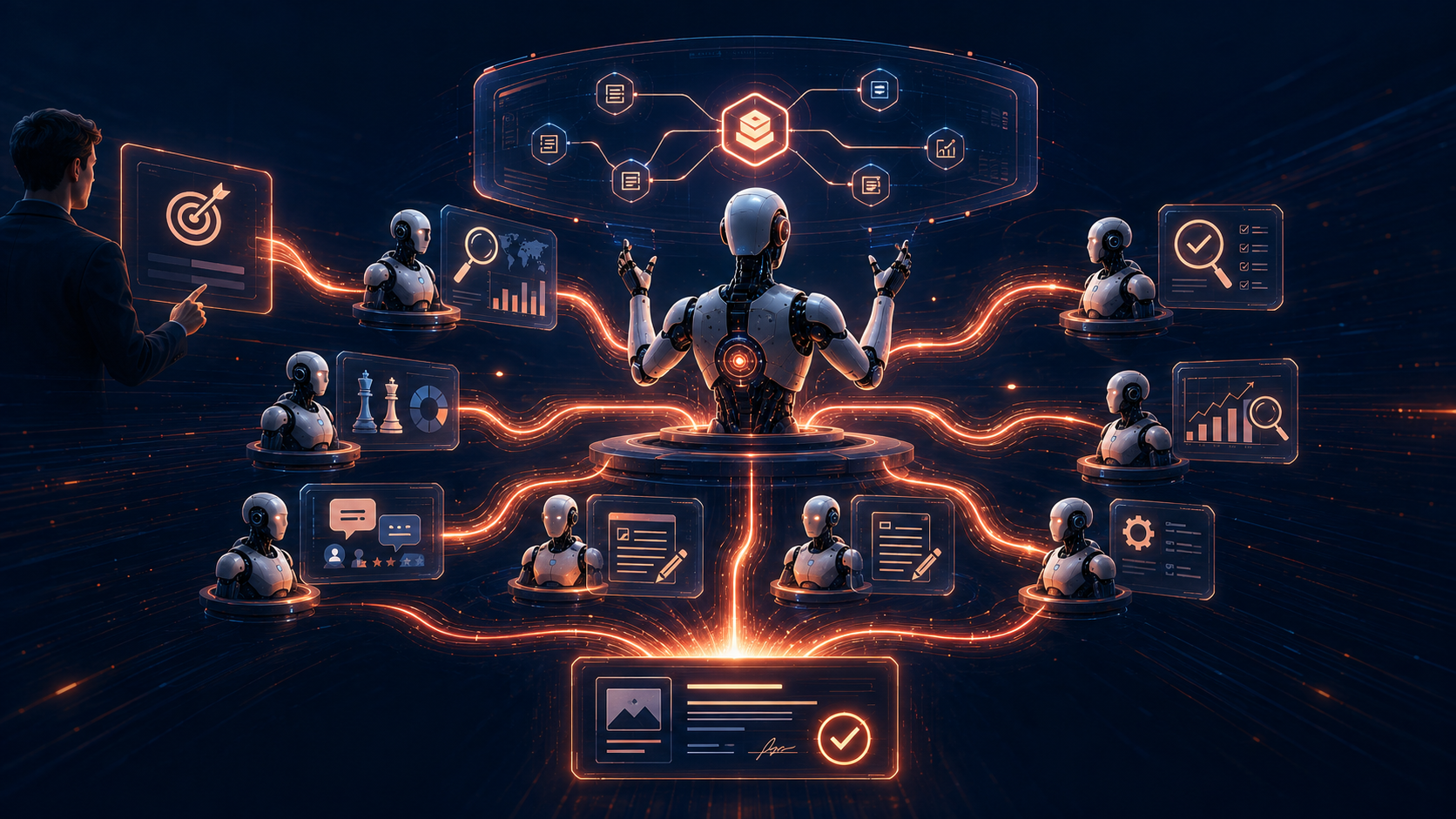
One of the most closely watched capabilities of Claude Fable 5 is its ability to function as an Orchestrator in a Multi-Agent system.
Rather than having a single AI handle everything, organizations adopting advanced Agentic AI are beginning to design systems where multiple agents work simultaneously — with Fable 5 as the “manager” that receives a goal from a human, breaks it into Sub-tasks, routes work to each agent, collects results, checks for consistency, and assembles the final output.
One pattern organizations have reportedly begun testing is a Product Research Workflow where one agent is responsible for finding and summarizing market data, another analyzes competitors, another collects customer feedback, and Fable 5 synthesizes everything into a Product Brief ready for the Product team to decide on.
Another is a Content Production Pipeline where separate agents handle Research, Outline, Drafting, Fact-checking, and SEO Optimization in sequence — with Fable 5 overseeing quality across the entire process and flagging points that require a human decision.
This kind of architecture allows work that once took multiple days to happen in Parallel, completing in significantly less time.
More Than a New Model — a Signal of Change
Claude Fable 5 may be just one of many AI models launched this year. But what’s more interesting than the product itself is the trend it’s reflecting.
The competition in AI going forward may no longer be about building the Chatbot that answers questions best. It may be the competition to build Agentic AI that can plan, execute, and deliver results continuously.
In the next few years, we may see AI Agents playing a role in increasingly complex work — from data analysis and software development, to project management and business decision support.
For organizations, this shift isn’t just a matter of technology. It’s a matter of redesigning work processes to fit an era where AI can genuinely collaborate with humans.
Conclusion
Claude Fable 5 is an example that reflects how AI is moving from being a tool to being part of how business operates.
Yet the challenge for organizations going forward may not be which AI model to choose. It’s designing the systems, data, and Workflows that allow AI to actually create business value.
At Muze, we believe AI delivers results only when it’s integrated appropriately with an organization’s work processes, business goals, and technology. As an Enterprise Tech Partner, we work with organizations to design and develop Digital Platforms, AI Solutions, and Business Workflows that are ready for the transition to the Agentic AI era.
Because in the end, the difference isn’t which AI model an organization uses. It’s how well the organization can turn AI’s potential into measurable business outcomes.
Contact the Muze team → muze.co.th/contact/