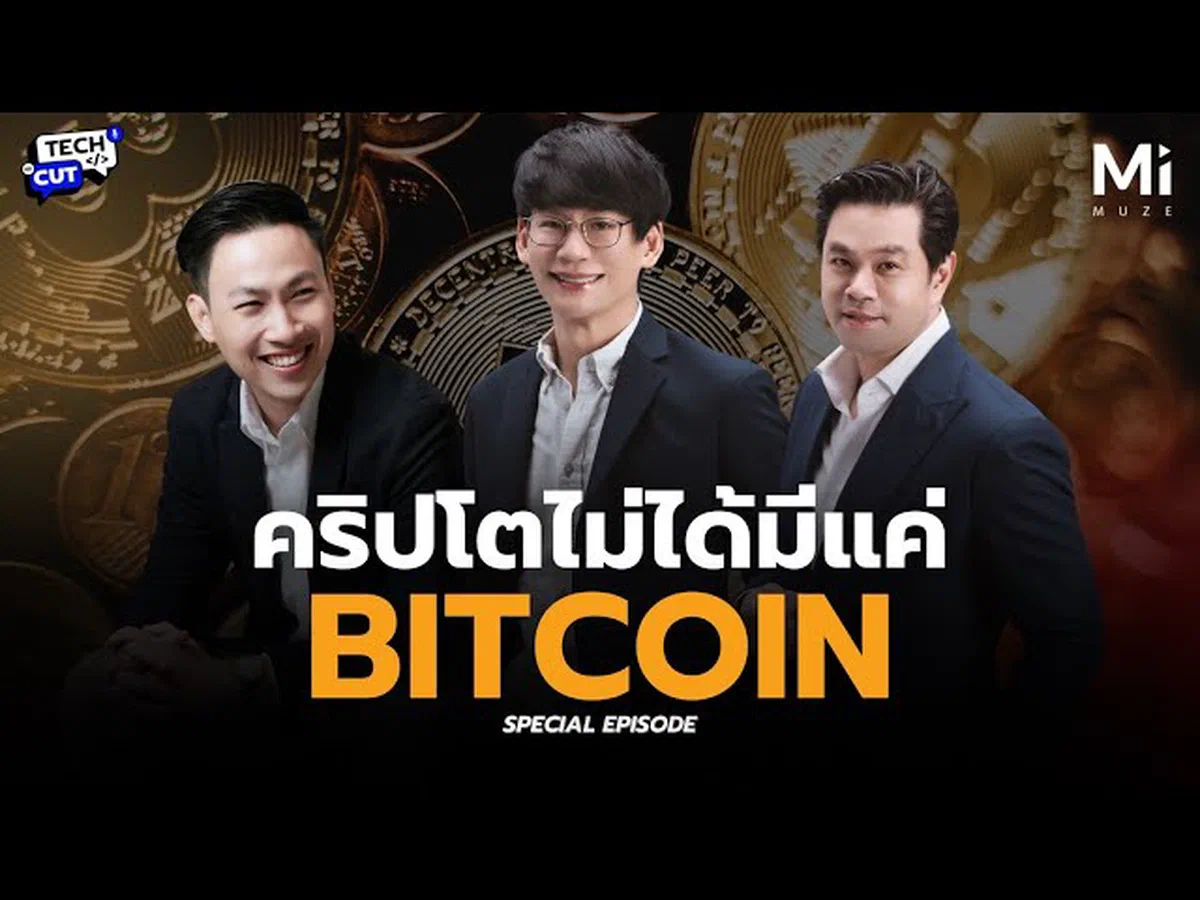
If you know Bitcoin but haven’t yet encountered Ethereum, Stablecoins, or Smart Contracts — you’re only seeing the first layer of the crypto world. This space has expanded far beyond a digital store of value. In this episode of TechCut, Bee (Peeranat Thoonsaengngam) from Muze decodes crypto’s evolution so you can keep up — safely.
1. From Bitcoin to Ethereum: The Operating System of the Digital World
Bitcoin is “digital gold” — designed to store value, freely transferable, and controlled by no one.
Ethereum goes a step further — not just a currency, but an operating system with Smart Contracts.
Smart Contracts are agreements that run as code:
- They execute automatically when conditions are met
- No intermediary needed, and no one can alter them once deployed
- They’ve enabled DeFi, NFTs, DAOs, and an entire ecosystem beyond currency
2. The Rise of Web 3.0 and the Blockchain Wars
Web 3.0 is the next generation of the internet — where users own their own data, not Google or Facebook.
Multiple blockchains are competing for territory in this new world:
| Blockchain | Strength |
|---|---|
| Ethereum | Largest, widest ecosystem |
| Solana | Very fast, low fees |
| BNB Chain | Cheap, versatile use cases |
| Polygon | Extends Ethereum’s scalability |
Each chain serves a different purpose — choosing the right one depends entirely on what you’re building or doing on it.
3. Understanding Exchanges and the Role of Stablecoins
Exchanges come in two main forms:
- CEX (Centralised Exchange): e.g. Binance, Coinbase — easy to use, but you don’t hold your own private keys (“Not your keys, not your coins”)
- DEX (Decentralised Exchange): e.g. Uniswap — you hold your own keys, but requires more technical knowledge
Stablecoins like USDT and USDC are Crypto pegged to $1:
- Used as a “safe harbour” between buys and sells
- Reduce exposure to market volatility
- Enable faster, cheaper cross-border transfers than traditional banking
4. Investment Psychology and the Importance of Knowledge
In a highly volatile market, the biggest enemy of any investor is their own emotions.
- FOMO (Fear of Missing Out): The fear of missing a run causes people to buy at the peak
- FUD (Fear, Uncertainty, Doubt): Fear drives selling precisely when holding is the right move
- Knowledge is your best risk management: When you truly understand what you hold, you make decisions from reasoning — not panic
Never invest in what you don’t understand — this rule applies in crypto, and in every other form of investing.
Closing Thoughts from Muze
The crypto world no longer revolves around Bitcoin alone — it’s evolving into the foundational infrastructure for finance, contracts, and ownership in the digital age.
At Muze, we follow this technology not just as investors, but as Tech People looking for opportunities to bring Blockchain into Solutions that give businesses transparency and genuine trustworthiness.
Key insights from TechCut — “Beyond Bitcoin: Why Knowing Just One Coin Isn’t Enough in Today’s Crypto World”