In Thailand’s HealthTech space, there’s one question that founders almost always ask too late:
“When should we start building the Platform?”
The right answer isn’t “when we have enough customers.” It’s the day you know you’re going to scale.
A platform designed to scale from the start costs far less to grow — in time, budget, and business risk — than one that gets patched together after the fact.
Thailand’s HealthTech market is growing across every segment — Digital Health, Fitness Tech, Mental Wellness, and Telemedicine. But what’s worth noting is that most Startups that fail to scale don’t fail because of Product-Market Fit. They fail because their Technical Infrastructure can’t keep up with growth. Platforms built for 100 Users break under 10,000. And the cost of a Rebuild is almost always higher than the cost of designing it correctly from the start.
From Real Problem to Platform: The Bestfitt Case Study
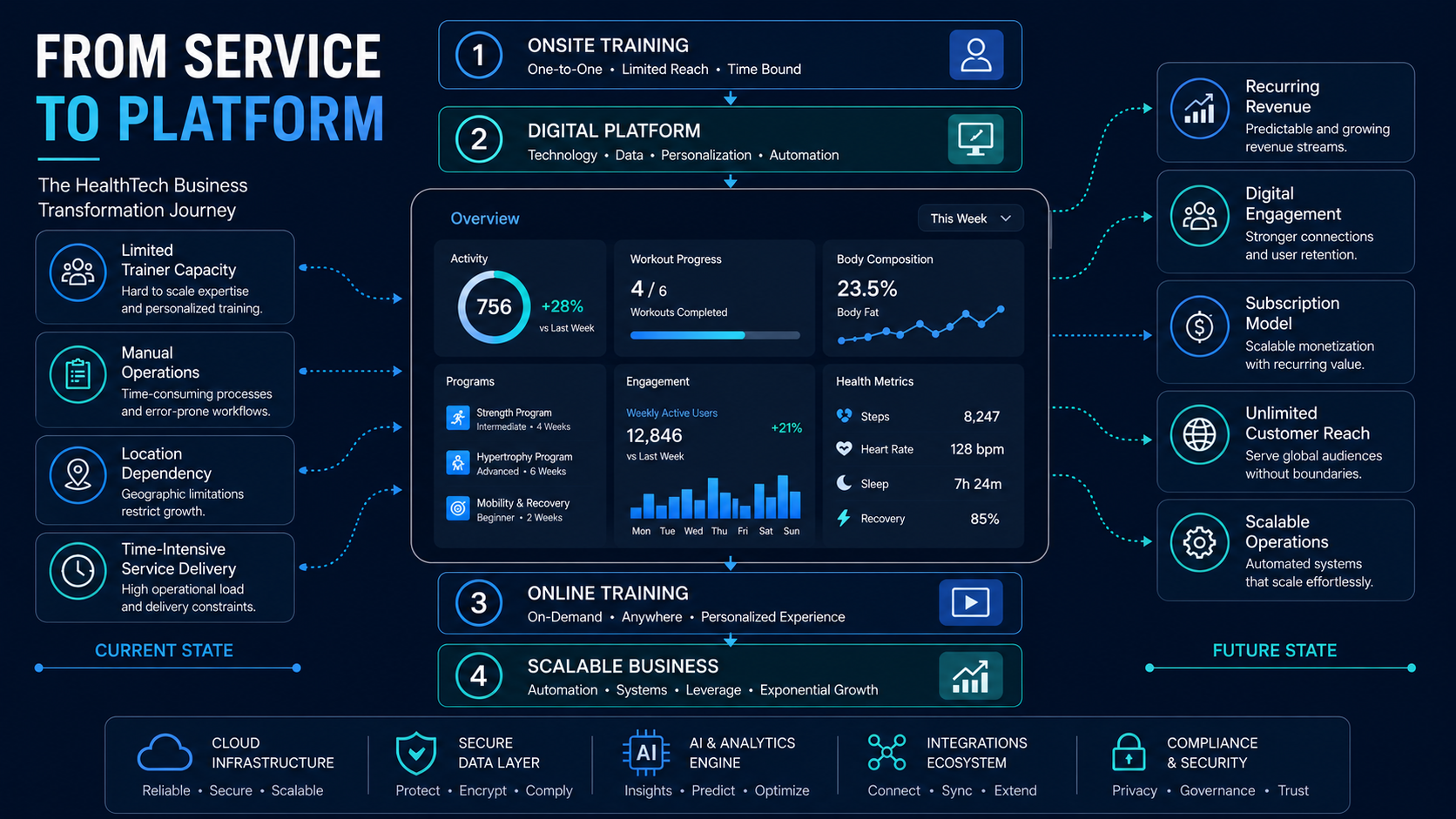
Bestfitt is a Fitness Training & Tracking startup that launched with an Onsite Training model — providing Personal Trainer services to an existing customer base. The business performed well enough, but had a clear ceiling: growth was constrained by the number of Trainers and available hours.
The constraint of an Onsite Training model isn’t about Service quality — it’s about Unit Economics. Revenue is tied to the number of Trainer Sessions per day, and every additional Session comes with a nearly proportional increase in Variable Cost. That’s the opposite of a Platform model, where Cost per User decreases as the number of Users grows. The difference between Linear Growth and Exponential Scalability is one of the most important concepts for any Service-based Founder to understand before deciding the direction of the business.
The real challenge for Bestfitt wasn’t “where do we find new customers?” It was: “How do we design a system that grows the customer base without scaling costs at the same rate?”
That’s where Technology came in — and where Bestfitt made the decision to build the Bestfitt Online Training Platform together with Muze.
Why Build the Platform First, Rather Than Wait
Muze’s Business Development team started by looking at the full Business Model, not just the feature scope.
What both sides discovered: if Bestfitt continued to serve only its existing customer base through Onsite Training, it would never generate new revenue at the scale it needed.
The business decisions that followed were critical:
Phase 1 — Build the Platform for Onsite Training first, so the existing customer base could use it, test it, and give Feedback in a real environment — without rushing to enter a new market before the system was ready.
Phase 2 — Expand into Online Training & Tracking to reach a significantly larger new customer segment, using the existing Platform as the foundation.
This strategy looks like more work in the short term, but it substantially reduces investment risk — because the system gets validated by real users before being scaled up.
What many Startups miss is skipping Phase 1 entirely and jumping straight to building an Online Platform. This sounds faster, but it’s significantly riskier — because every assumption about User Behavior, Feature Priority, and Technical Load comes from Hypothesis, not real data. When the Product launches and those assumptions are wrong, the cost of a Pivot or Rebuild far exceeds what testing with Existing Users in Phase 1 would have cost.
A Business Model Built for Mutual Return
One of the most important lessons from this project is that a good Business Model has to be designed correctly from the start — not figured out after the business proves itself.
The reality of Platform projects is that Scope can rarely be defined 100% on day one. What real users need, how the business will evolve, and which features will actually create value all take time to validate. Designing a Business Model that accommodates this Flexibility from the beginning is just as important as designing the Technical Architecture.
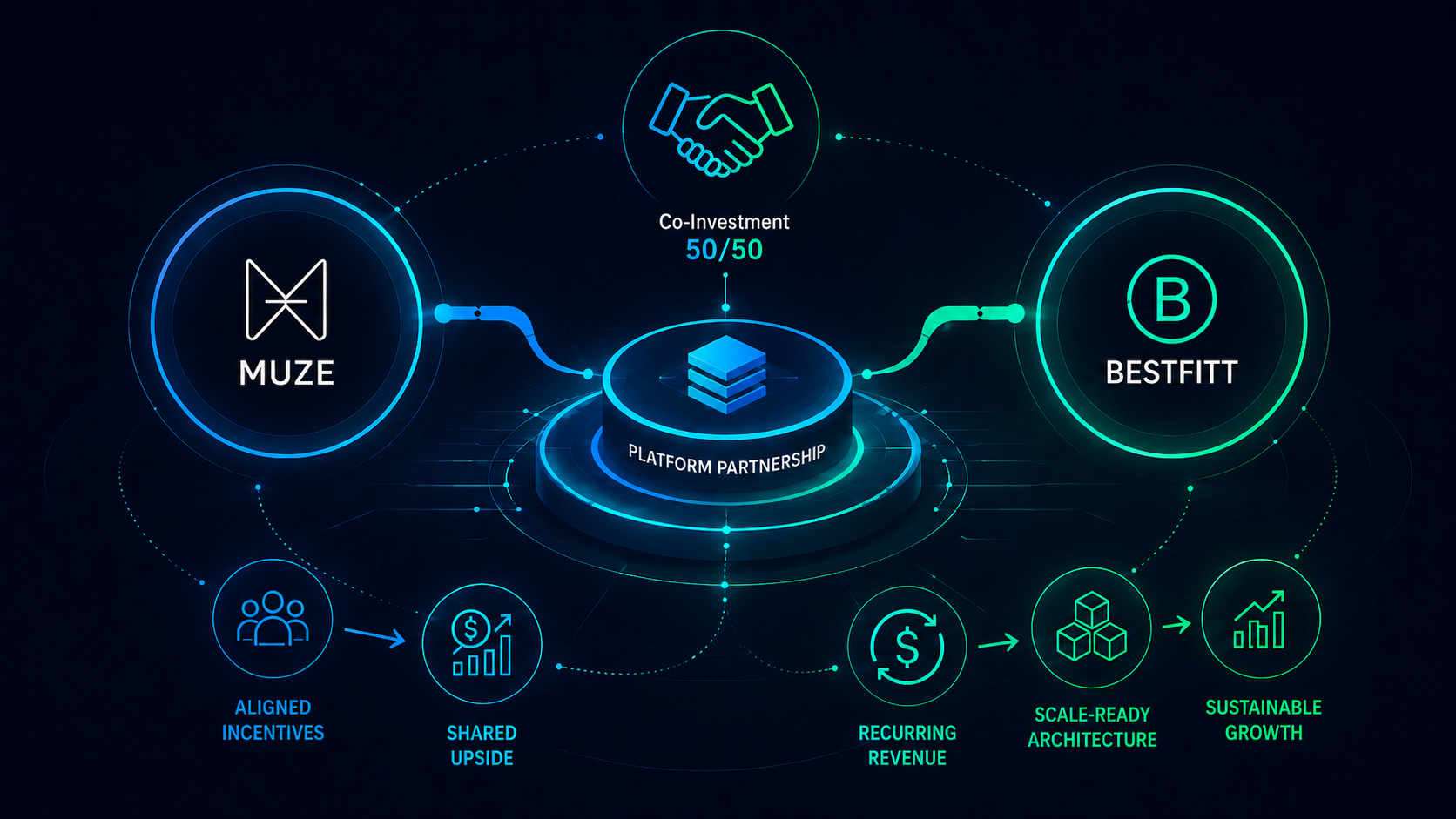
Instead of a traditional Fixed-fee or Time & Material model, both parties agreed on a Co-Investment model for Platform Development over the term defined in the partnership agreement.
The business reasoning behind the model:
- Bestfitt didn’t have to absorb the full development cost during the period before Online revenue existed — allowing the team to focus on validating product-market fit without cash flow pressure.
- Muze has a direct stake in the Platform’s long-term success, which creates real incentive for the development team and Product Owner to work toward outcomes — not just deliver against Scope.
In practice, the Co-Investment Model changes how the development team approaches Architecture Trade-offs. When Muze has a direct stake in the Platform’s success, choosing a Solution that genuinely scales long-term matters more than choosing whatever Delivers fastest with the highest Technical Debt. Every Technology Decision gets evaluated from a Business Outcome lens, not just Engineering Convenience.
This model reflects a broader truth: scaling through a Platform isn’t just a Tech decision. It’s a structural business expansion that requires every Stakeholder to have real skin in the game.
What Happens When Tech Is Scoped From Day One
The Muze team on the Bestfitt project included a Product Owner, Developers, and QA — working together in a Scrum structure. In the early phase, the focus was on Analysis and designing an Architecture that could support future Scale.
Core features built in Phase 1:
- Planning & Personal Info — a system for capturing user data and designing personalized workout plans
- Daily Summary Dashboard — giving both Trainers and Users a Real-time view of progress
- Tracking — a training log system that can be extended into a behavioral data foundation over time
The system was built on LINE OA — the channel Bestfitt’s Onsite customers were already using. This was a smart UX decision: it dramatically reduced the friction of adopting a new Platform. Customers didn’t need to download a new app or learn a new interface. They just used LINE, which was already open every day.
Building on LINE OA also directly improved Data Quality. Users who engage through a familiar Channel are more likely to log Workouts, report Progress, and respond to Automated Reminders — resulting in richer Behavioral Data. That data is the foundation Phase 2 depends on for Personalized Training Plans and AI-driven Progress Recommendations.
The QA process included Smoke Tests and End-to-End Product Flow Reviews to check both Logic and Design before Production — reflecting the reality that investing in quality early costs far less than fixing problems after launch.
Lessons HealthTech Startups Should Take From This
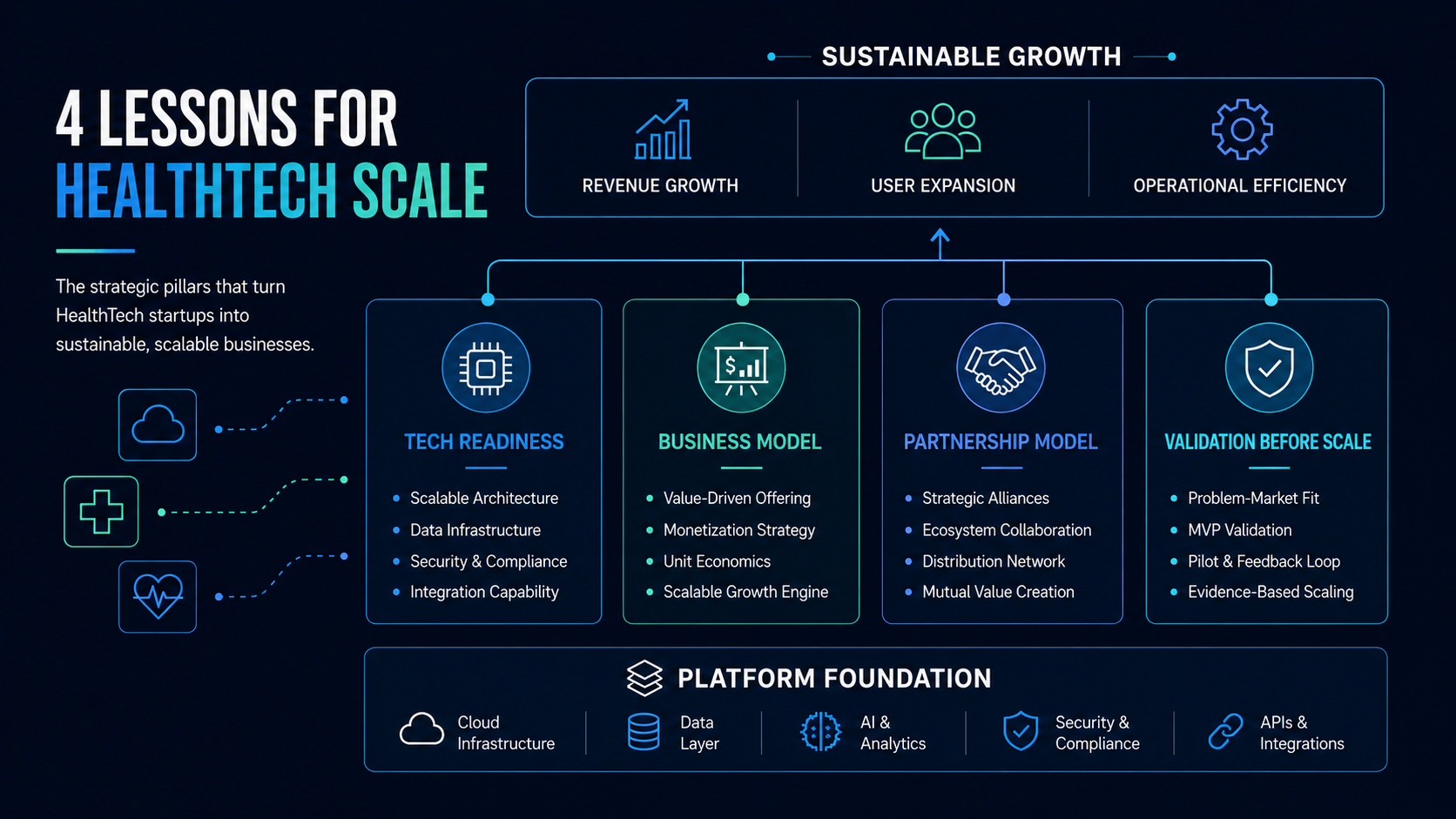
1. Technology Readiness doesn’t wait for the business to be ready first
Bestfitt didn’t wait for a massive online customer base before starting to build. What they did was design the Architecture to support Scale from day one — and validate it against the existing customer base first.
2. Business Model and Tech Architecture must be designed together
One of the most common mistakes in HealthTech is building the app first, then figuring out how to monetize it. This project proved that thinking through both at the same time gives the system a clear direction and a Scope that stays manageable.
3. Co-Investment Model shifts the relationship from Vendor to Partner
When a Tech Partner has a direct stake in the Platform’s success, the quality of development and the commitment to problem-solving change automatically. The difference between “delivering the Scope” and “making the Platform succeed” is exactly what the Co-Investment Model creates.
4. Validation before Scale isn’t delay — it’s risk reduction
Starting with Onsite Training before expanding to Online might look conservative. In reality, it’s the best Risk Mitigation design available for a Technology investment — because every Baht invested in Phase 1 gets validated by real users before being multiplied in Phase 2.
Conclusion: Tech Isn’t a Cost — It’s the Infrastructure for Scale
The Bestfitt story shows that HealthTech Startups that successfully scale don’t have a special formula. They simply think about Tech Infrastructure on the same day they think about Business Model.
For HealthTech Startups at an inflection point, the question to ask isn’t “what Technology do we need?” It’s:
“If our business grows 10x next year, can the Tech we have today handle it?”
If the answer is “not sure” — that’s the signal that it’s time to have a conversation about Platform Architecture.
For HealthTech Startups between Validation and Scale, investing in Platform Architecture isn’t a cost to defer until Revenue proves the business. It’s the Infrastructure that makes Revenue possible at the scale you need. The Bestfitt story proves that when Technology Decisions are designed to align with Business Goals from day one, every subsequent Phase has clearer direction, more efficient investment, and faster Scale.
If your business is looking for a Tech Partner who doesn’t just deliver against Scope, but is ready to design a Business Model that’s flexible and grows with your Platform from day one — the Muze team is happy to listen and work through the right approach together.