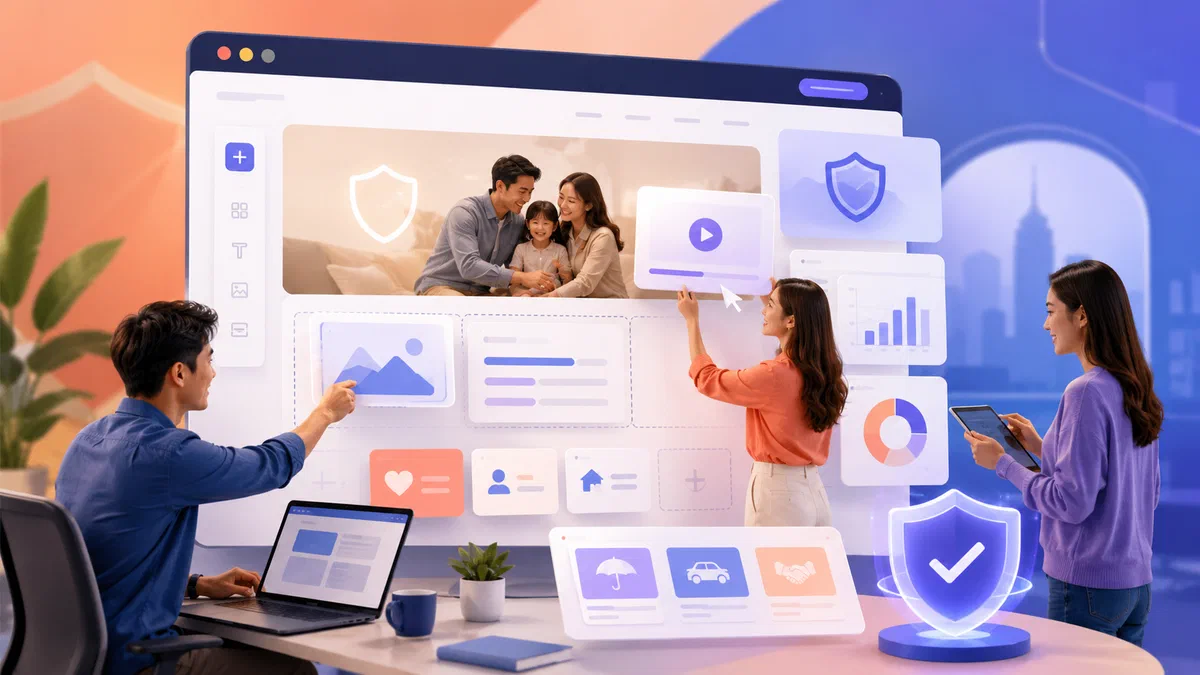
In Thailand’s insurance industry, speed is competitive advantage.
The best car insurance promotion this month may not be the same next month. Popular health insurance plans shift with the seasons. Partner insurers launch new products almost every quarter. And the global InsurTech wave is pushing market players to respond to customer needs faster than ever before.
But there’s one question many Insurance Brokers in Thailand still can’t answer comfortably: if you need to update content on your website today, how long does it take?
The common answer is “wait for IT” or “submit a ticket to the developer” — which in practice means each content update can take days or weeks. And that’s time your competitors are using to capture the opportunities you missed.
The Hidden Problem in Traditional Website Architecture
Most Insurance Broker websites are built with one implicit assumption: that the website exists to display information, not drive business. That assumption shapes every architectural decision made along the way — and the result is a system where the marketing team can barely touch anything without routing through a developer.
Every change, no matter how small — updating a promotion banner, correcting a premium range, adding a FAQ entry, publishing a seasonal campaign — requires the same process: request, prioritize, develop, test, deploy. In a business where content freshness directly affects conversion, this pipeline is a structural disadvantage.
The problem becomes exponentially harder when the business grows. A brokerage that started with two or three insurance lines eventually builds a portfolio spanning health, auto, life, travel, property, and commercial coverage. Each product line has its own sub-products, pricing tiers, promotional windows, and contact flows. Managing that breadth of content through a single developer queue is not just slow — it actively prevents the business from competing at the speed the market demands.
HUGS Insurance: A Challenge That Needed a Long-Term Answer
HUGS Insurance Broker is an insurance brokerage with a portfolio covering both personal and corporate insurance — health, auto, life, travel, personal accident, pet, home, property, marine, engineering, and liability products spanning more than 20 insurance types in total.
When HUGS Insurance decided to revamp their entire website in 2026, the brief wasn’t “make it look better.” It was: build a system where the internal team can work faster without depending on developers at every step — and build it in a way that scales as the product portfolio grows.
Muze Innovation came in as Tech Partner, responsible for designing and building the full system from scratch: a Next.js and TypeScript frontend paired with a PayloadCMS backend, running as a decoupled (headless) architecture where both services are independently deployable. The project ran in two-week sprints with milestone-based delivery, so HUGS could validate progress and provide feedback throughout — rather than waiting until the end to discover misaligned expectations.
What Changed When Marketing Could Own Content
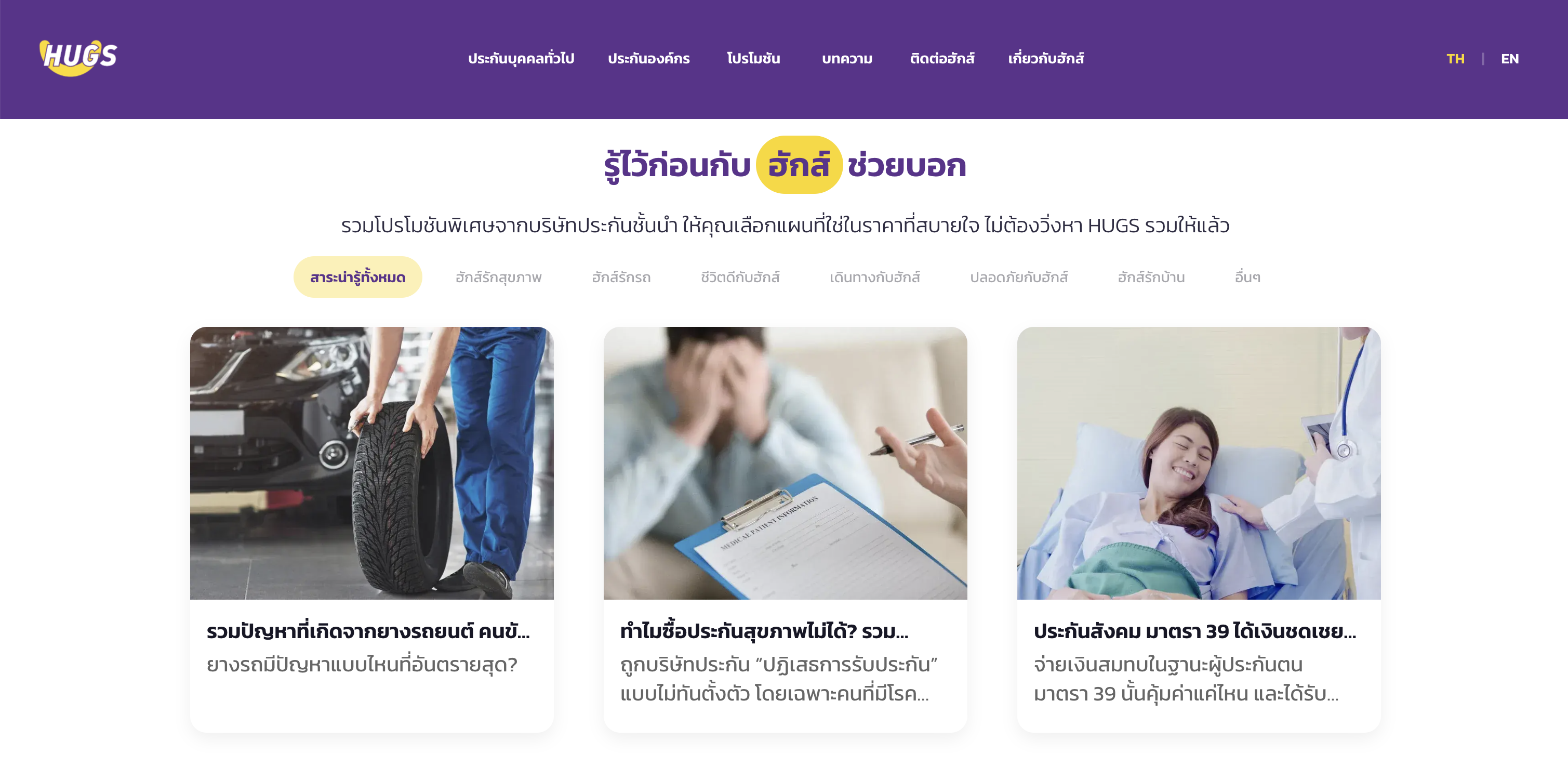
At the core of the system is a Headless CMS built on PayloadCMS, designed specifically so the HUGS marketing and content team can manage the website end-to-end without writing a single line of code. From the admin panel, the team can update insurance plan details, add partner promotions, publish articles, manage FAQ entries, and edit career listings — all without involving a developer.
On the technical side, the frontend uses Incremental Static Regeneration (ISR) with a 60-second revalidation window. In practical terms, this means any change saved in the CMS goes live on the website within under a minute — no deployment, no approval chain, no waiting. For a business that needs to respond to partner announcements, regulatory changes, or competitor moves in near real time, this is a meaningful operational shift.
The content infrastructure is backed by PostgreSQL with a dedicated CMS schema, and the entire system is containerized with Docker for consistent deployment across environments. Both the frontend and backend are built to run independently, which means the website’s public-facing performance is never affected by CMS activity.
The system also supports full bilingual management — Thai and English — through a single admin interface using next-intl. For HUGS, whose client base includes both Thai nationals and expatriates, this eliminates the parallel-update problem that plagues most bilingual sites.
Designing User Journeys for 20+ Insurance Products Without Losing Customers
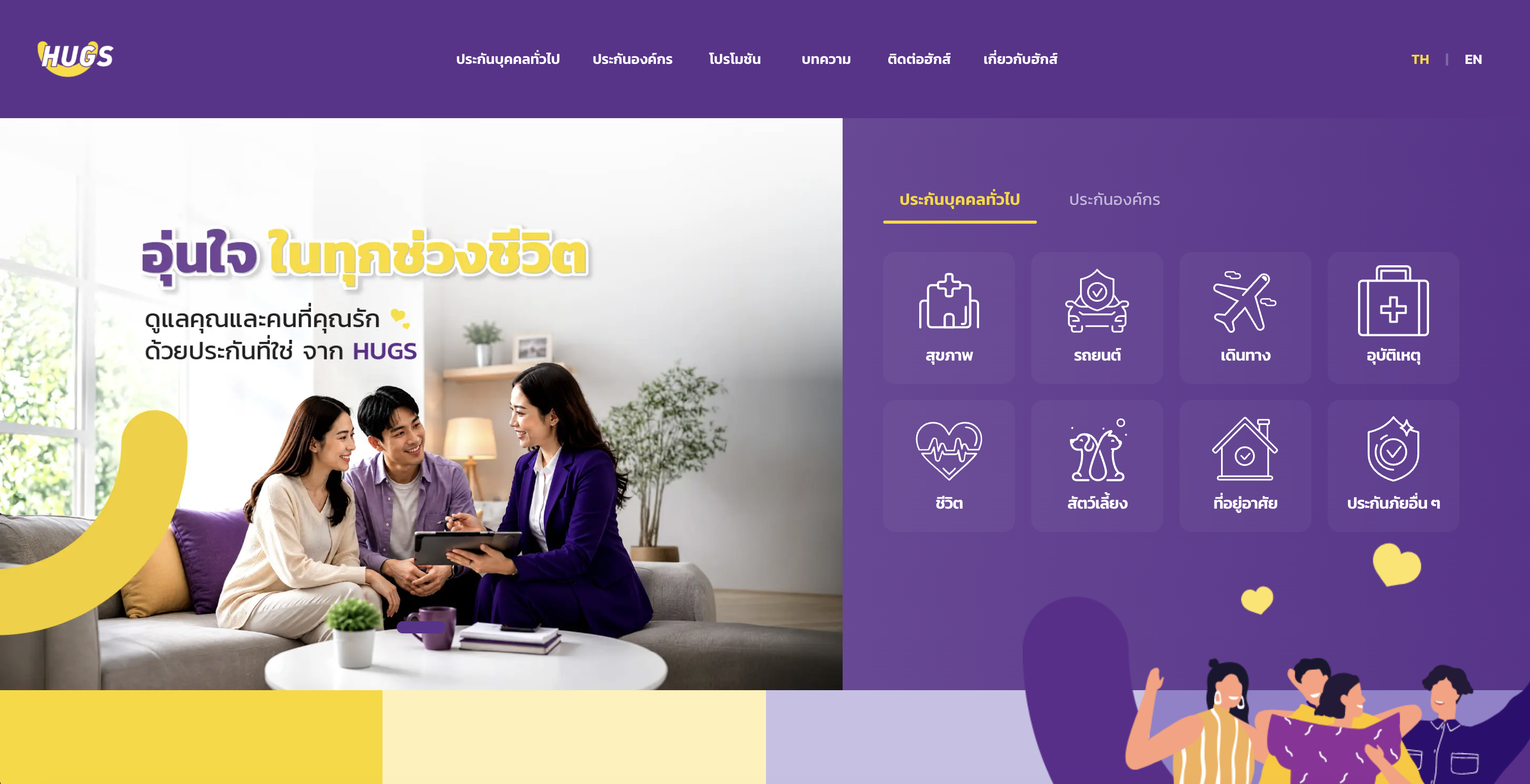
The most complex design challenge in this project wasn’t the CMS. It was building a single website that could guide customers through the right decision flow for more than 20 distinct insurance products — each with fundamentally different buying behavior.
Personal insurance products like health, auto, and travel insurance involve relatively quick, comparison-driven decisions. Commercial products like engineering insurance, marine cargo, and directors and officers liability require multi-step qualification and agent involvement. Designing a single site architecture that serves both audiences without confusing either is a non-trivial UX problem.
Muze’s approach was to build a dedicated user journey for each insurance category. Every product type has its own plan comparison page, a coverage customization flow, and a contact agent page — all optimized for how that particular type of buyer makes decisions. The flows aren’t templates reused across products; they reflect the actual behavioral differences between someone shopping for pet insurance and someone managing a cargo insurance inquiry for an enterprise client.
When a prospective customer fills out a contact form, the system routes the lead notification via SendGrid to the team responsible for that specific insurance type — so health insurance inquiries go to health insurance agents, and commercial liability inquiries reach the right specialist, immediately.
Lessons for Insurance Brokers Considering a Digital Investment
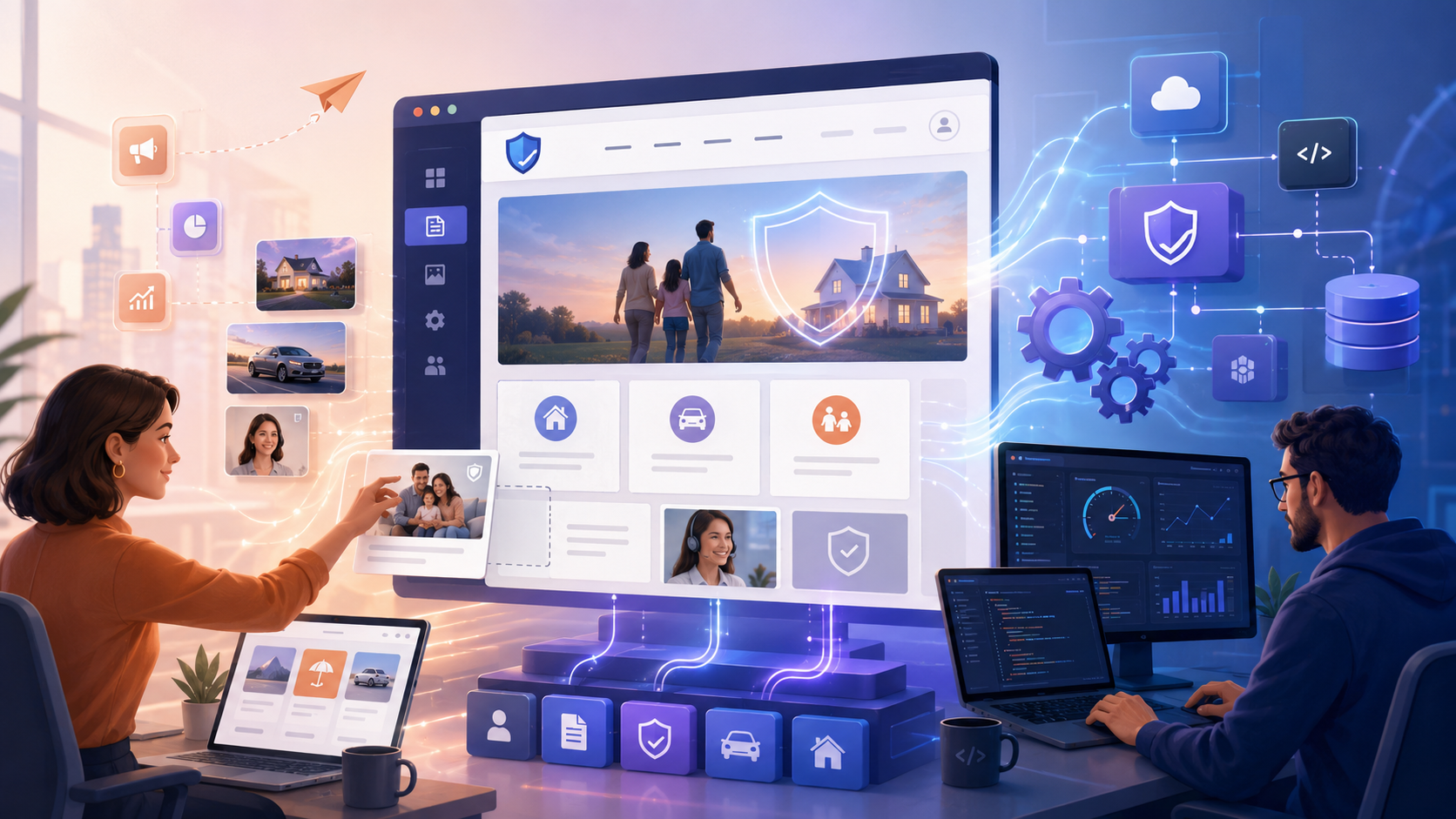
The core lesson from working with HUGS Insurance is this: the right website investment isn’t primarily a technology decision. It’s a business decision about the organizational capability you want to build.
An Insurance Broker whose marketing team has to wait for a developer every time they want to update content is paying a hidden cost every day — measured not in direct expenses, but in the competitive opportunities that slip away while the queue clears. A competitor with a more flexible system can react to the same market conditions within hours.
A website that genuinely serves an insurance business in today’s market has to answer two questions at once: can customers find what they need and reach the right person easily? And can the internal team keep the website accurate, relevant, and responsive without friction?
If the answer to either is “no,” that’s not a cosmetic problem. It’s a structural one — and the fix requires rethinking the architecture, not just the design.
Contact the Muze team → muze.co.th/contact/