TechCut — Process & Methodology · AI, Content Workflow, B2B Trust
Most organizations have a substantial amount of real knowledge sitting inside their teams.
That knowledge might live in meetings, in proposals, in project retrospectives, in the experience of senior people, or in the lessons the team earned from working directly with clients.
The problem is, this knowledge rarely gets translated into content consistently.
Not because organizations lack insight — but because turning insight into a readable, well-structured, publish-ready article takes time.
This is the precise point where AI is beginning to change how B2B content gets made.
When people talk about AI and content creation, the question that usually comes up is: “Will AI replace human writers?”
But from Muze’s experience building the TechCut Blog, that may not be the right question.
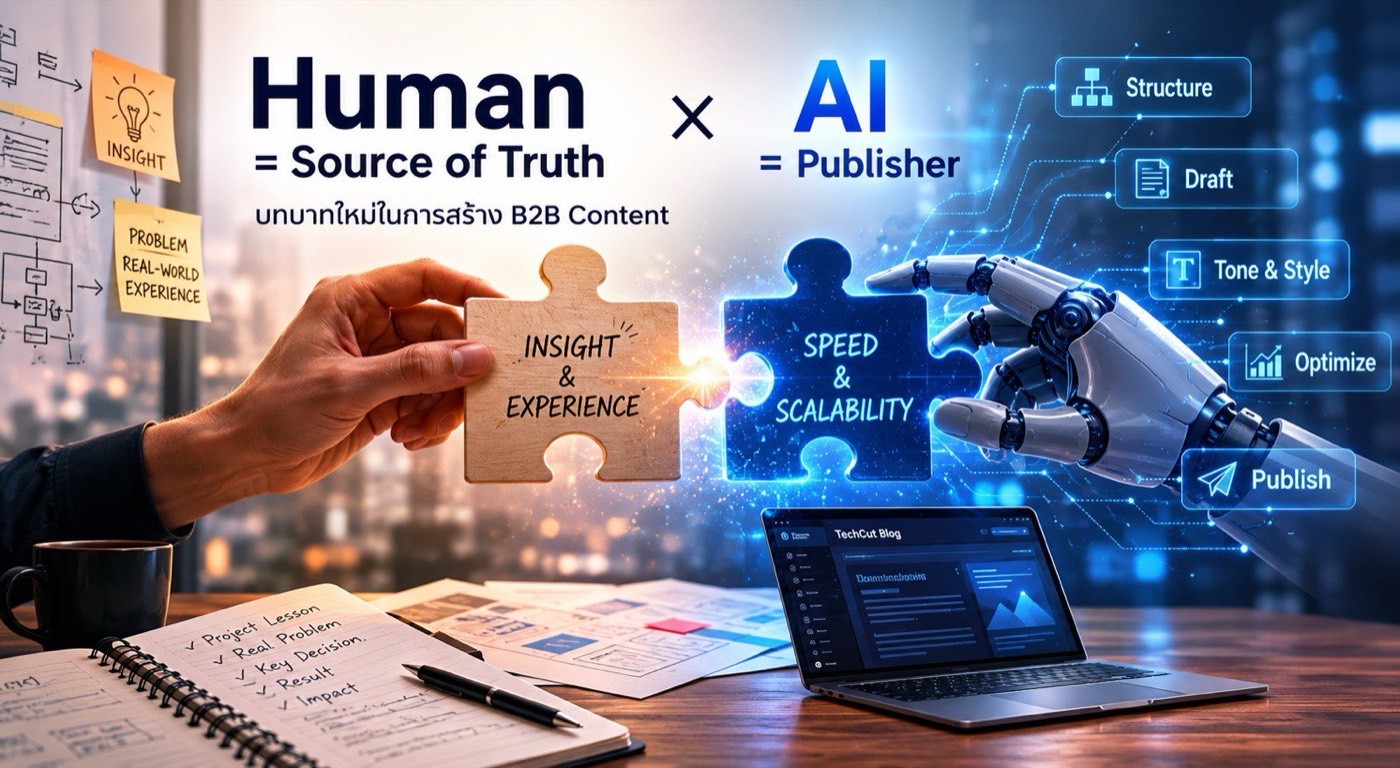
Because what’s actually happening isn’t AI replacing people — it’s a new division of roles between human and AI.
Humans serve as the source of truth. AI serves as the publisher and accelerator.
These two roles are clearly distinct, and neither can function without the other.
What AI Does Well
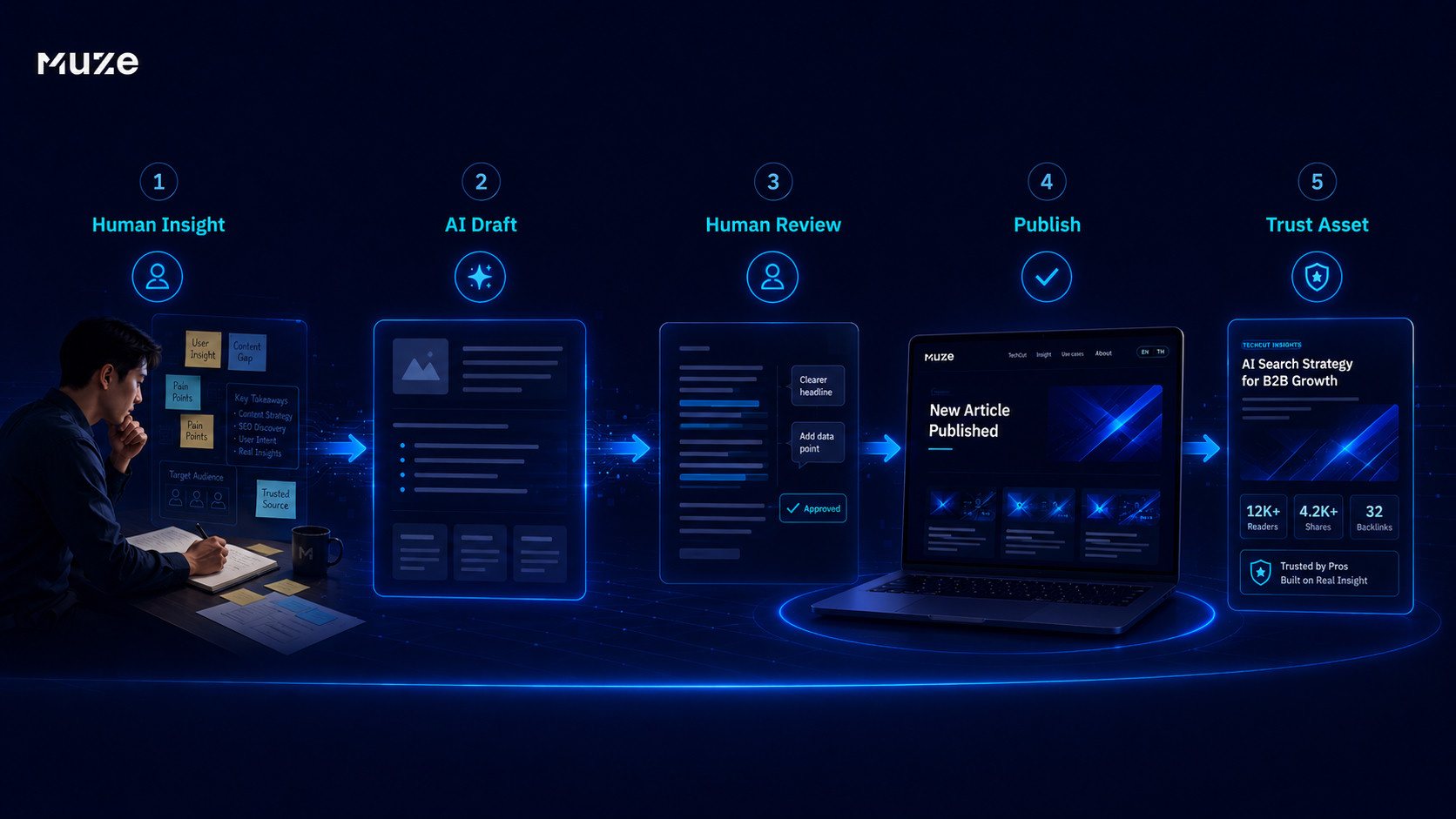
AI is highly capable at work involving organizing ideas and producing content:
- Turning raw ideas into readable structures
- Generating first drafts quickly
- Maintaining consistent tone
- Converting articles into different formats — Markdown, Google Docs, CMS
- Checking content completeness
- Scoring content against defined frameworks
- Prioritizing which articles should be published first
These are genuinely important tasks in real content production — but they don’t require the deepest domain expertise. What they require is time, consistency, and the ability to format things for use. This is where AI significantly reduces friction.
Where a team might once have had great ideas but no time to organize them, AI can turn those ideas into structured drafts quickly — so the team doesn’t start from a blank page, but from a working draft they can sharpen and refine with their actual expertise.
What Humans Do That AI Cannot
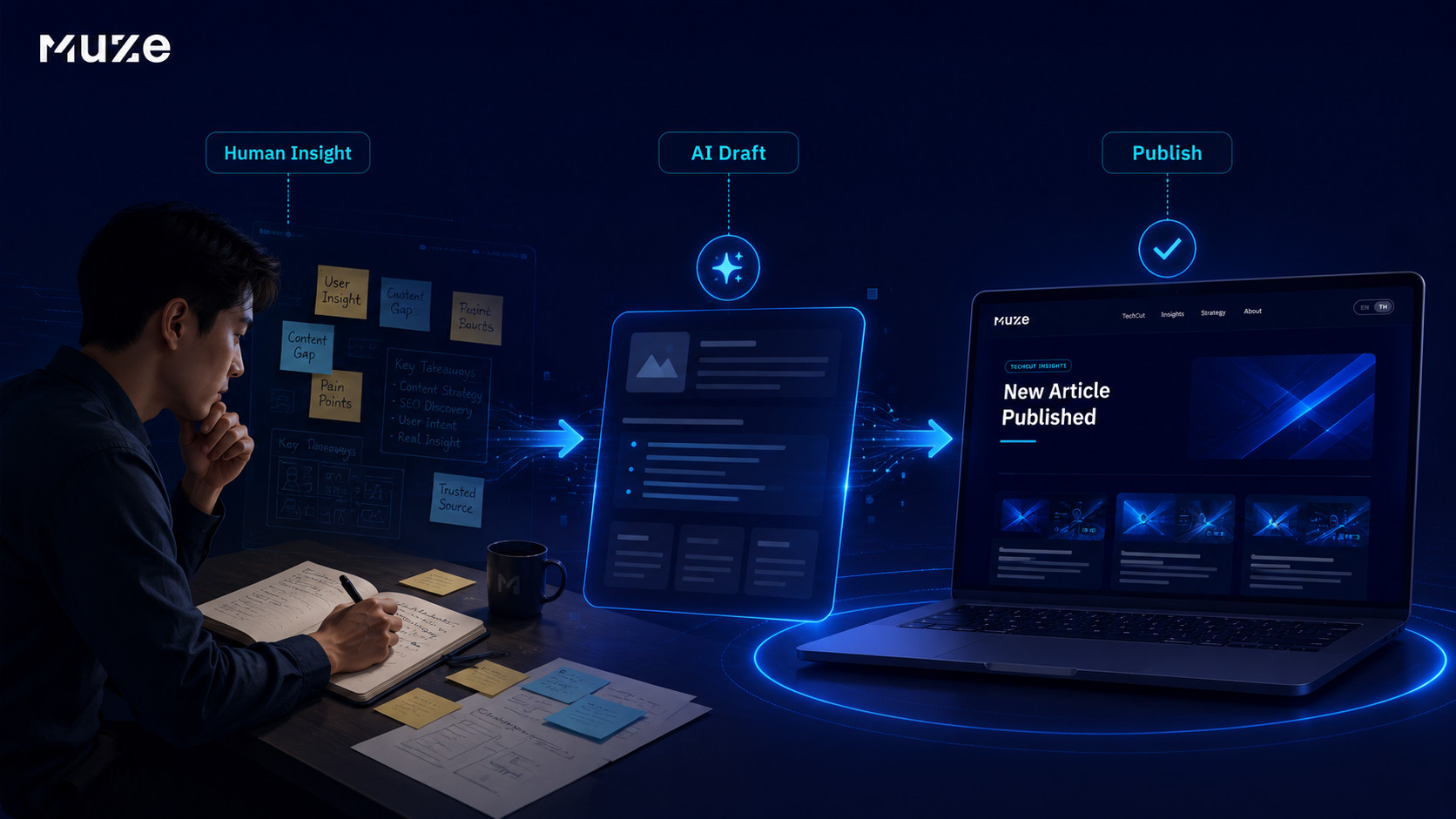
What makes B2B articles genuinely valuable isn’t polished language — it’s truth from experience.
For example:
- “CH3+ grew from 1 million to 12 million MAU” — a real number from a real experience
- “The live streaming system has to handle peak traffic in short bursts, not just average load” — a lesson that only comes from building the system
- “The hardest part of the SFV SDK wasn’t video playback — it was token exchange and integration into the Super App ecosystem” — an insight most people couldn’t see from the outside
AI can write the sentence “the system involved multiple layers of complexity.” But AI doesn’t know which layer was the actual bottleneck — unless a human provides that.
This is the critical difference between content that “reads well” and content that “earns trust.”
For a B2B company, credibility doesn’t come from declaring what you can do. It comes from demonstrating how deeply you understand the problem.
The Difference Between an Ordinary Article and One With Insight
A clear example is the 7-Eleven Live Commerce article.
In the first draft, the article covered all the features completely — video, commerce, SDK, Super App, user experience. But it still read like a general overview. It didn’t have the feeling that “only a team who actually built this would know this.”
When the human added context:
- This system had to run inside a Super App serving an enormous user base
- The SDK had to be embedded without affecting the stability of the parent app
- Token exchange was the component that required the most careful design
- Making the shopping experience seamless mattered more than adding features
The article transformed immediately — from a feature walkthrough into an article about technical decisions under real business constraints.
This is the line AI alone cannot cross. AI can help write. But humans have to define what the real issue is. AI can organize. But humans have to determine what should be said — and what shouldn’t.
A Framework for Human–AI Collaboration
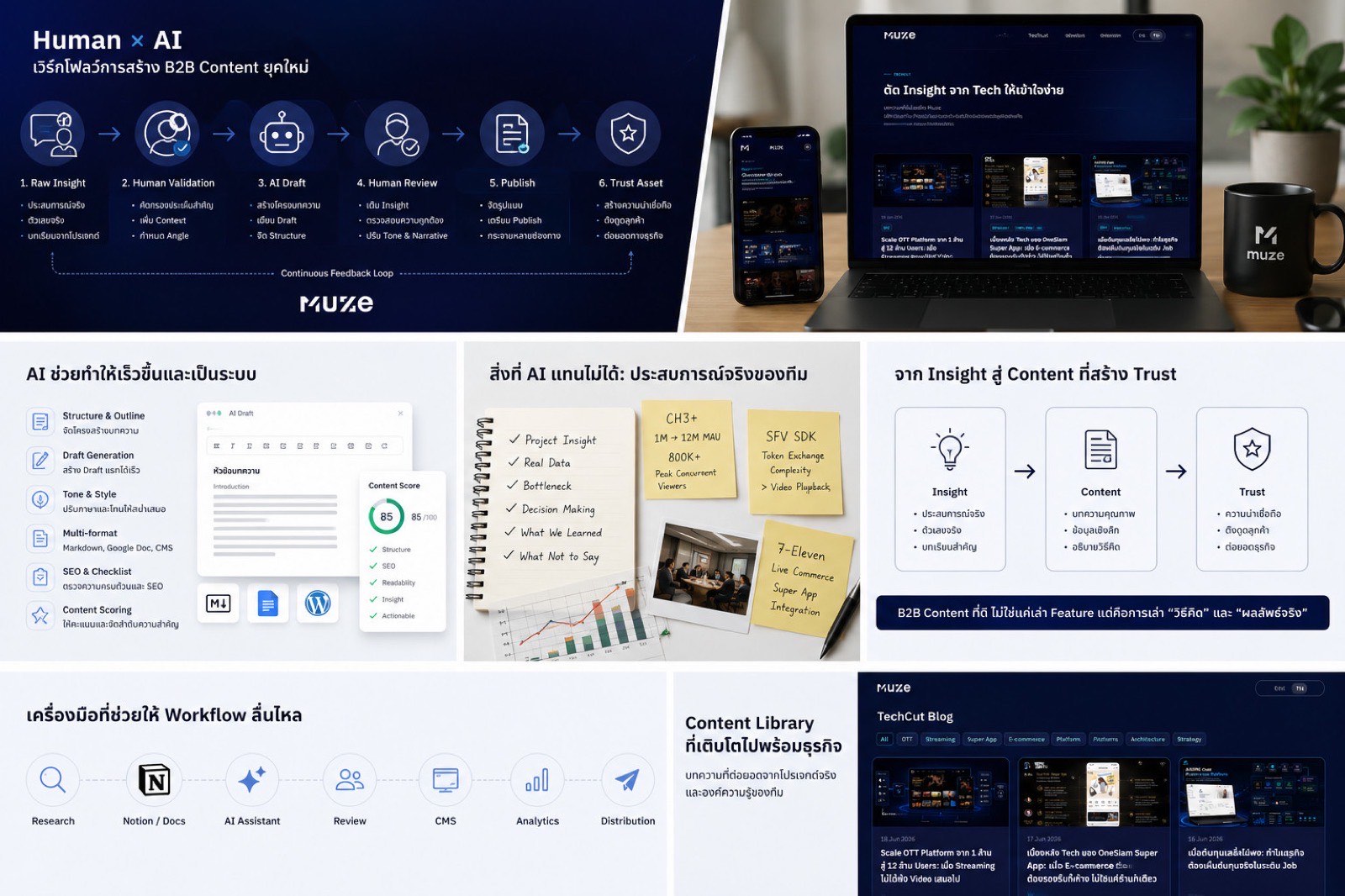
From building the TechCut Blog, Muze found that the workflow that actually works is one with clearly separated roles.
Humans define what matters:
- What did this project teach us?
- What was the actual problem?
- Which numbers are significant?
- Which decisions are worth sharing?
- What’s too sensitive to mention?
- Which insights most reflect the team’s expertise?
AI converts that into publish-ready content:
- Article structure and outline
- First draft
- Language refinement and readability
- Headlines and section breaks
- Formatting for website
- Publish preparation
When roles are divided this way, AI doesn’t diminish the value of human input — it makes human knowledge available faster and more clearly.
Previously, team knowledge might have stayed inside a few people’s heads, or only been used in client presentations. With a good workflow, that knowledge can be continuously converted into a content library.
Content Library as a Long-Term Trust Asset
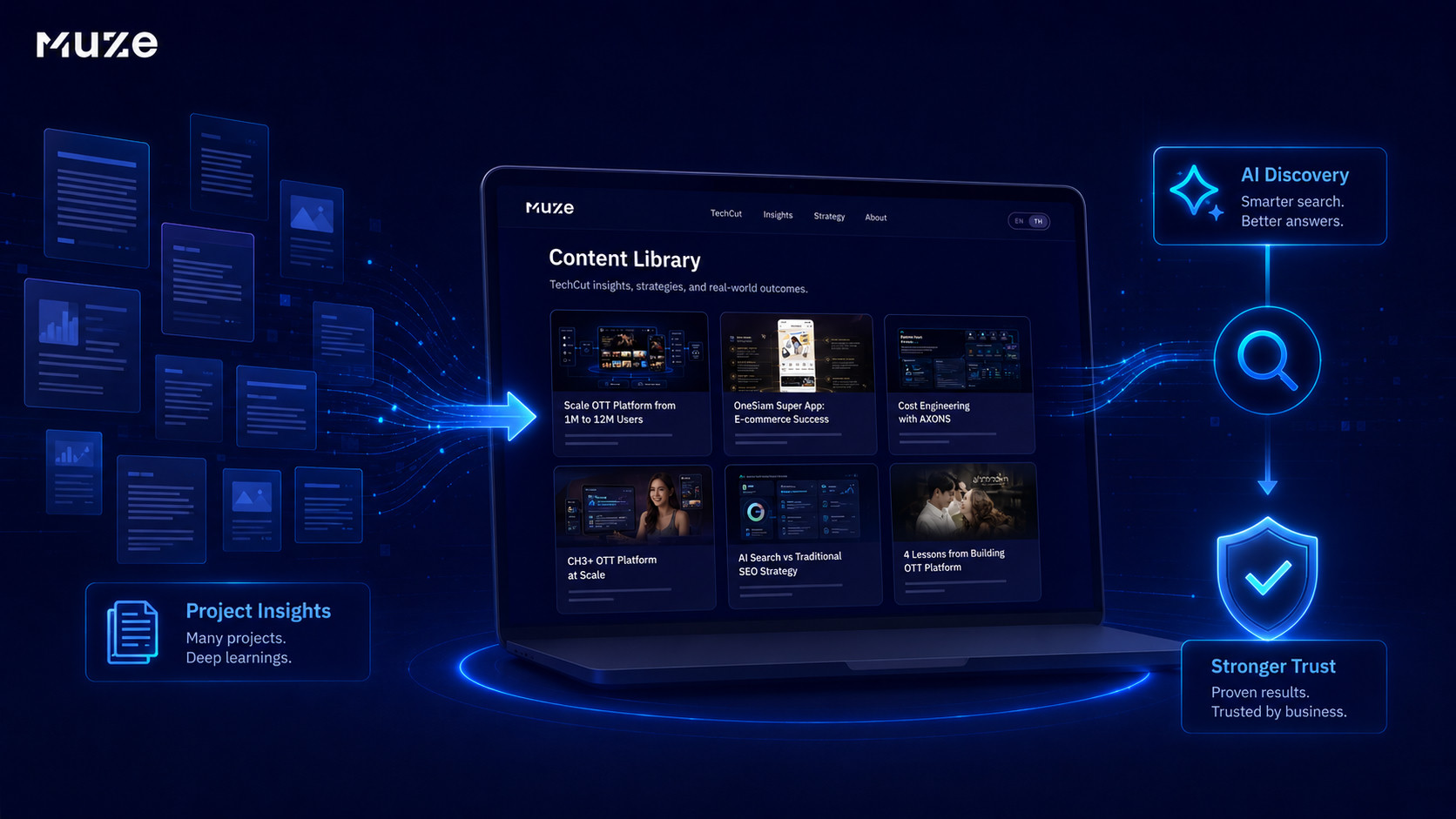
Over time, that content library becomes one of the organization’s most important assets — because it shows clients that the company doesn’t just execute. It has a way of thinking, a base of experience, and a genuine understanding of complex work.
Good B2B content should leave readers knowing:
- This company understands real problems
- They’ve encountered real complexity
- They have an approach that leads to real outcomes
- They can translate their experience into thinking others can learn from
AI can accelerate writing significantly — but the credibility still has to come from the team’s real experience.
So the question isn’t “Can AI write instead of people?”
The better question is:
“How do we use AI to surface the team’s real knowledge faster, more clearly, and with greater impact?”
For Muze, this is the new role of AI in B2B content creation. Human as source of truth, AI as publisher — and when those two work together, the speed and quality of content changes in a meaningful way. Not just because AI makes content cheaper to produce, but because AI enables insight that was once scattered across an organization to be continuously converted into content that builds trust.
If your organization has real knowledge inside the team, but hasn’t yet found a way to turn it into trust-building content consistently:
Talk to Muze about designing a content workflow for the AI era →