In Thailand’s insurance industry, digital competition intensifies visibly every year. Today’s consumers always research and compare insurance plans online before making a purchase — whether it’s health, auto, or life insurance. This behavior has transformed the website from a nice-to-have into the most important competitive arena for Insurance Brokers. Whoever responds faster, more clearly, and more conveniently online is the one who gets the lead.
And yet despite knowing this, there’s one question many Insurance Broker executives in Thailand still can’t answer clearly: “How much revenue is our website actually generating?”
The most common answers are “it’s there for customers to look up information,” or “it’s one of our PR channels,” or occasionally “we just rebuilt it 2-3 years ago, it should be fine.” These answers are a signal that the website is still functioning as an online brochure — not a Sales Engine that works on behalf of the business even outside office hours.
The problem isn’t bad intentions from the team. It’s a structurally flawed decision-making process from the start. When organizations decide to build or revamp a website, multiple stakeholders come with different goals. Marketing wants high traffic and sales-ready leads. IT wants stability and low maintenance overhead. Sales wants context-rich leads they can contact immediately. Management wants to see clear ROI. The result is a website designed to satisfy everyone simultaneously — which in practice means it satisfies no one seriously.
The Real Problem with InsurTech Websites in Thailand
Insurance Brokers with broad product portfolios face a challenge that’s more complex than it looks on the surface. Different insurance types don’t just have different names — they serve different customer segments, require different decision contexts, different information needs, and different purchase processes.
Customers shopping for health insurance are typically in a careful comparison and evaluation mode. They want to compare plan coverage side-by-side, understand whether pre-existing conditions are covered, and find a channel to ask a specialist before committing. Customers shopping for auto insurance tend to decide faster — they want flexible filtering by make, model, year, and coverage type, and they want to compare prices immediately.
Corporate clients interested in engineering insurance, professional liability, or large-scale property coverage typically don’t want self-service at all. They want to speak with a specialist who understands their business model first, and they need a channel to submit detailed requirements for the team to evaluate before receiving a quote.
When all of these customer segments land on the same website without an architecture built to serve them separately, the result is a User Experience that confuses everyone. Auto insurance shoppers encounter irrelevant corporate content. Customers who want to speak with a specialist find only a generic contact form with no indication of where it will be sent. And leads that should represent business opportunities fall through the cracks.
Beyond UX, complexity multiplies when managing large volumes of content. Auto insurance promotions change every quarter. Partner insurers continuously launch new plans. Educational content needs updating to match current search keywords. But if every change requires going through a developer, the marketing team can’t respond to the market in time — and in an industry where competitors update their offers every week, a few days’ delay can mean permanently lost leads.
HUGS Insurance: An Insurance Broker That Wanted to Grow Digitally
HUGS Insurance Broker is an insurance brokerage with a comprehensive portfolio covering both personal and corporate lines. On the personal side: health insurance of all types, auto and compulsory insurance, life insurance, domestic and international travel, personal accident, pet, home, and golf insurance. On the corporate side: group insurance, all categories of property insurance including fire, SME, all-risk property, burglary, and business interruption, plus marine cargo, engineering, and directors and officers (D&O) liability insurance.
Having such a broad and deep product range is a significant competitive advantage — customers can find any insurance type in one place. But it also creates a substantial digital challenge: each product requires a different user experience, the internal teams serving each customer segment differ, and the volume of content that needs to stay current is enormous.
When HUGS Insurance decided to revamp their entire website in 2026, the brief to Muze Innovation wasn’t just about aesthetics. It had two core objectives: first, give each customer group an experience tailored to their specific needs and context without having them get lost on the site; second, let the internal HUGS team manage and update all content themselves without depending on a developer every time something changes.
Muze Innovation came in as Tech Partner, responsible for the full process — from understanding Business Requirements through System Architecture design, building both the customer-facing Frontend and the CMS Backend that the HUGS team uses to manage the system, through testing, deployment, and handover.
Why HUGS Chose Not to Use Off-the-Shelf Platforms
Before committing to a custom build, the HUGS Insurance team evaluated several CMS and Insurance Platforms available in the market — options that initially appeared to answer the brief at lower cost and faster time-to-market. But on closer examination, they found critical limitations that were not acceptable for a business of this complexity.
The first constraint was insurance Business Logic too complex for off-the-shelf platforms to handle. The clearest example is age filter calculations for life and health insurance — each insurer uses different rules. Some calculate by exact birthday, some by calendar year, and some have special conditions that affect premium pricing and underwriting eligibility. If the system calculates incorrectly or shows plans the customer can’t actually buy, the platform’s credibility collapses instantly.
The second constraint was content structure flexibility. Most off-the-shelf platforms ship with a predetermined structure. Adding a new product type with different logic and a different journey requires significant development time and cost. And when the business grows beyond the platform’s limits, a full migration becomes necessary — meaning the “cheap” option on day one can become far more expensive over time.
The third constraint was long-term system ownership. Using an off-the-shelf platform means depending on the vendor for updates, bug fixes, and capability expansions. If the vendor changes pricing, discontinues the service, or refuses to customize — the organization has no alternative.
Investing in a custom website therefore wasn’t just a decision about features or design. It was a strategic decision about the ability to control the system, grow the business, and maintain competitive advantage over the long term.
Architecture Built to Work in the Long Run
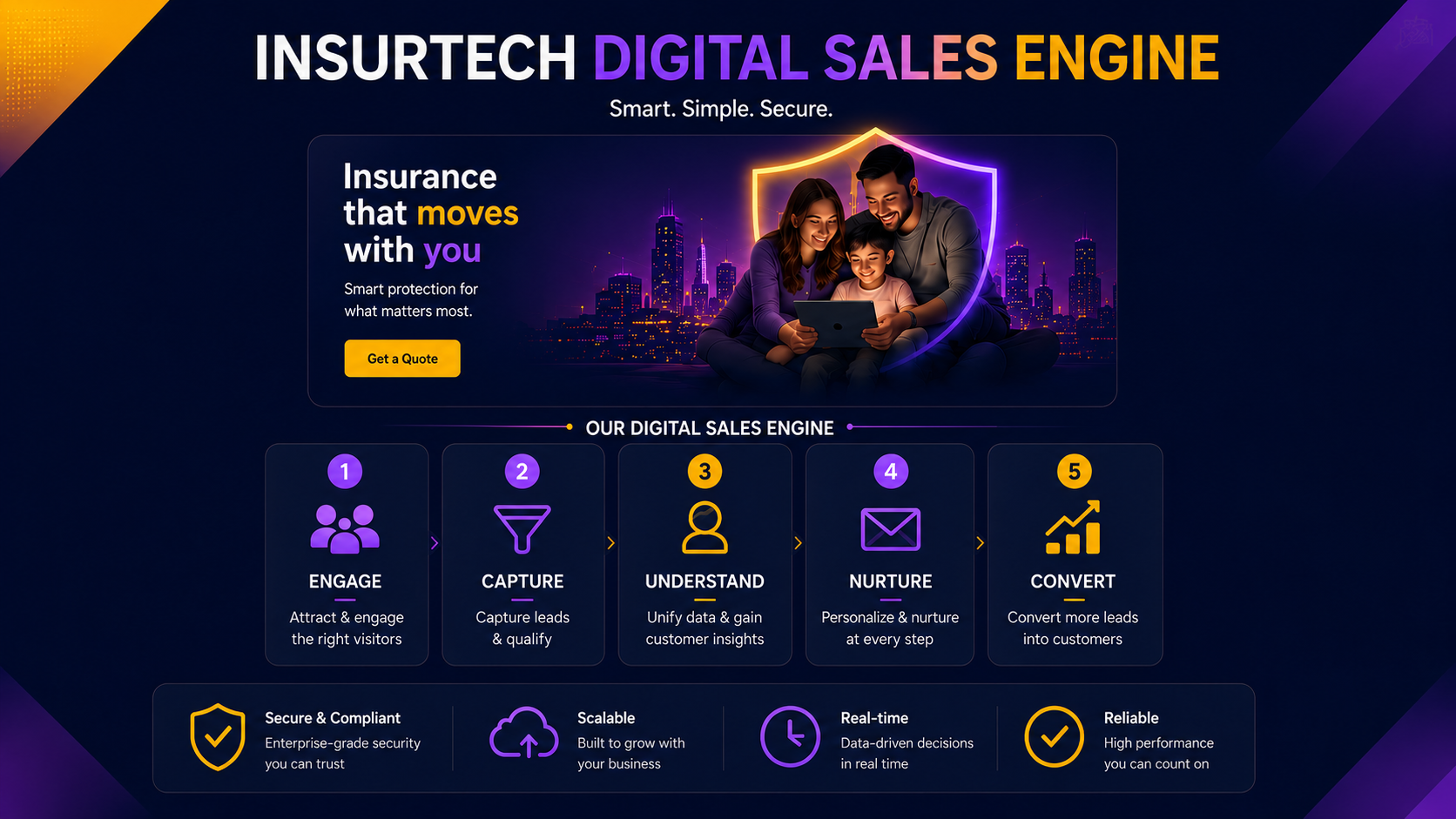
Muze Innovation designed the HUGS Insurance system across 4 integrated layers, each built to address specific needs of a complex Insurance Broker operation.
Layer 1: Content Architecture the Marketing Team Owns 100%
At the core of the entire system is a Headless CMS built on PayloadCMS, designed specifically so the HUGS team can manage all content end-to-end without writing a single line of code. Insurance plan details for every product type, promotional content that needs frequent updates, educational articles, partner information, job listings, and FAQs — all managed through a single, easy-to-use Admin Interface.
The practical change in daily life for the HUGS team is concrete: when a partner insurer launches a new plan or adjusts terms, the team doesn’t need to email a developer, wait in a queue, or depend on someone else. They update the information themselves immediately. The system also supports both Thai and English through the same interface, so the team can manage both language versions simultaneously — important for a broker looking to grow its expatriate customer base.
Layer 2: User Journeys Designed Separately for Each Insurance Type
Muze took a fundamentally different approach from generic templates by designing dedicated User Journeys for each insurance category from the start. Every personal insurance type — health, auto, life, travel, personal accident, pet, home, and golf — has its own plan comparison page, coverage customization flow, agent contact page, and confirmation flow, each designed around how that specific customer group makes decisions.
Corporate insurance products with higher business complexity — property, engineering, marine cargo, and professional liability — use entirely different flows: leading users toward detailed inquiry submissions and direct expert contact, rather than forcing a Self-service path that doesn’t fit how corporate insurance is actually purchased.
A key differentiator is that even though each flow differs in complexity, all content within every flow is manageable through the CMS. The HUGS team can adjust copy, images, and plan details within any flow without touching the underlying system logic.
Layer 3: Lead Capture and Notification System That Routes Directly to the Right Team
One problem that mid-to-large Insurance Brokers commonly face is leads that come in but don’t get followed up promptly — because every lead routes to a shared inbox that everyone sees but no one feels personally responsible for.
Muze designed a Lead Capture system that solves this directly. Whenever a prospect submits a contact form on any insurance product page, the system automatically routes the notification to the team responsible for that specific insurance type — bypassing the shared inbox entirely. Health insurance leads go directly to the health team. Auto insurance leads go to the auto team. Corporate property leads go directly to the Corporate Insurance team. Each notification carries full lead context, so the receiving team can prepare before follow-up.
Layer 4: Performance and Scalability Built for Long-Term Growth
The Frontend is built on Next.js using Incremental Static Regeneration (ISR), keeping every page load fast and consistent even during high-traffic periods. CMS content is automatically regenerated every 60 seconds, so when the HUGS team saves a change in the CMS, it appears on the live website for users in under a minute.
Because the system is built on a Decoupled Architecture — Frontend and CMS Backend completely independent — adding a new product line in the future can be done without touching the core structure or rebuilding existing systems. The investment made today remains useful long-term, rather than requiring a full rebuild every 2-3 years.
4 Lessons from HUGS Insurance That Other InsurTech Should Know
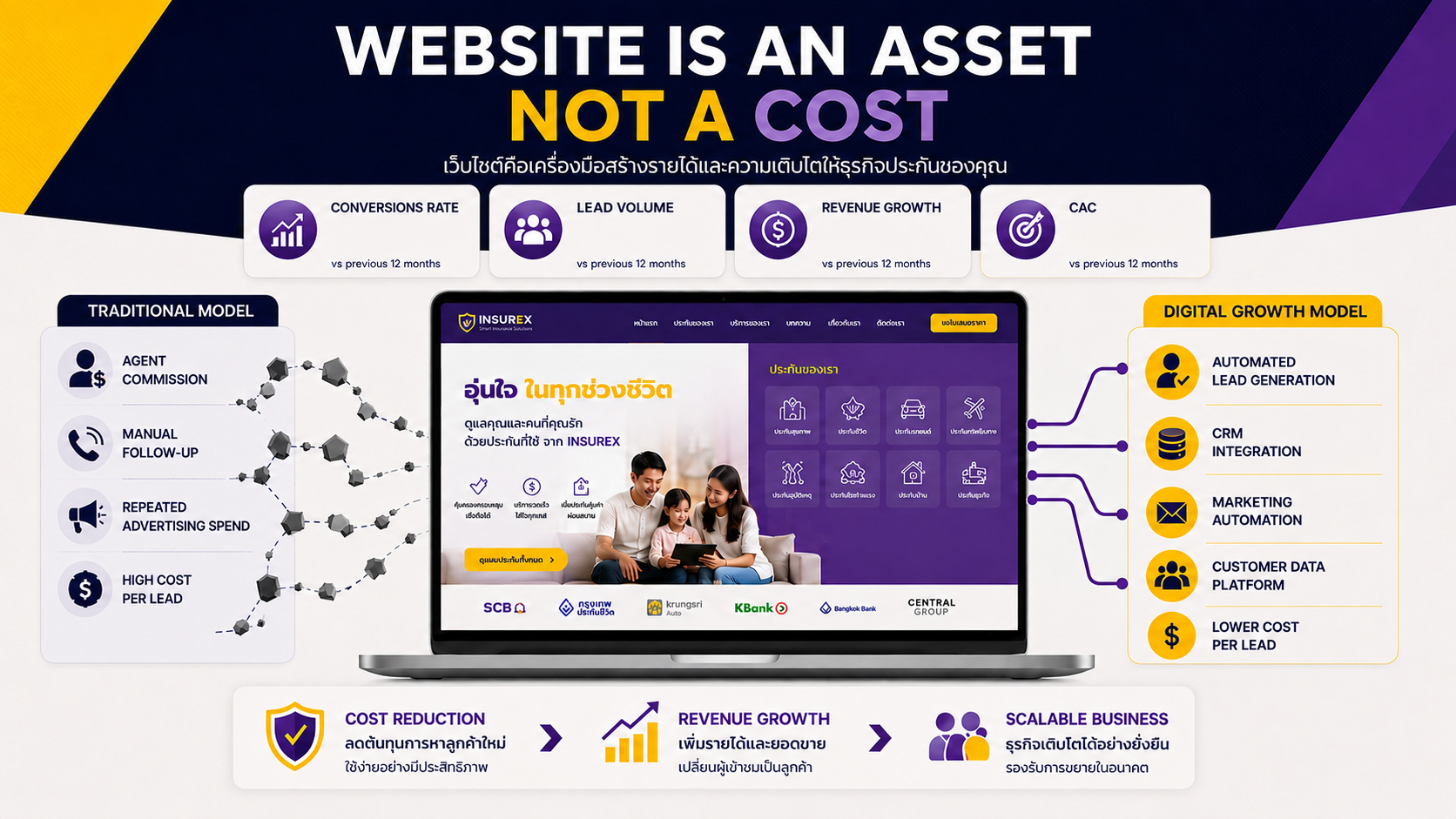
From working with HUGS Insurance, here are 4 key lessons worth sharing with Insurance Broker executives currently evaluating digital investment.
Lesson 1: Start from Business Outcomes, Not Feature Lists
What causes many Website Projects to fail or fall short of expectations is starting with a feature list without first answering the basic question: how will this website create business value? Before any design or development begins, the team needs to answer clearly: how does this website help the internal team work faster and better? How much easier does it make it for customers to find what they need? What revenue does it generate or what costs does it reduce? These answers define everything from UX Design to Technical Architecture — and critically, they keep the tech team and business team aligned from day one.
Lesson 2: Good Content Management Is the Heart of the Business, Not a Bonus to Add Later
Insurance is a business where information and offers change more frequently than most assume — seasonal promotions, new plans from recently signed partners, content that needs updating to match current search keywords, and product details that change with regulation. If the marketing team has to wait for a developer every time they want to update content, that hidden cost is being paid every day — in the form of missed opportunities, wasted coordination time, and constrained business agility. Investing in good CMS from the start isn’t an added expense; it’s an investment that returns in the form of consistently higher competitive responsiveness.
Lesson 3: User Journeys Must Be Designed Separately by Insurance Type, Not Built from a Single Template
The most common mistake in Insurance Website design is using a single flow or template for all insurance types to save development time and cost. In reality, a customer shopping for health insurance and a customer seeking corporate property insurance have fundamentally different decision-making processes. Investing in separate Journey design for each type from the start is far more cost-effective than trying to fix this after launch.
Lesson 4: Speed to Market Matters — But Not at the Cost of Good Scalability
InsurTech and Insurance Brokers aiming for sustainable growth need to plan ahead for continuously adding new product lines, new partners, and new channels. Good architecture must support this expansion without requiring a full system rebuild every 2-3 years. Because the cost of rebuilding isn’t just the development work — it includes the Opportunity Cost of the time the team spends on migration instead of building new features, and the risk of losing market momentum while the system is being rebuilt.
A Website Is a Value-Accumulating Investment, Not a One-Time Cost
In an era where InsurTech has gone mainstream and every consumer segment habitually searches and compares insurance online before deciding, the question is no longer “should we have a website?”
The more accurate competitive question is: “Your competitors are capturing leads online 24 hours a day, 7 days a week. What is your website doing right now?”
A website built correctly with growth-ready architecture isn’t an expense paid once and forgotten. It’s a Digital Asset that compounds in value — through Organic Traffic growing from strong SEO, content the team can maintain and update continuously, leads the system routes automatically even without anyone staffing the phones, and a customer database that grows every day.
The right question therefore isn’t “how much does it cost?” but “if we don’t invest today, what is the true cost of waiting?” and “while you’re waiting, what assets is your competition building that you don’t have yet?”
Contact the Muze team → muze.co.th/contact/