TechCut — Business / Product / Engineering · KTC Digital Platform Project
When Muze began working with KTC, the brief wasn’t simply “build a better-looking website.”
It was: make the website work for the business.
The result was that organic search became one of KTC’s most important acquisition channels — transforming the website’s role from an information hub into a platform with direct impact on business outcomes.
This is what Muze learned from designing a financial services website to function as a genuine acquisition engine.
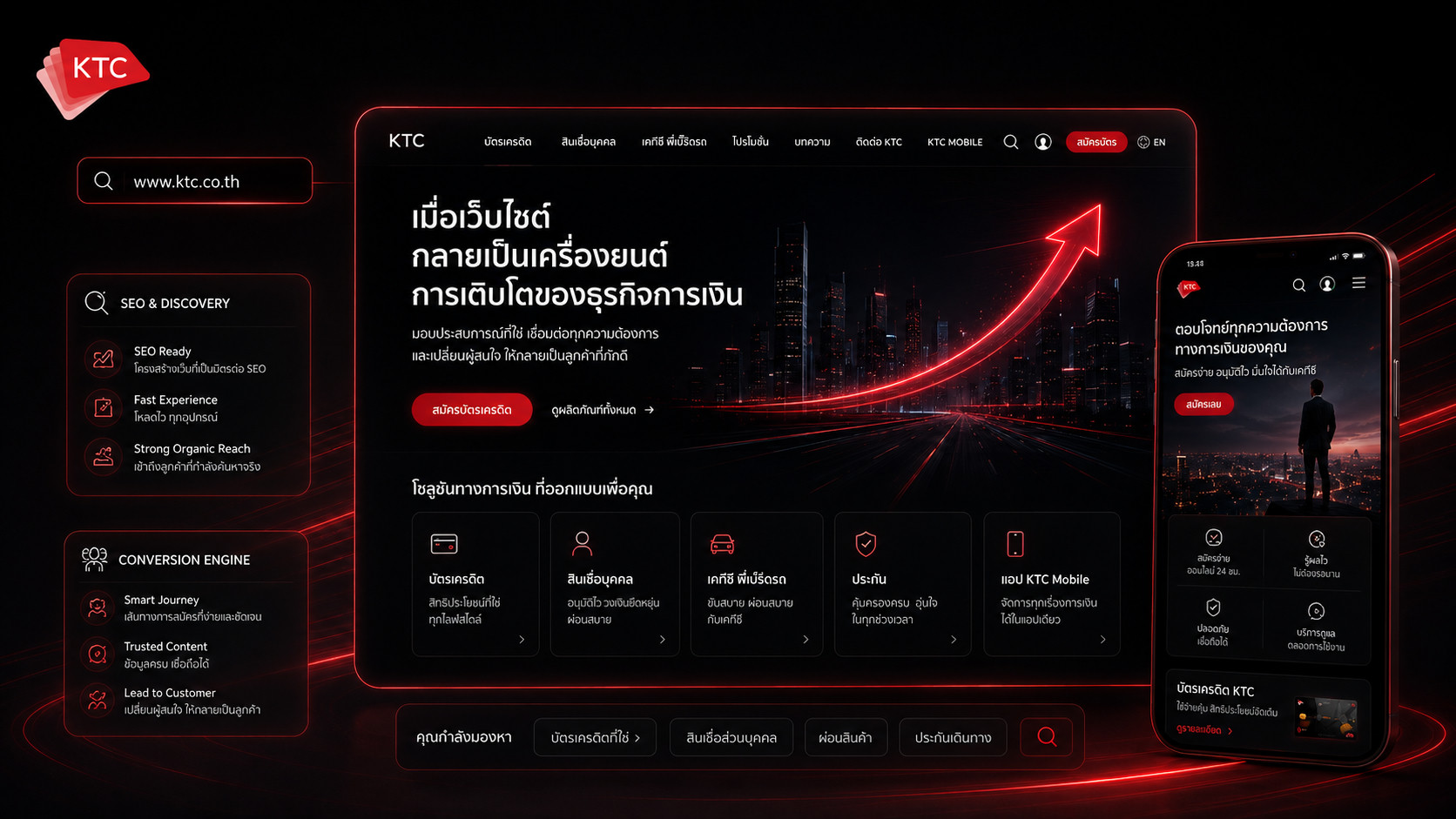
From Information Site to Customer Acquisition Channel
In financial services, websites are often seen as information channels.
Users arrive to check credit card details, read promotion terms, review benefits, or research before applying for a financial product.
But in practice, a financial services website can do far more than that.
When designed correctly, a website isn’t just the “front door” of a brand — it can become a Digital Acquisition Engine that generates leads, supports product applications, and connects the user journey from a Google search all the way to conversion.
KTC is a clear example of transforming a website’s role from information platform to a platform with a well-defined business function.
Challenges That Set Financial Websites Apart
The challenges of a financial services website aren’t like those of a standard website.
Users don’t arrive just to “browse products” the way they do on e-commerce sites. They arrive with questions, concerns, and a more deliberate decision-making process:
- Which credit card should I apply for?
- Which card fits my lifestyle?
- What restaurant, hotel, or shopping promotions are available?
- What are the application terms?
- What documents are required?
- Can I apply online?
This is a user journey that begins with search intent.
Many users don’t start from the app — they start by searching for information on a search engine.
So a financial services website must do more than provide information. It needs to guide users from “interested” to “decided” as smoothly as possible.
What Muze Designed for KTC
Transforming KTC’s website into a genuine acquisition engine required multiple design decisions working in concert.
Information Architecture That Responds to Search Intent
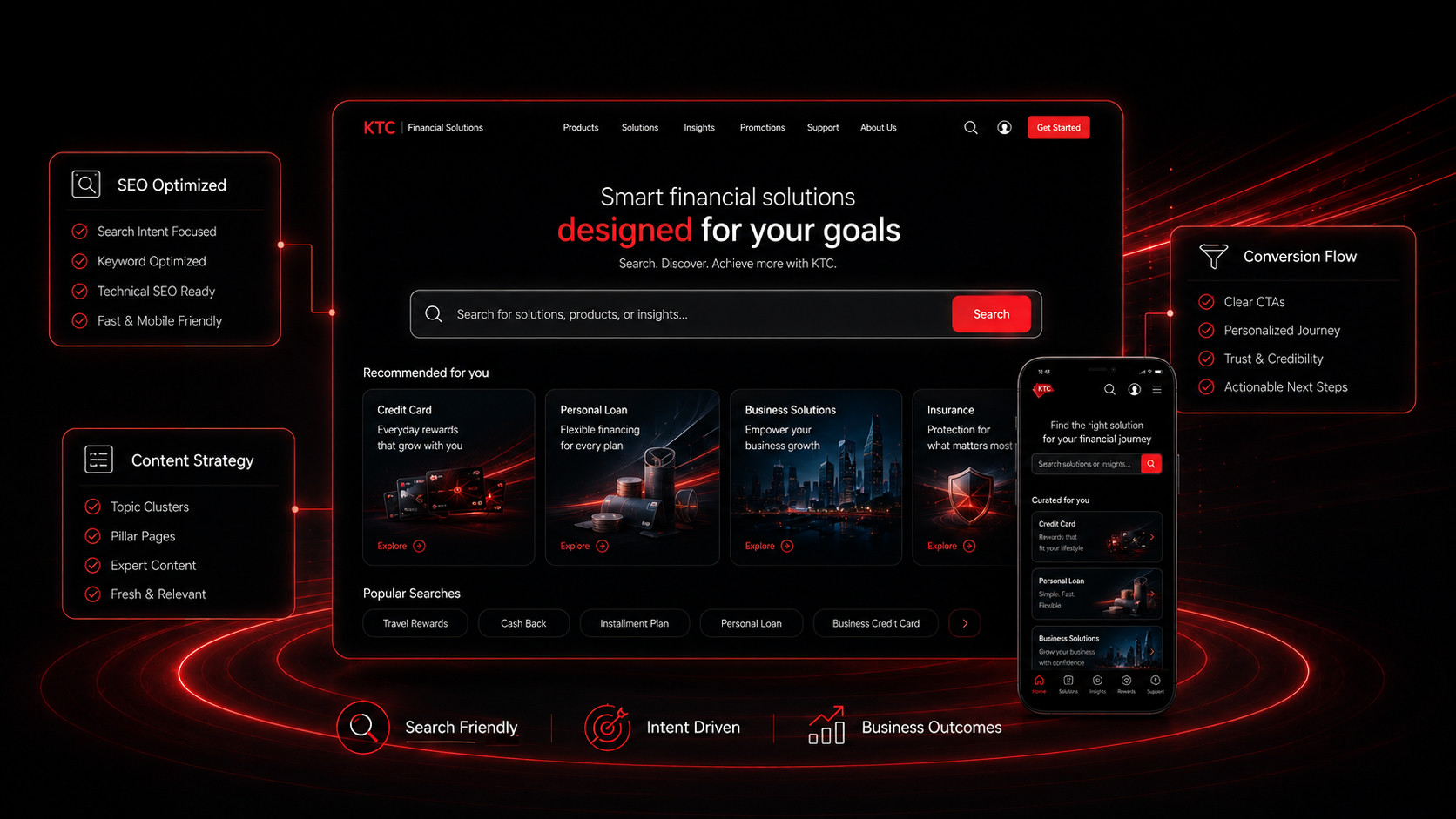
Rather than organizing the website around the bank’s internal product categories, Muze designed an architecture that responds to the intent of each user group — those comparing cards, those looking for promotions, and those ready to apply. Each group has a different path through the site.
Headless CMS for Fast-Moving Content
KTC’s previous system used Magento as its CMS, which meant the business team had to depend on developers for almost every change — from updating promotions to adding landing pages or adjusting form layouts.
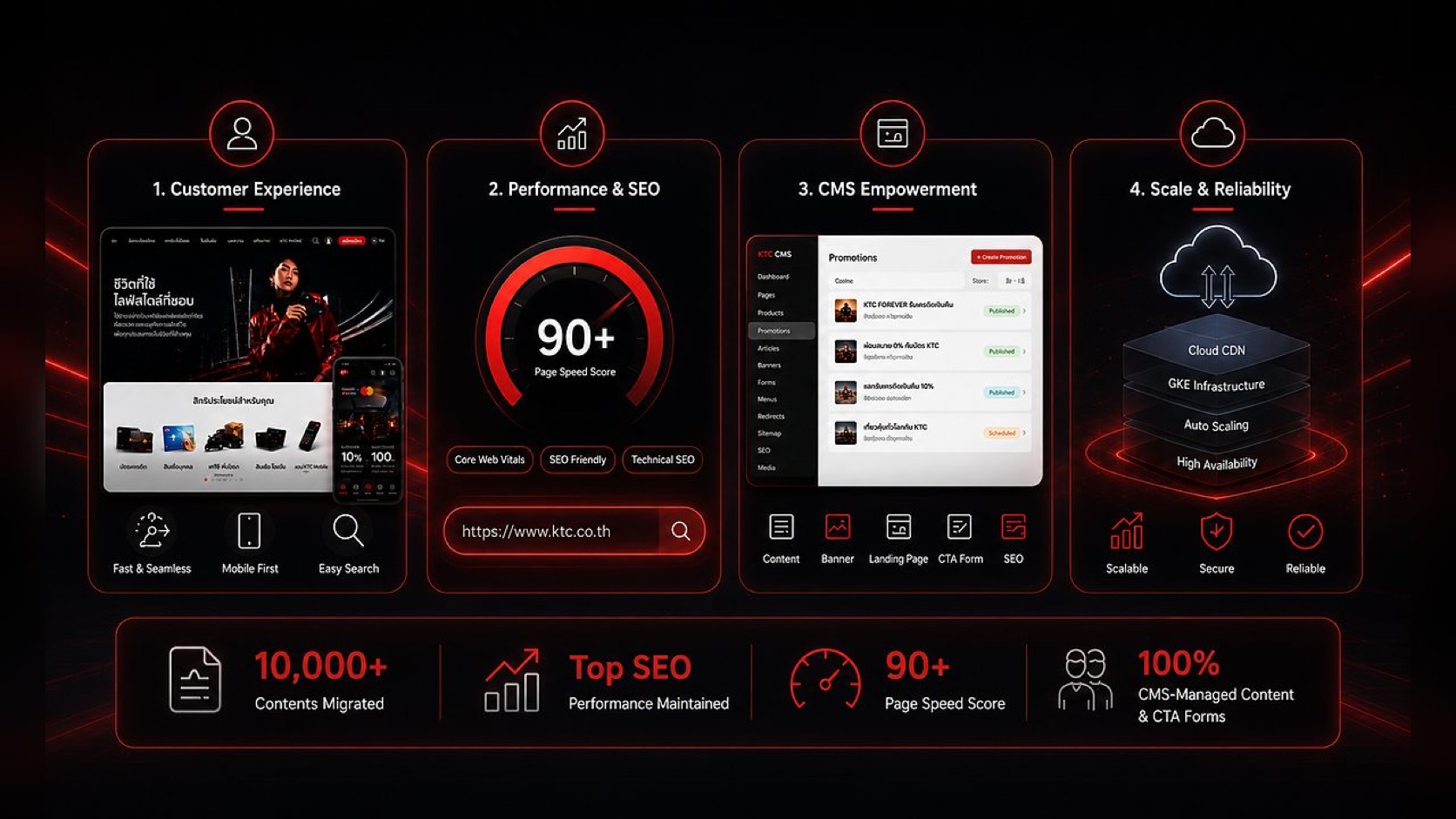
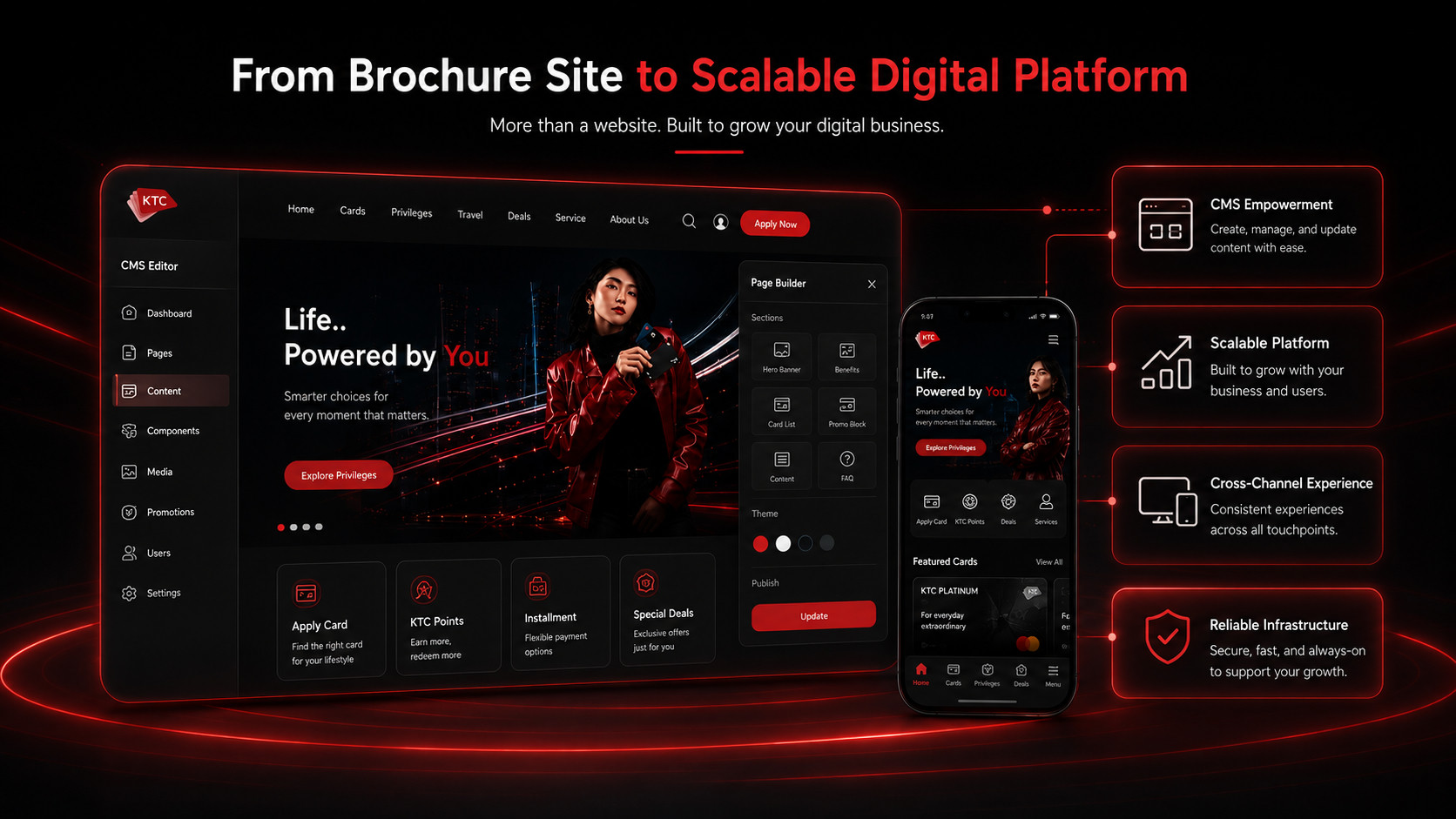
Muze replaced this with PayloadCMS as a headless CMS designed for flexibility across content structure, layout blocks, and form systems. KTC’s team can now build new pages, adjust layouts, and update content independently without waiting for developers — reducing time-to-publish from days to hours.
Performance Built into the Architecture
Every millisecond lost on a landing page has a direct impact on conversion. Muze designed performance strategy at the architecture level rather than optimizing after the fact — with Next.js on GCP and Redis for caching, achieving a Page Speed Score of 90+ across all main pages. This improves both SEO rankings and conversion rate simultaneously.
Conversion Flow That Reduces Friction
Each page was designed with a clear next action: from information browsing → card comparison → application form. The path needs to be smooth enough that users with high intent aren’t lost along the way.
SEO Is Not Just Traffic — It’s Business Infrastructure
Many organizations still treat SEO as a back-office marketing function.
But for financial services, SEO is one of the core infrastructure elements of digital acquisition.
Because good search traffic doesn’t just mean more visitors to the website — it means capturing demand that already exists in the market.
People searching for credit cards, promotions, reward points, or financial benefits typically already have some intent.
If the website answers questions well, loads quickly, has clear information structure, supports mobile, and guides users toward action — that website isn’t just a communication channel. It becomes an acquisition channel that works around the clock.
Why Financial Websites Differ From Brochure Sites
While a typical corporate website might focus on brand image, a financial services website must be designed to handle multiple dimensions simultaneously.
Trust — Financial services involve personal data and decisions with real impact on people’s financial lives. The website must feel credible, be easy to read, and eliminate any moments of hesitation.
Content Depth — Financial product information involves extensive detail: terms, benefits, merchant categories, promotions, and FAQs. The backend system must make it easy for business teams to manage content without relying on developers for every update.
Search & Discoverability — With large volumes of information, users need to quickly find what’s relevant to them — nearby promotions, merchant categories they care about, or products that match their lifestyle.
Conversion Flow — The website shouldn’t end at reading. Clear next-steps must be designed: apply online, fill in a form, or connect to the app and other services in the organization.
Scalability — A financial services website isn’t a short-lived campaign site. It’s a platform that must accommodate content, traffic, integrations, and business requirements that change continuously.
Behind It All Is Product Thinking, Not Just Web Development
Working with KTC made it clear to Muze that this kind of website requires thinking like a product team.
It starts with understanding what role each page plays in the user journey:
- Which pages exist to build awareness?
- Which pages exist to answer questions?
- Which pages exist to support decision-making?
- Which pages exist to drive conversion?
From there, information structure, content management systems, and interactions are designed to align with those roles.
What makes this project more complex than it appears is that the website doesn’t have a single owner. It involves marketing, product, business, compliance, technology, and operations. A good system must make it easier for all these teams to collaborate — not create new burdens where every change requires waiting for the dev team.
On the technology side, Muze selected a stack where each component serves a clear business purpose: Next.js for measurable frontend performance, PayloadCMS as the headless CMS that the business team controls directly, Elasticsearch for advanced internal search, Redis for caching, and GCP for infrastructure that scales under high traffic. Each choice was driven by what the business actually needed — not by what was trending.
From Website to Digital Ecosystem
Another dimension that became clear through this work: a website doesn’t exist in isolation.
For a financial organization, the website is typically one touchpoint within a much larger ecosystem.
A user might start from Google → read information on the website → find a promotion → connect to the app → apply for a product → redeem rewards → return to engage with other services in the ecosystem.
So the website must be designed to connect well with other digital channels — mobile app, e-application, CRM, campaign systems, loyalty programs, and other backend services.
The KTC case demonstrates that starting from a strong website platform can extend into a broader digital ecosystem — from information platform to commerce, privilege, promotions, and lifestyle-linked services.
Data Migration Is Often Underestimated
Another challenge that often goes overlooked in large-scale website revamps is data migration.
Websites that have been live for years accumulate extensive data: articles, product pages, promotion details, media files, metadata, and original URLs that affect SEO.
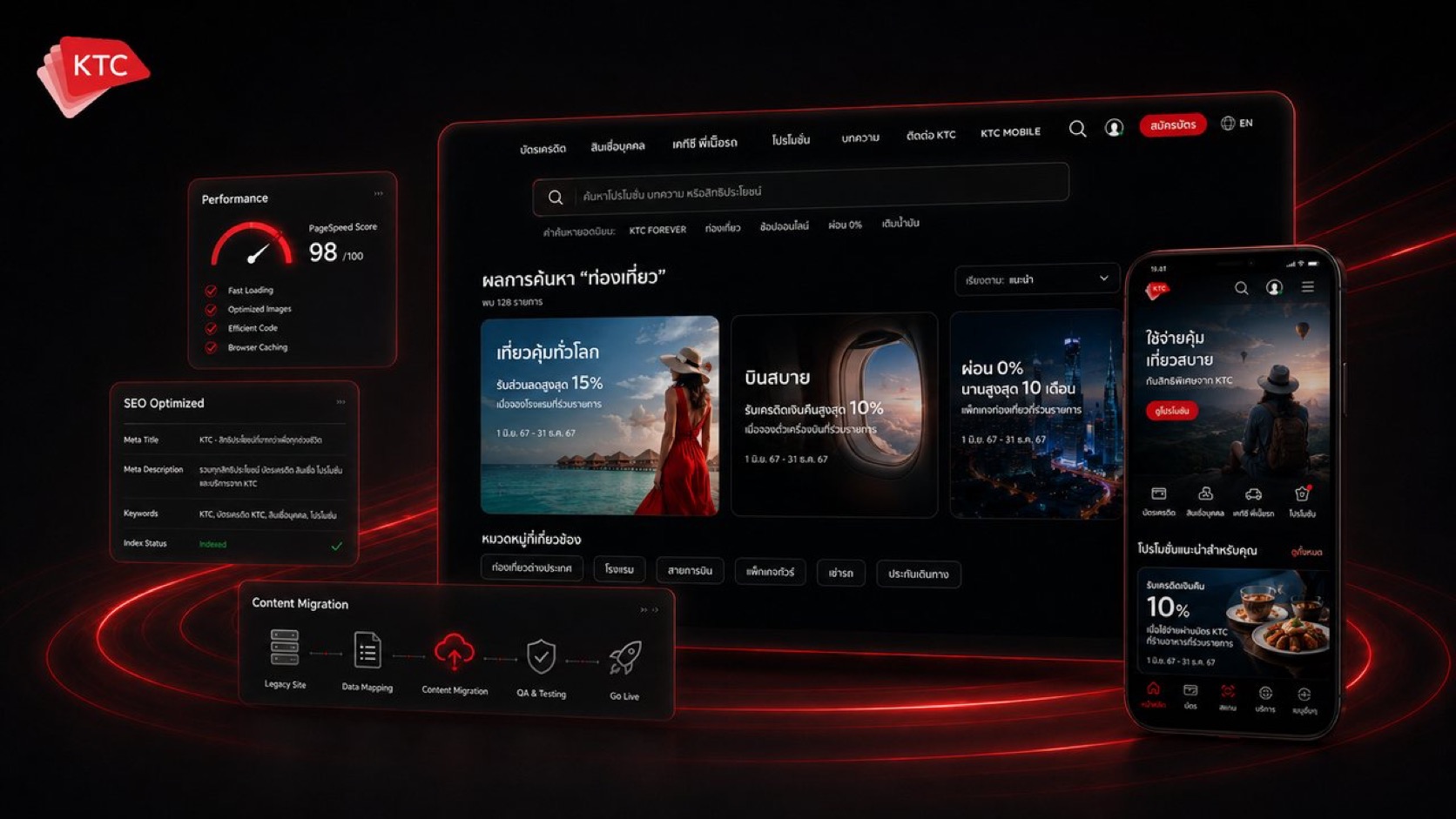
System migration isn’t just copying content from one place to another. It requires thinking through new data structure, content accuracy, URL mapping, SEO impact, and how business teams can continue managing information after go-live.
In the KTC case, Muze migrated over 10,000 content items while preserving URL structure, SEO metadata, and every redirect path — so the SEO equity built over years continued working on the new platform.
What this migration makes clear is that leads converting to business outcomes don’t happen overnight. They’re the result of years of accumulated content, keyword rankings, search data, and insight. A good migration isn’t just moving data — it’s preserving that investment so it keeps working on a platform that’s faster and easier to manage.
Poor migration management can result in a website that looks better but loses traffic, generates fewer leads, or is harder for internal teams to use than the old system.
Migration is therefore one area requiring both technical precision and business understanding simultaneously.
Performance Is a Conversion Issue
On a standard website, speed might be treated as a technical matter. In financial services, performance has a direct impact on conversion.
- If pages load slowly, users may leave before reading terms.
- If mobile experience is poor, users may not complete an application.
- If search results don’t surface the right thing, users may turn to a competitor.
- If forms are difficult to use, leads may drop off mid-journey.
A fast, clear, easy-to-use website reduces friction at every stage of the user journey — especially in a market where users have many options and tolerance for poor experiences continues to shrink.
Lessons from KTC for Financial Services Organizations
From Muze’s experience on this project, there are key lessons any financial organization can apply.
1 — Start from the business problem, not the design problem
Don’t start by asking what the website should look like. Start by asking what the website needs to do for the business — increase leads, reduce friction in the application process, help the business team update content faster, grow organic acquisition. When the business goal is clear, UX, content, SEO, and technology will have clearer direction too.
2 — SEO must be designed into the structure, not added at the end
SEO for a large website isn’t just about keywords. It involves information architecture, URL structure, page speed, metadata, internal linking, content hierarchy, and technical implementation. Getting this right from the start gives the website a real opportunity to grow into a genuine acquisition channel.
3 — The CMS must be designed for the business team, not just the tech team
Financial services websites have content that changes frequently. If every change requires waiting for a developer, the website will always lag behind the pace of the business. A good CMS lets business teams manage information independently within safe, controlled boundaries.
4 — The website should be part of a platform strategy
The website shouldn’t be treated as a digital brochure. It should be positioned as one platform that connects with app, lead system, CRM, campaigns, loyalty programs, and other services within the organization.
5 — Technical decisions must reflect business direction
Architecture choices shouldn’t be made because a technology is new. They should be made because they answer the needs of speed, flexibility, long-term maintainability, and future scaling.
“Muze handled our complex integrations and performance requirements flawlessly. We were impressed by the technical expertise and the ability to solve even the most difficult problems intelligently.”
— Chotiwit Kesorn, Head of Digital Marketing Department · KTC
Conclusion
A financial services website today shouldn’t be treated as just a communications channel.
It should be designed as an acquisition engine that connects search intent, content, trust, user experience, and conversion together.
The KTC case demonstrates that when a website is treated seriously as a platform, it can play a far more significant role in business outcomes than most organizations expect.
For financial services organizations considering a website rebuild, the most important question isn’t “how much better will the new website look?” — it’s “how will the new website help the business acquire customers more effectively?”
That’s the difference between an ordinary website and a website genuinely designed as a business platform.
For organizations looking for a Tech Partner to build a Website or Digital Platform that works as a real acquisition engine: