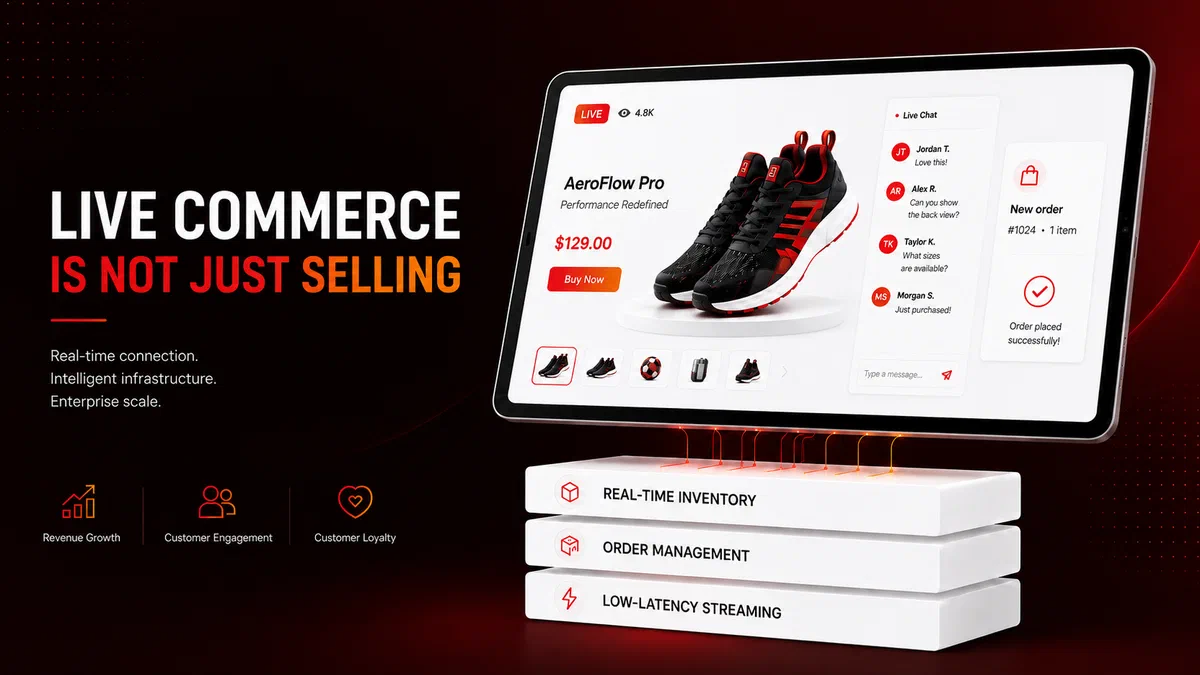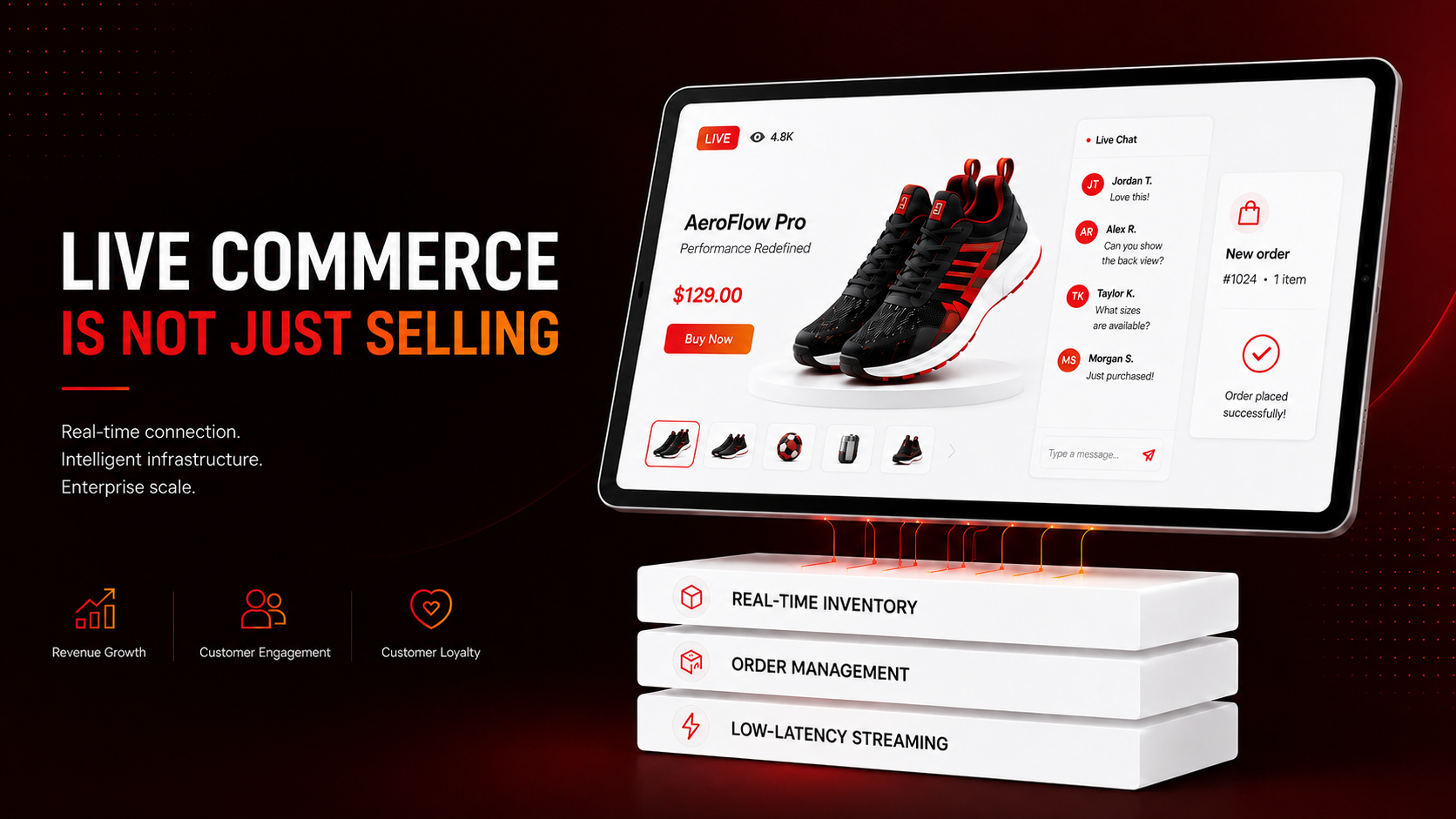
Live Commerce has become one of the fastest-growing sales channels in Southeast Asia. The numbers from TikTok Shop and Shopee Live prove this isn’t a passing Trend — it’s becoming a primary Channel that brands of every size need to compete in.
But as businesses scale, brands that rely on someone else’s Platform start running into clear limits. GP and Platform Fees that can increase without warning. Algorithm and policy changes that can hit revenue overnight. And customer data that belongs to the Platform, not the brand. All of this pushes serious Live Commerce brands to look for a way out.
The answer many brands choose is building their own Live Commerce Platform — to control the full Customer Experience, own the Customer Data, and reduce dependence on third-party Platforms that can change the rules at any time.
But when they actually build it, the problems that surface weren’t anticipated. Inventory shows as available even after it’s sold out. Orders flood in and freeze. Viewership grows but the system slows down. And ultimately, the customer experience ends up worse than buying through the Marketplace they just left.
These problems aren’t caused by a Marketing or Development team that underperformed. They come from existing Infrastructure in the brand’s app or E-commerce system that was never designed for Live Commerce specifically. A system that handles standard purchase traffic just fine simply cannot absorb a Live Commerce Demand Pattern where hundreds of orders arrive in seconds.
The Live Commerce market in Southeast Asia is growing rapidly and shows clear signs of becoming a primary channel for brands looking to build Real-time customer relationships. Competition here isn’t won by who produces the most engaging content — it’s won by who can absorb the Demand that content creates. Brands with better-prepared systems deliver better experiences, build stronger Loyalty, and ultimately win in the long run.
Why Live Commerce Demands a Different Infrastructure
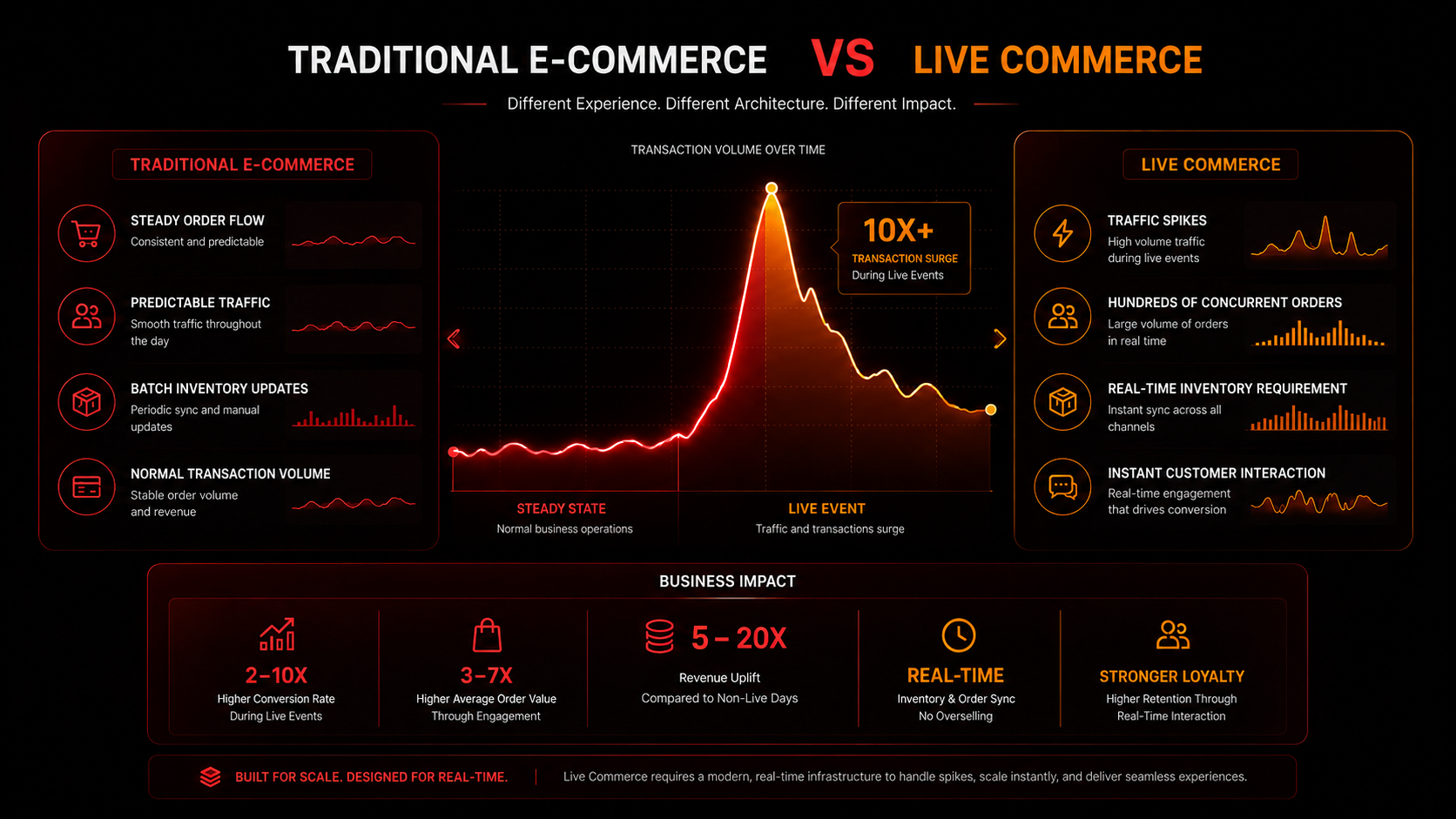
Live Commerce isn’t standard E-commerce that runs faster. It’s a fundamentally different business model with a completely different Demand Pattern.
In regular online selling, orders spread throughout the day. Systems have time to process. Inventory can be managed in batches.
In Live Commerce, hundreds of orders may arrive simultaneously within minutes — especially when a host announces a promotion or bonus gift. Systems designed for normal Traffic simply cannot absorb that pressure.
When the system fails, the damage isn’t just lost revenue. Customer trust disappears too. And the real Cost of failure is higher than the numbers show — it includes Customer Churn, the Operational Cost of fixing the aftermath, and long-term brand reputation.
What makes Live Commerce harder than traditional E-commerce is that it combines Media Production, Real-time Commerce, and Customer Service all at once. Teams manage content and systems simultaneously — which means Infrastructure failures that might be “fixed later” in normal E-commerce become immediate, visible problems in front of thousands of live viewers.
The 4 Core Systems That Make Live Commerce Profitable
1. Real-time Inventory Management: A Problem That Can’t Be Solved With Effort
The core challenge of Live Commerce is knowing whether products are in stock in Real-time — not Near-real-time that updates every 5 minutes.
During a high-intensity Live session, 100 units can sell out in 2 minutes. If the system still shows stock available, customers who place orders afterward receive cancellations — creating downstream work for both Operations and Customer Service, and worse, disappointing customers who were excited about buying in that moment.
From a business perspective, the cost of Overselling isn’t just refunds. It includes the Cost of Trust lost with each affected customer. The solution isn’t a faster team — it’s designing systems where Inventory and Order Management communicate in genuine Real-time.
For organizations selling across multiple channels — Website, Marketplace, Social Commerce, and Live Commerce — a Centralized Inventory Platform is no longer just a Technical Requirement. It’s a Business Requirement.
Consider the same product selling simultaneously on Shopee, TikTok Live, and the brand’s own Website. If Inventory isn’t synced across channels in Real-time, the risk of Overselling or selling already-sold-out items is high. And when it happens, every customer who receives an order cancellation email perceives the brand as unprepared — regardless of which channel caused the problem. A Single Source of Truth for Inventory that updates every channel simultaneously is a non-negotiable foundation.
2. Order Management System (OMS): When Sales Surge, the System Must Keep Up
Many organizations invest heavily in growing viewership but forget to prepare the systems behind the orders that follow. The root cause is that the Metrics Marketing teams track — Peak Viewers, Engagement Rate — are easy to see, while Order Queue Depth or Transaction Throughput are Technical Metrics that rarely appear in business meetings. This gap is why so many organizations invest in Content without investing in the Systems that need to support it.
During Live sessions, order volumes can multiply dozens of times within minutes. If the OMS can’t handle that transaction load, the result is dropped orders, Duplicate Orders, Payment Failures, and shipping delays — each of which directly impacts both the customer experience and the Operations team’s workload.
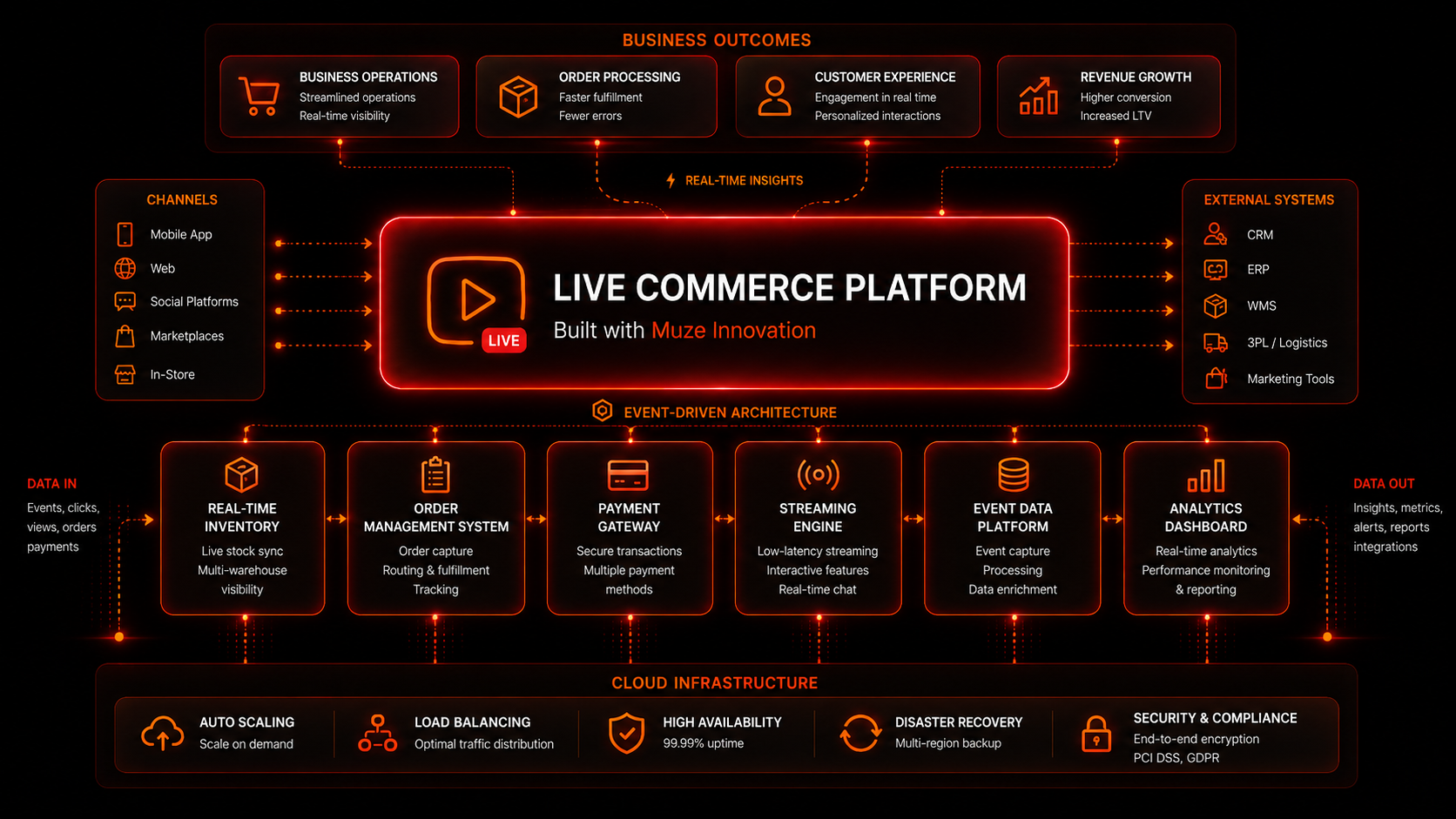
Case Study: Axons x TDG Live Commerce Platform
Axons, a major Platform Technology provider and Muze client, faced this challenge directly when they needed to build a Live Commerce system capable of handling Enterprise-level Traffic Spikes. Muze came in as Tech Partner to design and develop an OMS with the flexibility and scalability the business required.
What Axons prioritized in their solution decision wasn’t a Feature List — it was Business Resilience. The system needed to handle Concurrent Orders during Peak periods without affecting the customer experience, and it needed to Scale without requiring new infrastructure investment every time sales grew.
Choosing the right Solution also depends on business Maturity. Brands just starting with Live Commerce may not need to invest in all 4 layers — Real-time Inventory, OMS, Streaming, and Analytics — immediately. But they should build foundations that can Scale, not systems that require a full Rebuild when the business grows.
The approach Muze designed with Axons was to decouple Order Processing from Inventory Validation and the Payment Gateway using an Event-driven Architecture. This allowed each component to Scale independently, and ensured that a failure in one area wouldn’t cascade into the rest of the system.
Business ROI: Investing in a properly designed OMS reduces Order Error Rates, which directly improves Customer Satisfaction Scores and lowers the Operational Cost of fixing post-Live issues. What looks like a Technical Investment becomes measurable Revenue Protection.
3. Low-Latency Streaming: Every Second Affects Conversion
Another frequently overlooked factor is the speed of the video signal itself.
If viewers see the stream seconds behind reality, the cascading problems are predictable: promotions don’t land at the same moment for everyone, purchase windows are missed, and the experience varies between viewers — all of which directly affect Conversion Rate.
Imagine 10,000 people watching a Live session simultaneously, but some viewers see the promotion 3–5 seconds later than others. That sale window disappears without the brand ever knowing.
Low-Latency Streaming isn’t just about internet speed. It’s about designing a Delivery Infrastructure capable of serving large concurrent audiences without compromising quality — an area where many brands Underinvest because the impact isn’t visible until something breaks.
Modern Live Commerce Platforms need to prioritize Auto Scaling Infrastructure, Global Content Delivery, and Load Balancing so that large viewer numbers can watch and interact continuously, even during peak Traffic.
From a business perspective, every additional second of Latency has a measurable effect on Conversion. Investing in Streaming Infrastructure isn’t an IT expense — it’s an investment in Revenue Protection.
Protocol choice matters too. RTMP — the most widely used standard — carries 5–30 seconds of Latency. WebRTC or Low-Latency HLS can bring that under 2 seconds. Brands running Interactive Promotions like Flash Sales or Real-time Bidding need to factor Streaming Protocol into their system design from the start, not after launch.
4. Post-Live Analytics: Data Worth More Than the Sales Number
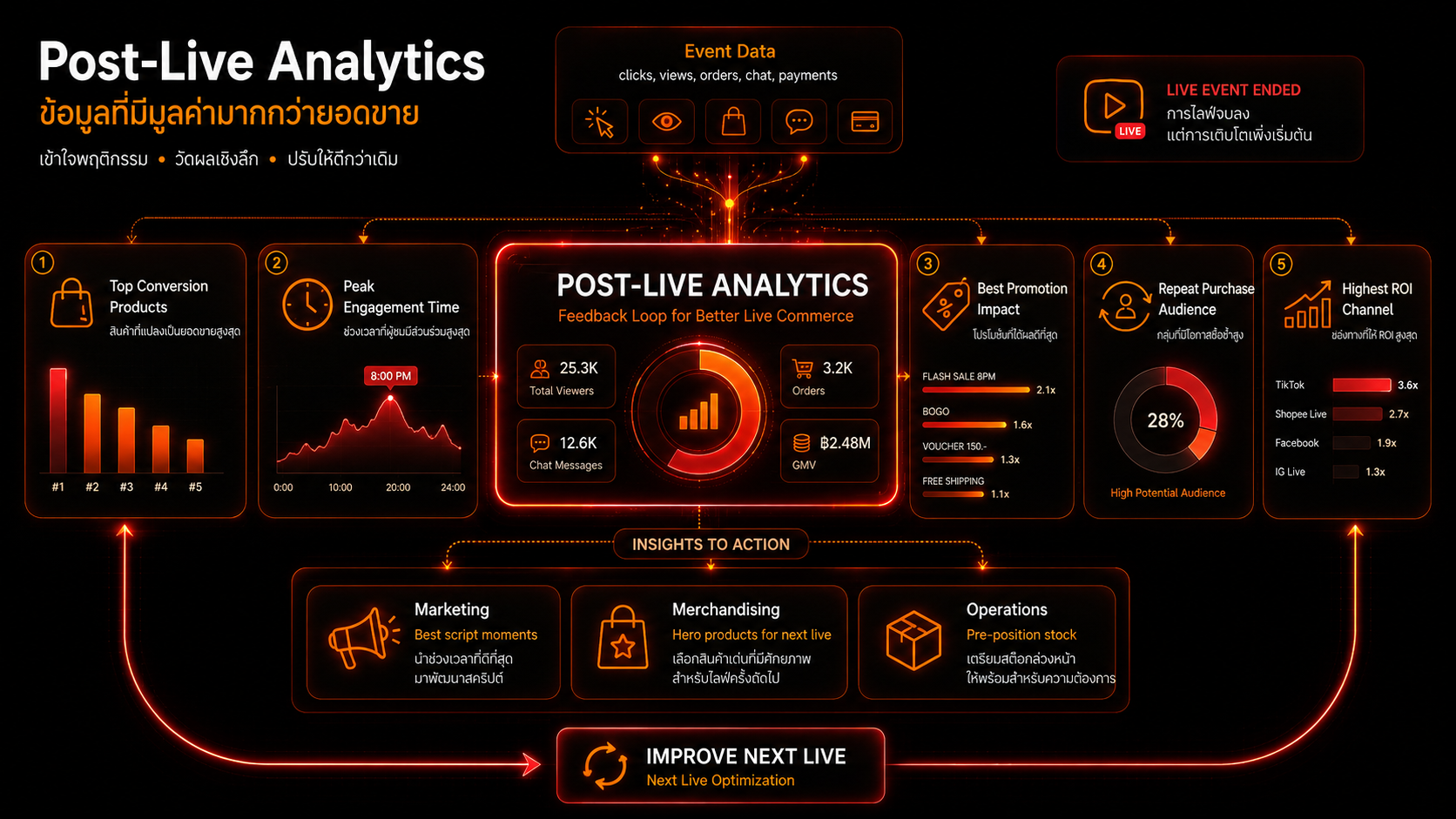
If Real-time Inventory and Streaming keep Live sessions from breaking, Post-Live Analytics is what allows the business to grow from them.
Many organizations measure Live Commerce success solely by revenue generated during the broadcast. But the more valuable data is the Insight that emerges after the session ends: which products drove the highest Conversion, which time windows generated peak Engagement, which Promotions influenced purchase decisions, which Audience segments are most likely to return, and which channels generated the highest ROI.
None of this data can be extracted if the system wasn’t designed to capture Event Data from the start. This means good Analytics has to begin at the Architecture level — it can’t be added on later. Overlooking this isn’t just a missed learning opportunity. It means running Live session after Live session without the data needed to improve.
When a Data Pipeline is working correctly, Post-Live Analytics becomes a powerful Feedback Loop. The Marketing team knows which script segments held viewers best. The Merchandising team knows which products should be Hero items next time. The Operations team knows where to Pre-position Stock before going live. Every data point collected is an opportunity to make the next Live session better and more profitable.
From Business Challenge to Technology Decision
The question brands should ask before investing in Live Commerce isn’t “which Platform should we use?” but:
- Can our current systems handle Traffic Spikes?
- If inventory sells out mid-Live, how does the system respond?
- When orders surge 50x in 2 minutes, are Payment and Fulfillment ready?
- Do we have enough data to plan the next Live session better?
The answers to these questions determine where investment is actually needed, and which Solution genuinely solves the problem — not just which one is cheapest or has the most features.
The experience of working with Axons shows that organizations that succeed at Live Commerce long-term share a common Mindset: they view Technology Investment as Revenue Enablement, not a Cost Center — and they invest in Infrastructure before problems occur, not after systems break. When it does break, the true Cost in Revenue and Brand Reputation almost always exceeds the cost of prevention.
Live Commerce That Drives Sustainable Profit
Live Commerce that genuinely performs requires 4 layers of Infrastructure working in sync: Real-time Inventory with no Lag, an OMS that absorbs Transaction Spikes, Streaming that never drops, and Analytics that captures every Touchpoint for decisions.
What Muze consistently finds when working with clients is that most Live Commerce problems don’t come from a lack of technology — they come from technologies that weren’t designed to work together. Inventory in one system, OMS in another, Streaming on a different platform, with no single owner ensuring they stay in sync. Having a Tech Partner who sees the full picture and designs all layers to connect is what separates a working system from a collection of purchased tools.
Because ultimately, the best technology for Live Commerce is the technology that customers never see — but feel through a seamless experience, and that the business feels through numbers that grow sustainably.
Live Commerce isn’t just going live and selling. It’s managing Customer Experience and a Revenue Engine in Real-time — which requires Strategy, Content, and Infrastructure to all be ready at the same time. Organizations that understand this will hold a clear advantage in a market that’s only going to grow.