TechCut — Mobile App Development · FinTech Platform · Digital Transformation
When a business in a traditional industry wants to go digital, the first question usually isn’t “how do we build a Mobile App?”
The more important question is:
“How do we build a Mobile App that connects to real business, real systems, and delivers real business outcomes?”
For many organisations, a Mobile App isn’t just a new service channel — it’s the primary gateway for transforming how the entire business operates. From onboarding and identity verification to payment processing, transactions, and integration with existing back-end systems.
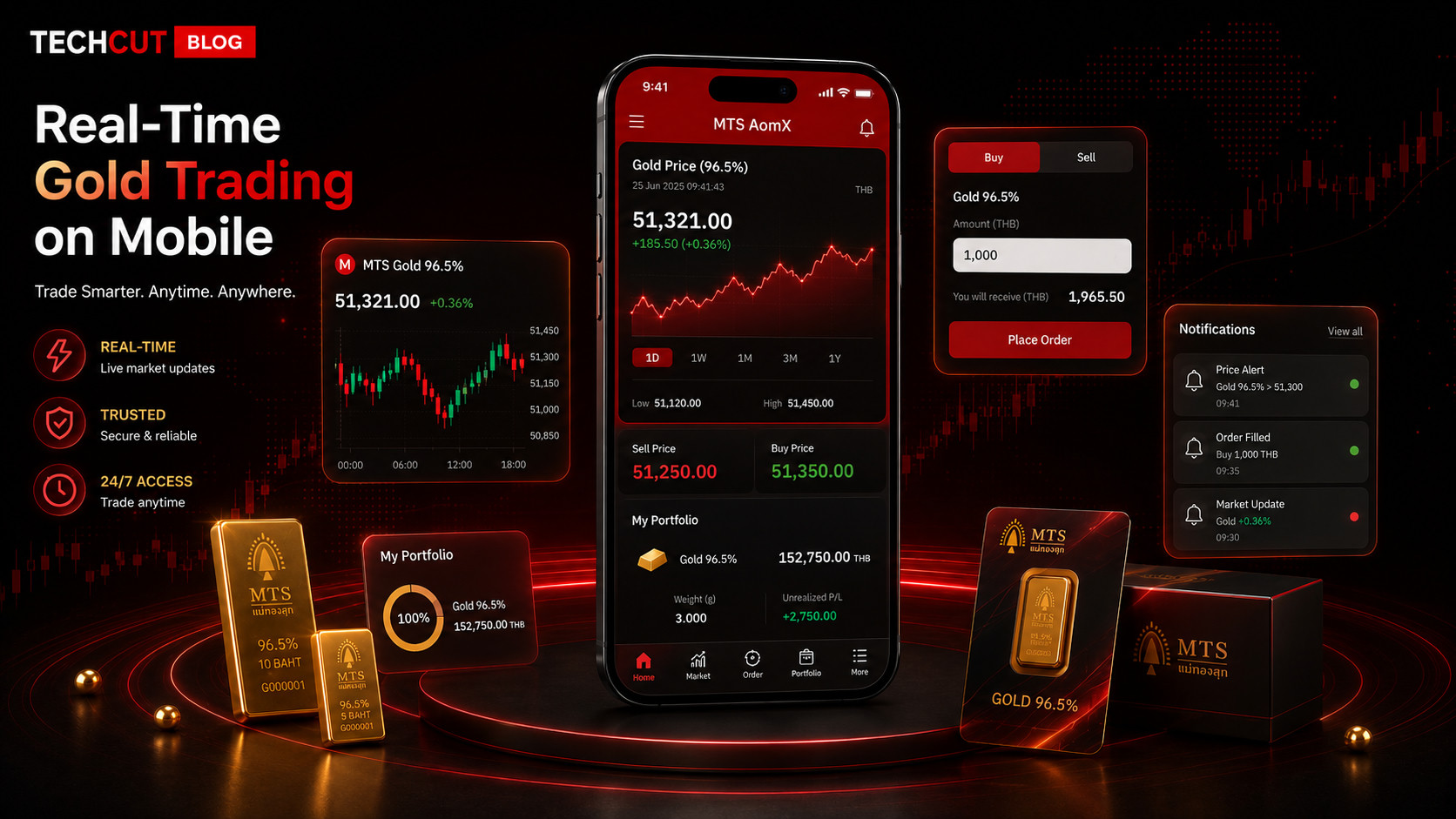
One of the clearest examples of this is MTS AomX — a digital gold trading platform for mobile, which Muze built together with MTS Gold.
This wasn’t just a gold trading app. It was about transforming the experience of a traditional gold shop into a Digital Gold Trading Platform — where users can open a portfolio, buy and sell gold, track market prices, and withdraw cash or physical gold, entirely from their phone.
From Traditional Gold Shop to Digital Mobile Platform
Trust is the foundation of the gold business. Customers need confidence in pricing, security, delivery, and the reliability of the provider.
Building a Mobile App for this type of business is fundamentally different from building a typical app.
The app needs to handle high-value transactions. It needs to connect to existing business systems. It needs to work alongside identity verification, payment processing, notification systems — and be architected for future feature expansion.
For MTS AomX, the goal was to make gold investment more accessible through a Mobile App on both iOS and Android — while maintaining the same level of confidence users expect from a physical gold shop.
This required Muze to design simultaneously across Product, User Experience, Technical Architecture, and System Integration.
Good Mobile Apps Start With User Journey, Not Feature Lists
When building Enterprise Mobile Apps, one of the biggest traps is starting from a feature list.
In the real world, users don’t think in features — they think in journeys.
For example:
- “I want to start investing in gold. What do I need to do?”
- “After buying gold, how do I know the transaction actually went through?”
- “If I want to withdraw as physical gold, can I have it delivered, or do I pick it up?”
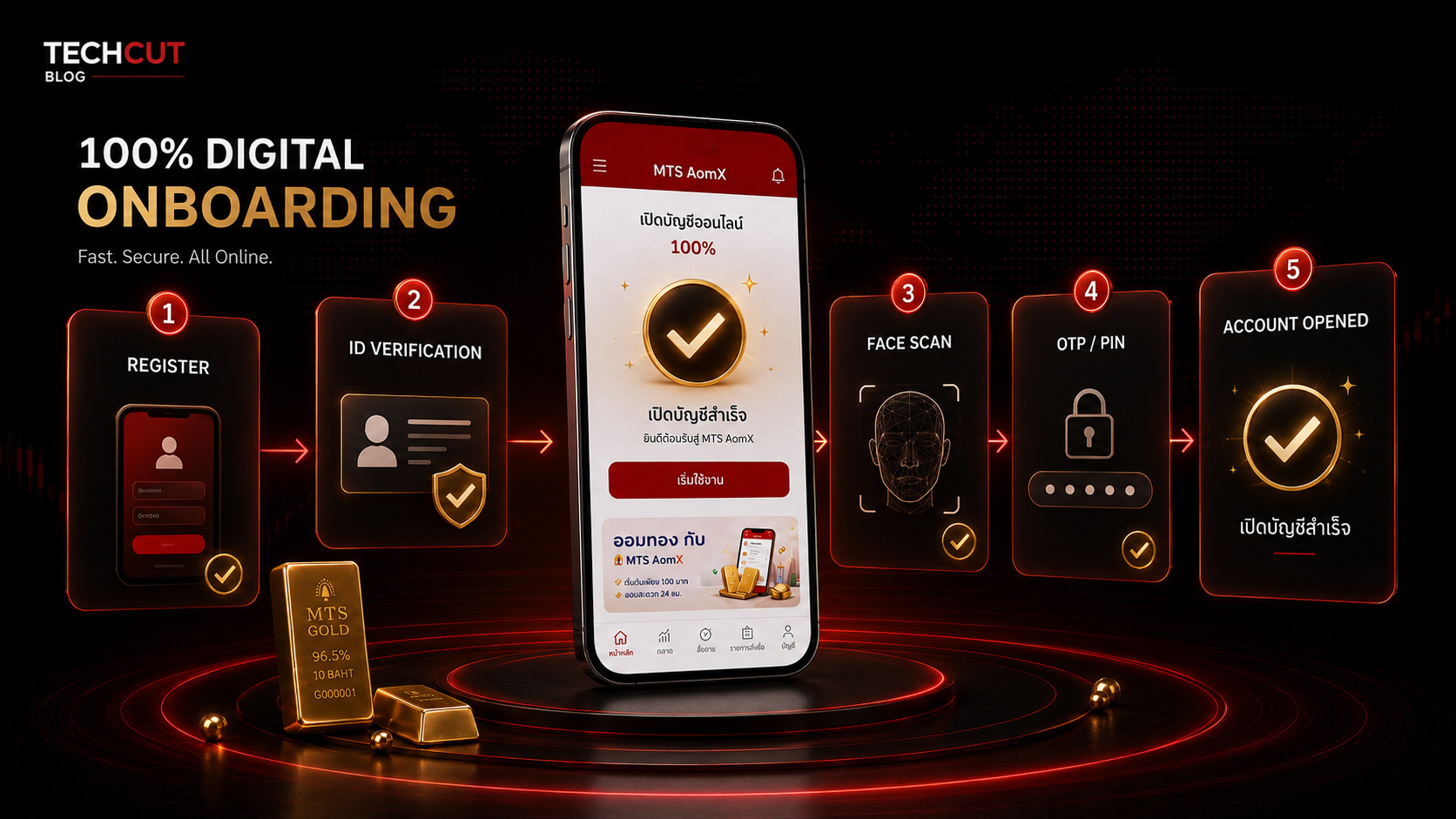
Designing MTS AomX meant thinking end-to-end: new customer onboarding on mobile → e-KYC identity verification → payment system connection → real-time gold price display → order execution → all the way through to cash withdrawal or physical gold fulfilment.
Technology Stack: Flutter, Node.js, TypeScript, and PostgreSQL
On the mobile side, Flutter was chosen to develop apps for both iOS and Android from a single codebase, while still delivering a near-native experience.
For businesses launching on multiple platforms simultaneously, Flutter lets the team keep user experience consistent across both operating systems, reduces development duplication, and makes future feature updates significantly faster.
The backend was built with Node.js and TypeScript, using TypeORM and PostgreSQL.
TypeScript adds structural clarity to code and reduces errors in systems with complex business logic. PostgreSQL is a natural fit for transactional systems requiring reliability and well-defined data structures.
| Layer | Technology |
|---|---|
| Mobile App | Flutter (iOS + Android) |
| Backend | Node.js, TypeScript, TypeORM |
| Database | PostgreSQL |
| Architecture | BFF + Microservices |
But the most important architectural decision wasn’t about which technologies to choose — it was how to design the system so the mobile app could connect securely and scalably to the business’s existing core services.
Why BFF Architecture Matters for a FinTech Mobile App
For a Mobile App that needs to connect to multiple systems, having the app call core services directly tends to create complexity — and increases security risk.
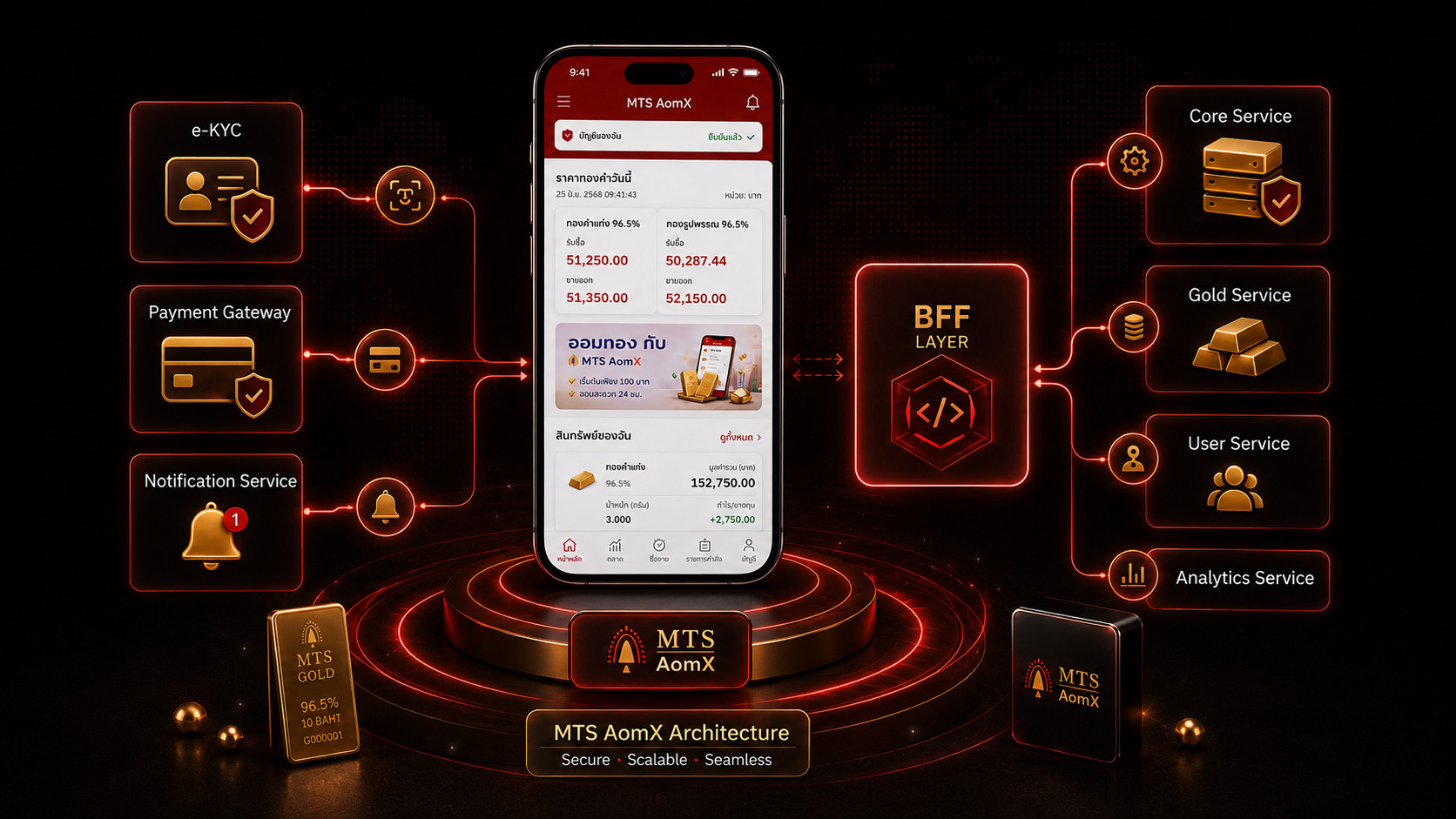
BFF (Backend for Frontend) acts as the middle layer between the Mobile App and those systems.
In MTS AomX, this layer:
- Handles requests specifically from the mobile client
- Reduces complexity on the mobile side
- Controls data formatting to match mobile UX requirements
- Combines and transforms data from multiple core services into a single response
- Improves security by keeping core service internals away from direct mobile access
For an app dealing with financial transactions and high-value assets, having this architectural middle layer isn’t just clean design — it directly affects performance, reliability, and security.
Integration Is the Hard Part of Enterprise Mobile Apps
Most of the time, building a Mobile App for a large organisation isn’t hardest at the app screen level. It’s hardest at the back-end integration layer.
MTS AomX needed to connect with several critical systems:
- e-KYC for identity verification
- Bank Payment Gateway
- Notification Service
- MTS Core Service for gold data and transactions
- Portfolio management and customer data systems
Each system has its own rules, constraints, and integration requirements. This is why building a Mobile App for real business needs a team that understands mobile, backend, integration, security, and business process — not just the ability to ship screens.
Muze approaches this kind of work as platform development, not standard application development.
Security: Trust Is the Foundation of a FinTech App
For a gold trading app, security isn’t an add-on feature. It’s the foundation of the entire system.
MTS AomX was designed to support multiple verification methods — PIN, Biometrics, and OTP — to build user confidence at critical transaction points.
Designing security for this type of app means thinking across multiple layers simultaneously:
- Protecting user account access
- Requiring verification before executing transactions
- Managing sessions safely
- Protecting sensitive data at rest and in transit
- Controlling how the mobile app connects to backend services
For businesses with high transaction values, security architecture must be designed from the start — not retrofitted later. Once the system has real users and real transactions, changing the security architecture carries far higher cost: in time, risk, and user trust.
Hybrid Experience: Trade Digitally, Receive Real Gold
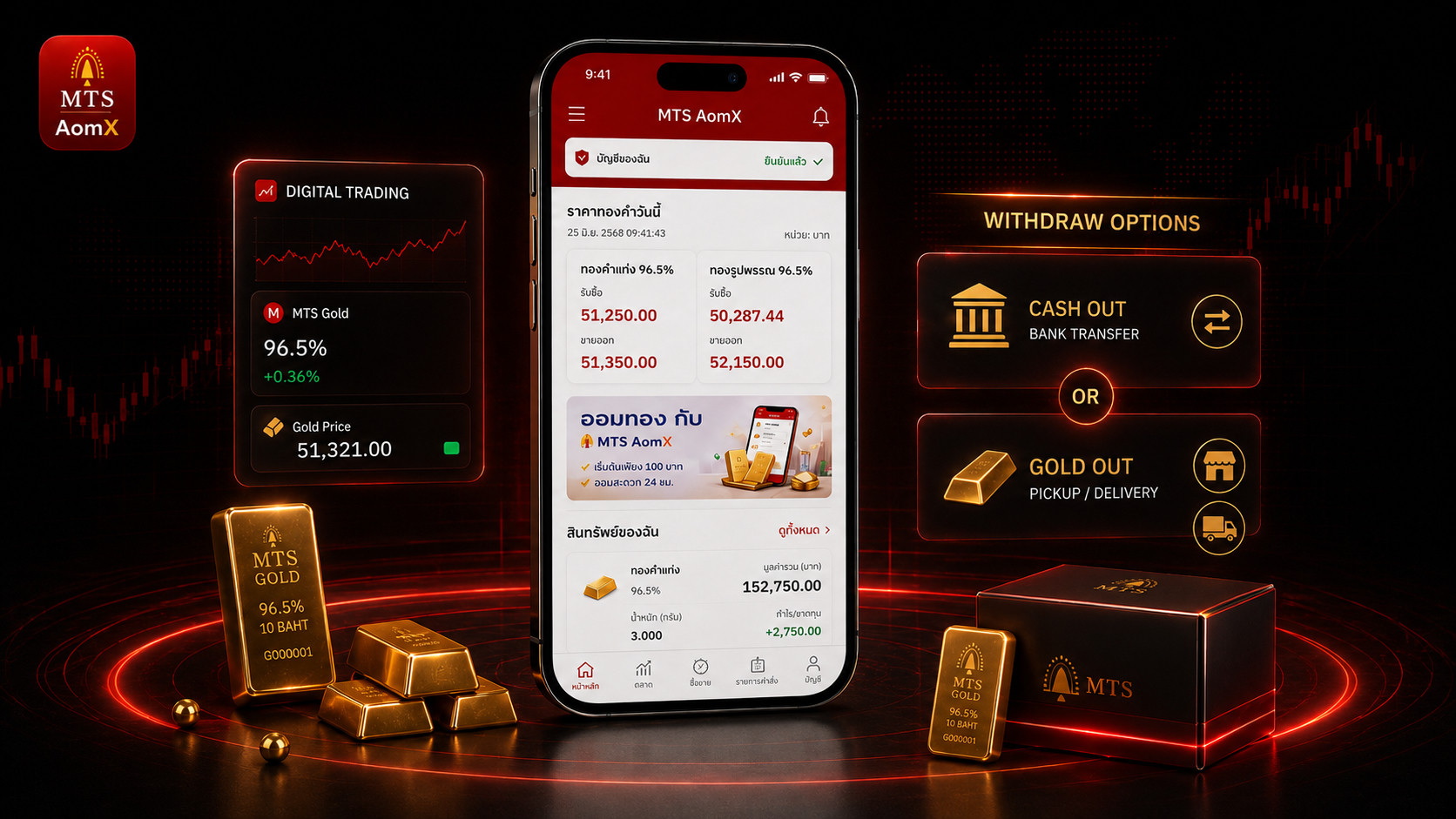
One of the most distinctive aspects of MTS AomX is its hybrid experience — bridging digital and physical.
Users trade gold through the app. But when it’s time to withdraw assets, they can choose:
- Cash Out — withdraw to a bank account
- Gold Out — receive physical gold via branch pickup or home delivery
This is a more complex challenge than typical digital asset trading, because the system has to bridge digital transactions with physical fulfilment.
From the user’s perspective, the flow needs to feel simple and trustworthy. But behind the scenes, the system must correctly handle transaction data, withdrawal status, fulfilment method, branch coordination, and delivery logistics.
Building a Mobile App for this kind of experience requires understanding both business operations and digital product design — simultaneously.
Results
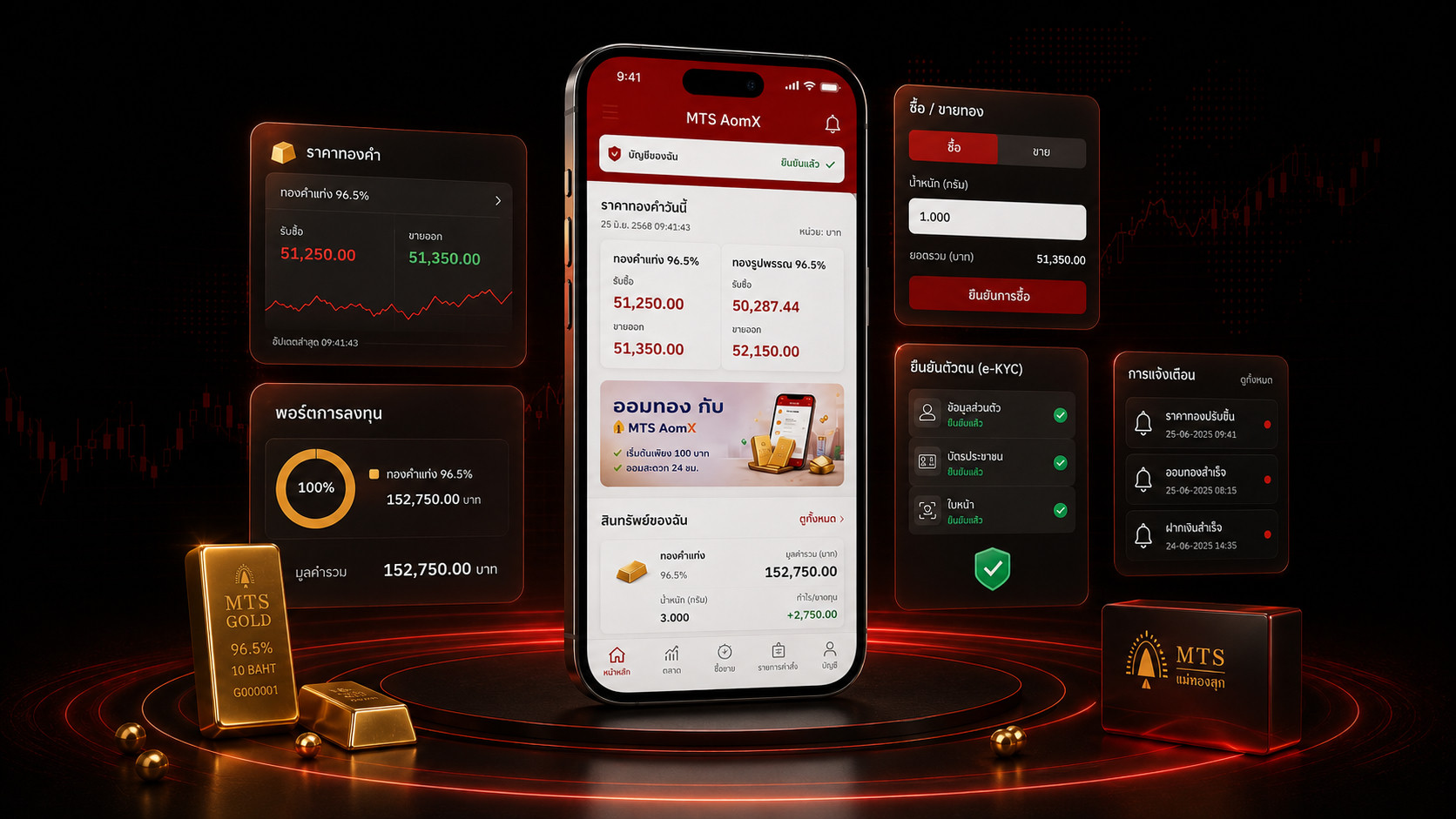
MTS AomX wasn’t just a new app launch. It created an entirely new business channel for MTS Gold.
After launch, the platform generated over 10,000,000 THB in digital gold trading volume per day.
The app also removed the traditional constraints of a physical gold shop — limited opening hours and the requirement to visit a branch. With the ability to open a portfolio on mobile, trade at market prices, and transact in real time, the gold business is no longer confined to the counter.
This is what a well-designed Mobile App can do when it’s built to connect with a real business model.
Lessons from Building MTS AomX
First — A Mobile App shouldn’t be treated as just a frontend. It should be treated as the primary touchpoint for the entire customer experience.
Second — Choosing the right tech stack matters, but architecture matters more. The system must support integration, security, and long-term scalability.
Third — Integration with existing systems is the defining challenge for large organisations. A team that understands mobile, backend, and legacy systems reduces development risk significantly.
Fourth — User journey comes before feature list. What keeps users coming back isn’t the number of features — it’s the confidence and simplicity of the end-to-end experience.
If your organisation is looking for a Tech Partner to build a Mobile App in Thailand — particularly one involving transactions, membership systems, payment processing, or integration with existing core business systems:
From the Client
“Muze’s team was genuinely attentive at every stage of the project — from designing the user flow to integrating with our existing backend systems, which were far from straightforward. What stood out was that they didn’t just take requirements and execute. They brought suggestions and raised considerations our team hadn’t fully anticipated, especially around architecture decisions that needed to hold up under real financial transactions. That kind of proactive thinking gave us a level of confidence in the partnership that made the entire project run smoothly.”
— Chananporn Saetang, Business Development · MTS Gold