When business challenges grow more complex, a single AI may no longer be enough. Multi-Agent Systems (MAS) is an approach where multiple AI agents work together in a structured way — each with a specialized role, from research and analysis through to reviewing outputs. This article explains how MAS works, what patterns exist, and what organizations should consider before adopting it.
Many organizations begin their AI journey with simple tasks: summarizing data, writing emails, analyzing documents, or drafting initial ideas. But as challenges grow more complex — spanning multiple steps, multiple stakeholders, and requiring more than one perspective — an important question emerges:
“Is a single AI still enough?”
In the world of Agentic AI, the answer may not be finding the single most capable AI model. It’s about designing multiple AIs to work together as a system. This is what Multi-Agent Systems, or MAS, refers to — a setup where multiple AI agents can divide roles, communicate, verify each other’s work, and collaboratively solve problems that are too complex for any single agent. Think of it as a digital team where each member has a specific specialization.
What Are Multi-Agent Systems?
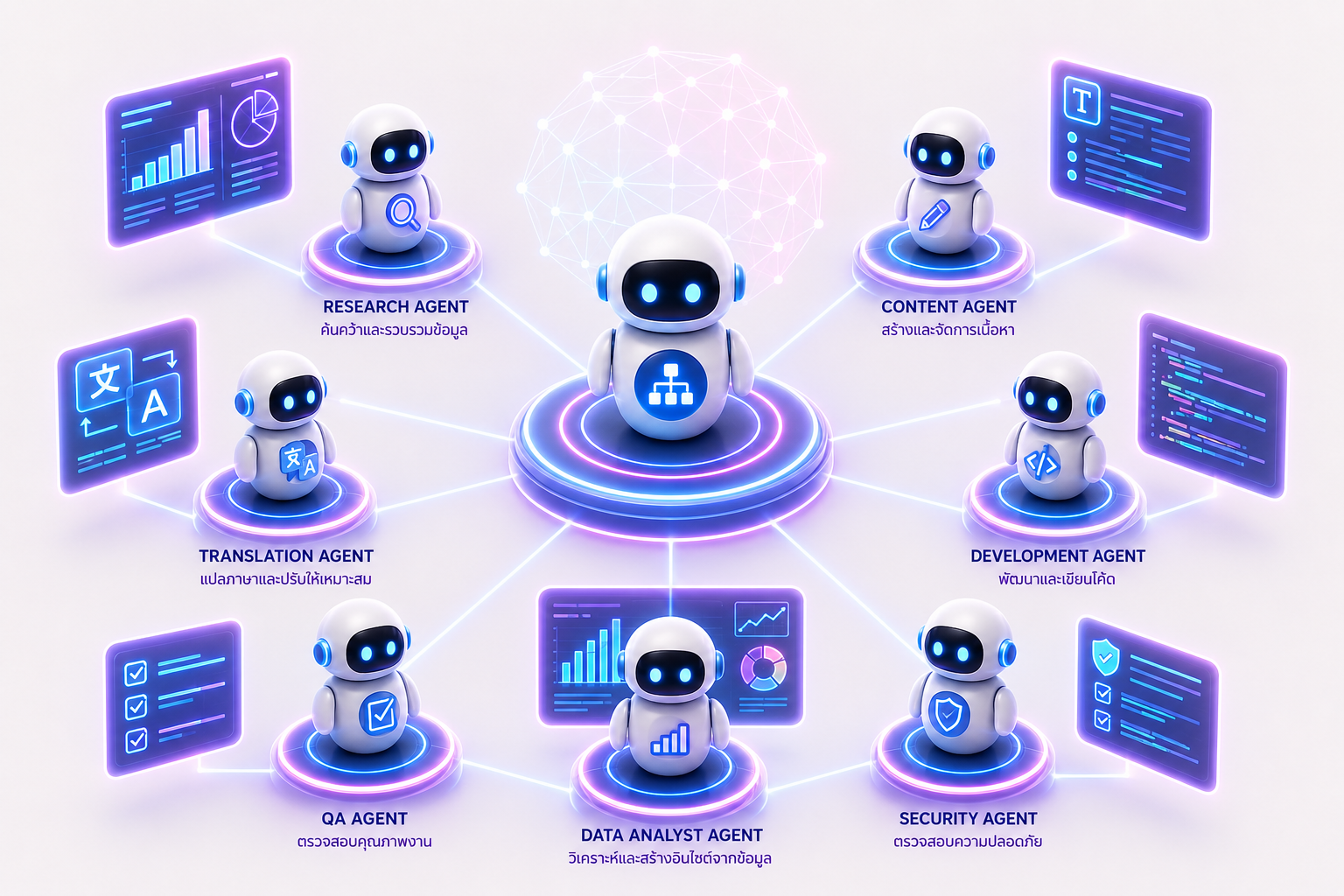
Multi-Agent Systems are systems composed of multiple AI Agents, each with different roles, goals, and areas of expertise. Rather than having one AI do everything, MAS breaks work into smaller parts and assigns each AI responsibility for the portion that fits its role:
- Orchestrator — plans and decomposes tasks
- Researcher — gathers information
- Analyst — evaluates risks
- Writer — composes outputs
- Reviewer — validates accuracy before delivery
When AI doesn’t work in isolation but operates together in a structured way, organizations can apply AI to significantly more complex work, more effectively.
Why a Single AI Might Not Be Enough
The core principle of MAS is Specialization. In the real world, no organization expects a single person to be Project Manager, Analyst, Developer, and QA simultaneously. AI is no different. Assigning a single AI to every step of a complex workflow increases the probability of errors — especially in tasks that are data-heavy, have multi-layered conditions, or require multiple verification passes.
MAS applies the principle of Divide and Conquer — breaking large goals into clearly defined smaller tasks. The result is a more organized system that’s easier to audit and reduces the risk of a single AI making decisions from only one perspective.
MAS also has a meaningful advantage in Parallelism. Multiple AI agents can work simultaneously: one analyzing customer data, another researching market trends, and another drafting communication strategies — then synthesizing the results together. Processes that previously required waiting for each step to complete can now run faster and with greater flexibility.
Patterns of Multi-Agent Systems
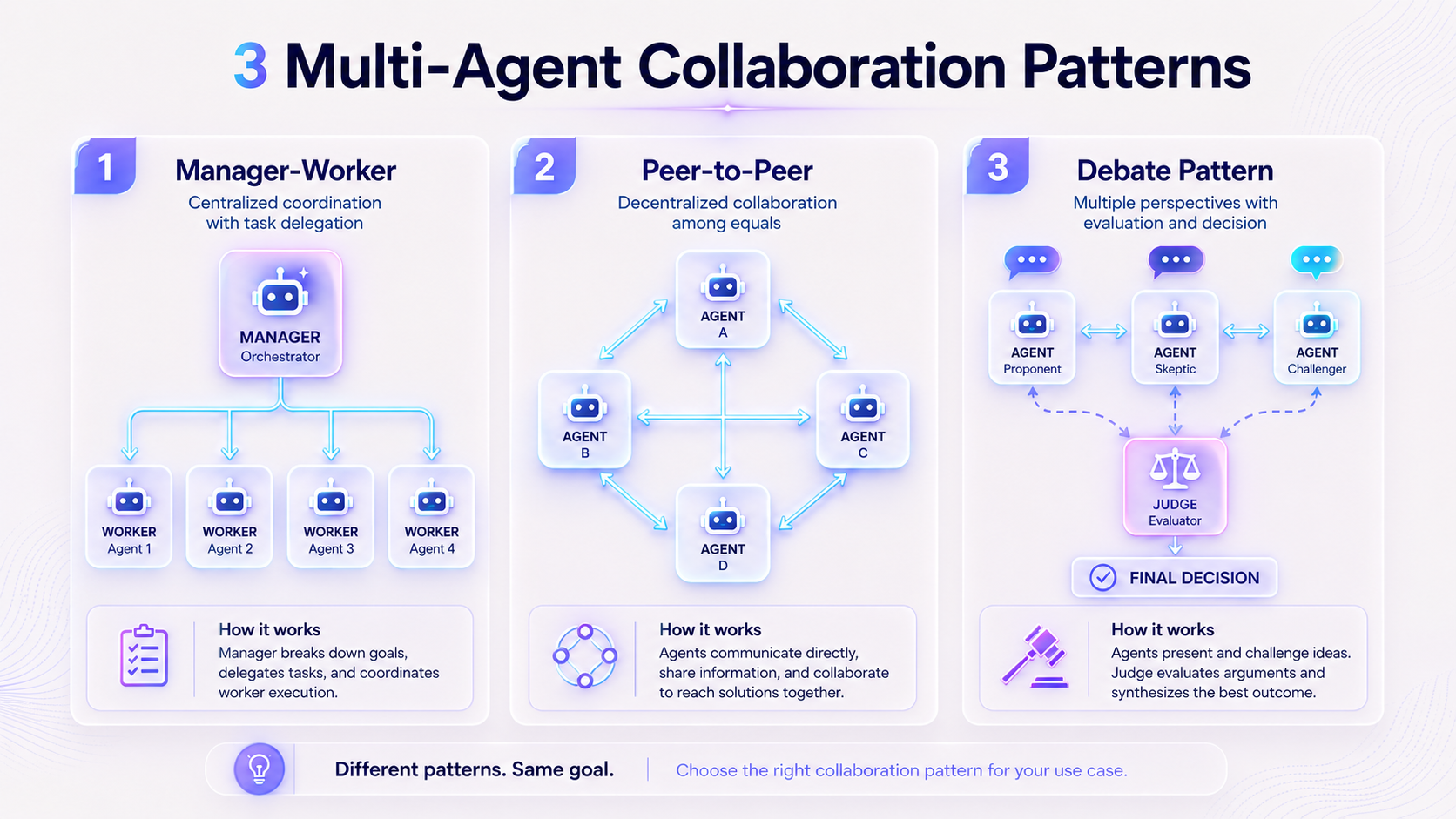
MAS has three primary patterns commonly seen in real-world deployments:
1. Manager-Worker Pattern — One AI acts as the manager, planning and assigning tasks to other AIs. Best suited for multi-step work that requires overall coordination — such as strategy development or report generation.
2. Peer-to-Peer Pattern — AIs pass work directly to each other without a central coordinator. Best suited for work requiring repeated iteration and multiple review cycles — such as Software Development or Data Pipelines.
3. Debate Pattern — Multiple AIs examine the same challenge from different or opposing perspectives in a structured way. For example, one AI proposes a plan while another plays Devil’s Advocate. This helps organizations reach more well-rounded outcomes on important decisions.
Emergent Intelligence: Collective Capability
What makes MAS compelling isn’t just the division of labor — it’s that multiple AIs working together can produce better outcomes than any single AI could. When multiple AIs communicate, challenge each other, and fill each other’s gaps, the system can discover new solutions or surface hidden errors. This is called Emergent Intelligence.
In a business context, this translates to more thorough reports, plans that have been examined from multiple angles, and processes that improve themselves over time.
Challenges Organizations Need to Know
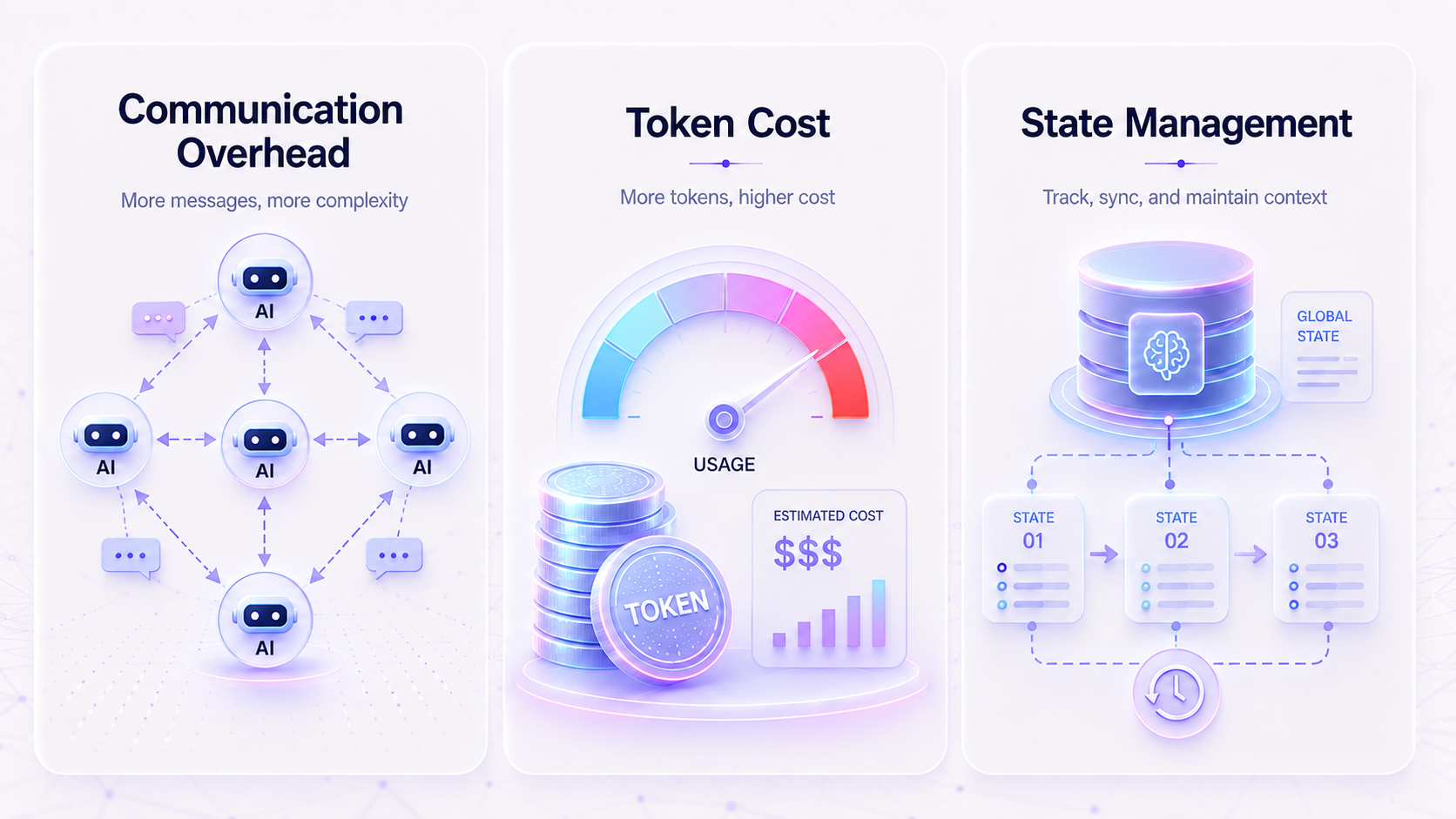
MAS comes with three categories of challenges that require careful design:
Communication Overhead — Poorly defined task boundaries can cause AI agents to loop indefinitely. Clear scoping is essential.
Token Cost — Costs scale with the number of communication rounds between agents. More agents means more careful cost planning is required.
State Management — All AI agents must work from the same shared data. Without robust Shared Memory, outputs may conflict or lose context entirely.
A Decision Framework Before Starting with MAS
Before adopting Multi-Agent Systems, ask yourself three questions:
- Is this task complex enough to require multiple AI roles?
- Does the output need to be verified from multiple perspectives?
- Does this process have the potential to generate business outcomes that justify the added cost?
If the answer is “yes” to at least two of these, Multi-Agent Systems may be worth serious consideration. But if the work is still straightforward, data isn’t complex, and risk is low — a single AI or standard Workflow Automation may be sufficient and more cost-effective.
Where Does the Human Fit When AI Starts Working as a Team?
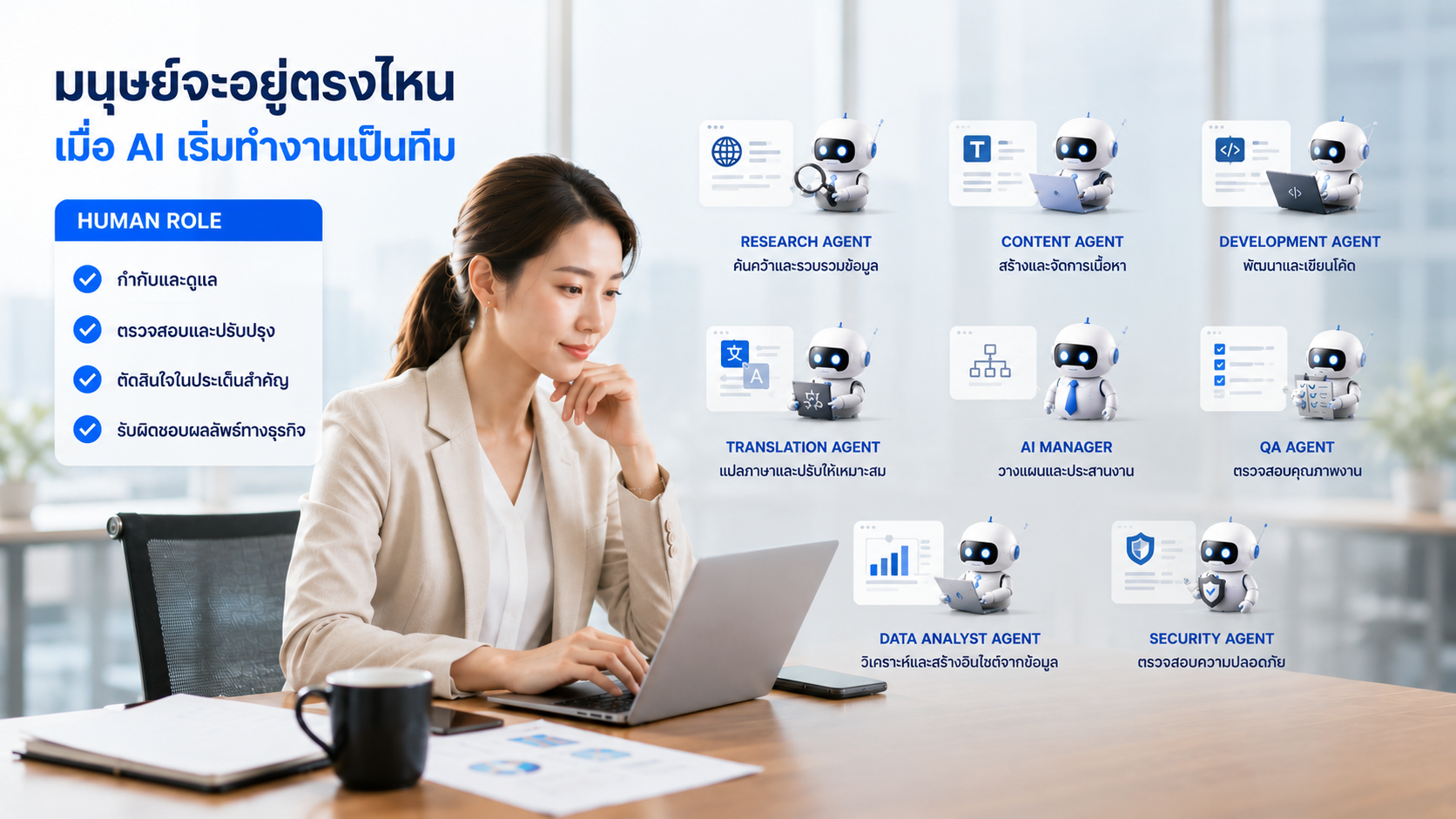
The human role doesn’t disappear — it shifts. Rather than being the one who executes every step, humans become Managers of Agents: setting goals, defining the working framework, reviewing outputs, and making decisions at critical junctures.
In the world of Agentic AI, humans remain the ones who define the purpose and meaning of the work. AI Agents help find the path to make those goals real. This relationship isn’t competition — it’s collaboration where both sides do what they do best.
Conclusion
Multi-Agent Systems aren’t just a new trend — they represent a significant shift in how organizations design their operating systems. The real value of MAS isn’t in the number of AIs, but in designing each one with a clear role, making them work together effectively, and keeping humans as the directors of the overall direction.
Is your organization ready to step into AI that works as a team?
Muze Innovation is ready to advise on Enterprise Tech and help you develop an AI strategy that delivers real value for your organization.