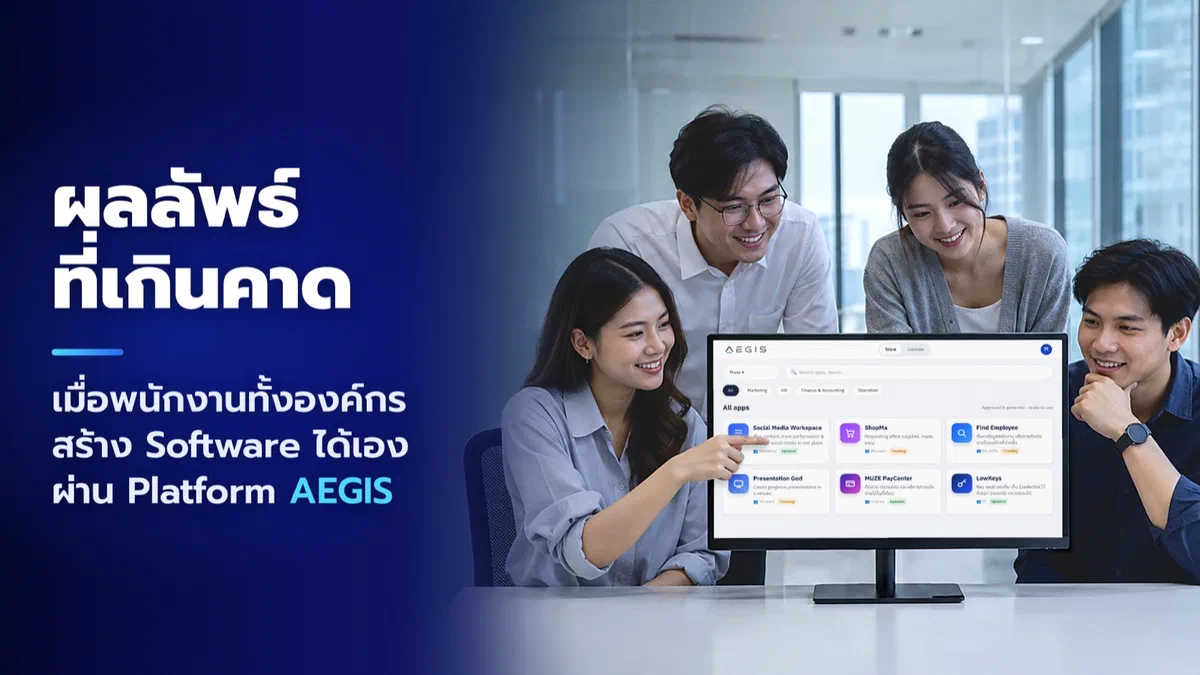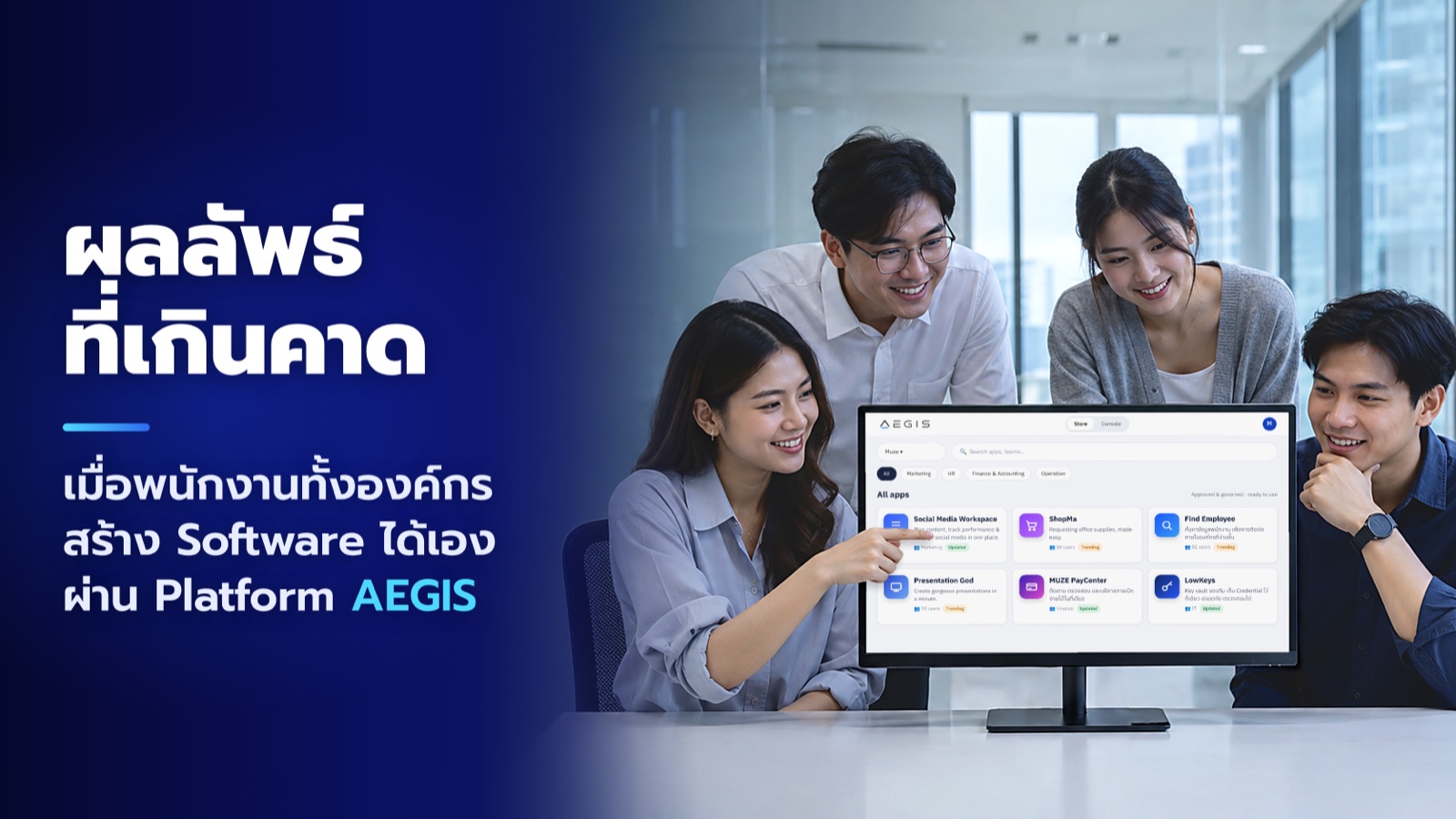
When Muze started letting employees build applications with AI on AEGIS a few months ago, the initial goal was fairly straightforward: let the people closest to a problem build the tool that solves it themselves, without waiting in the Dev team’s queue, while every application still meets the same standard before it goes into real use.
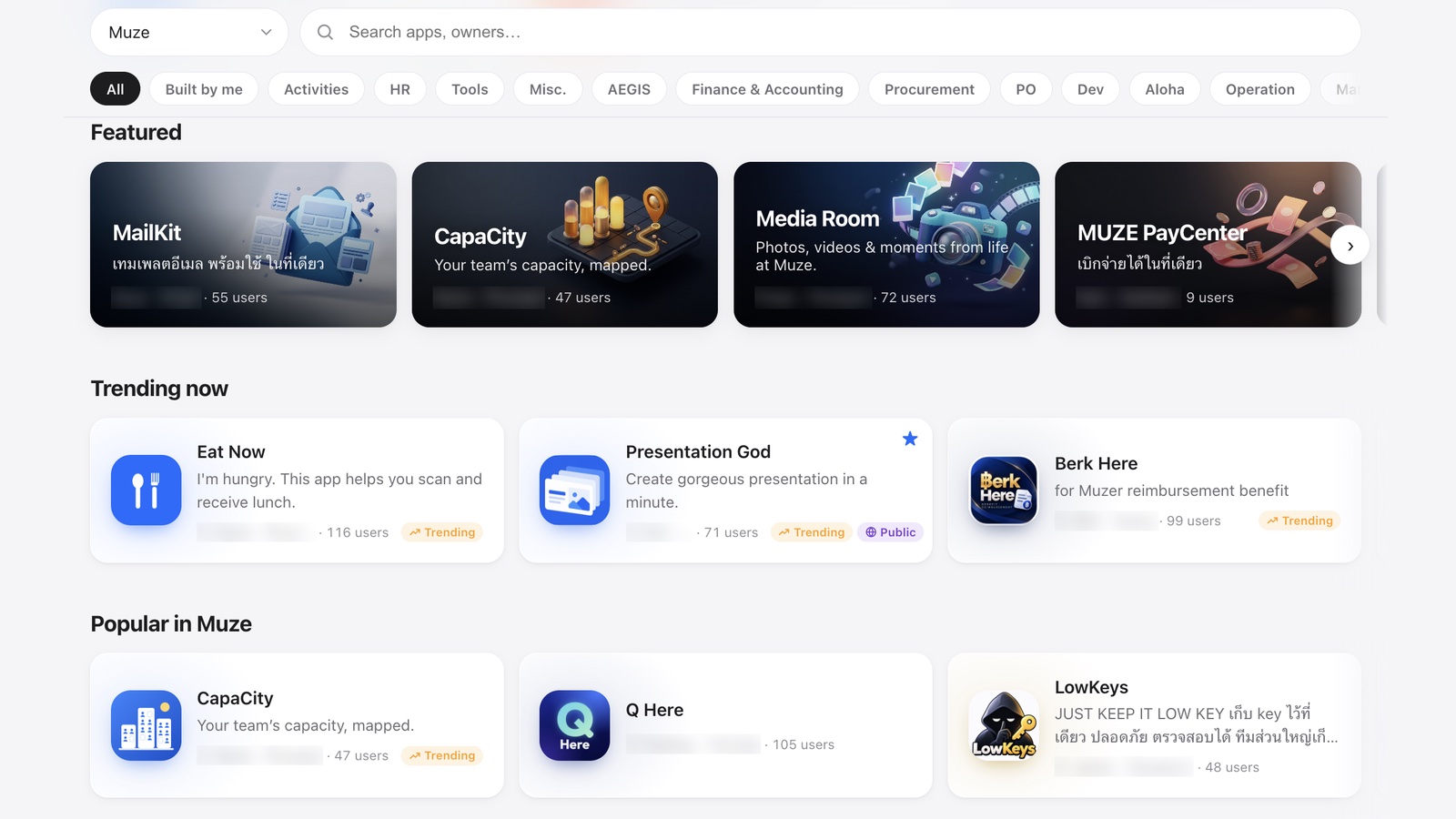
Today, Muze’s Internal App Store holds more than 150 applications built by employees, covering everything from Marketing, Finance, Procurement and Operations to internal company activities. Many apps have dozens of users, and some have close to a hundred.
But what’s more interesting than the number of applications is what we never expected: changes in how people think, how they work together, and in the culture of the organization.
Where It Started: Small Problems Nobody Ever Got to Fix
In most organizations, the development team’s time is limited, so priority usually goes to core systems or work that directly affects customers. The small problems employees run into every day, such as pulling together data from multiple sources, tracking requests through chat, or re-entering the same data into spreadsheets, tend to be left alone, because they don’t seem worth opening a project for.
Muze was in the same situation. Then AEGIS made it possible for employees to build their own tools under one shared standard, and problems that had been shelved for a long time started getting solved one by one. This is what has changed in the organization since then.
1. Problems Get Solved Where the Work Happens, Without Waiting in a Queue
The fastest visible impact is that the gap between “having a problem” and “having a tool that solves it” has clearly shrunk. Instead of writing a request, waiting for an assessment and waiting for a development slot, an employee who understands the problem can start building a tool right away, and put it into real use once it passes review.
What changed isn’t just speed, but the quality of the tools too. Because the person building it is the person who actually uses it, they know which data is necessary, which steps tend to go wrong, and which screen layouts are easiest to use. The tools fit the need from the very first version, and can be improved immediately when the way of working changes.
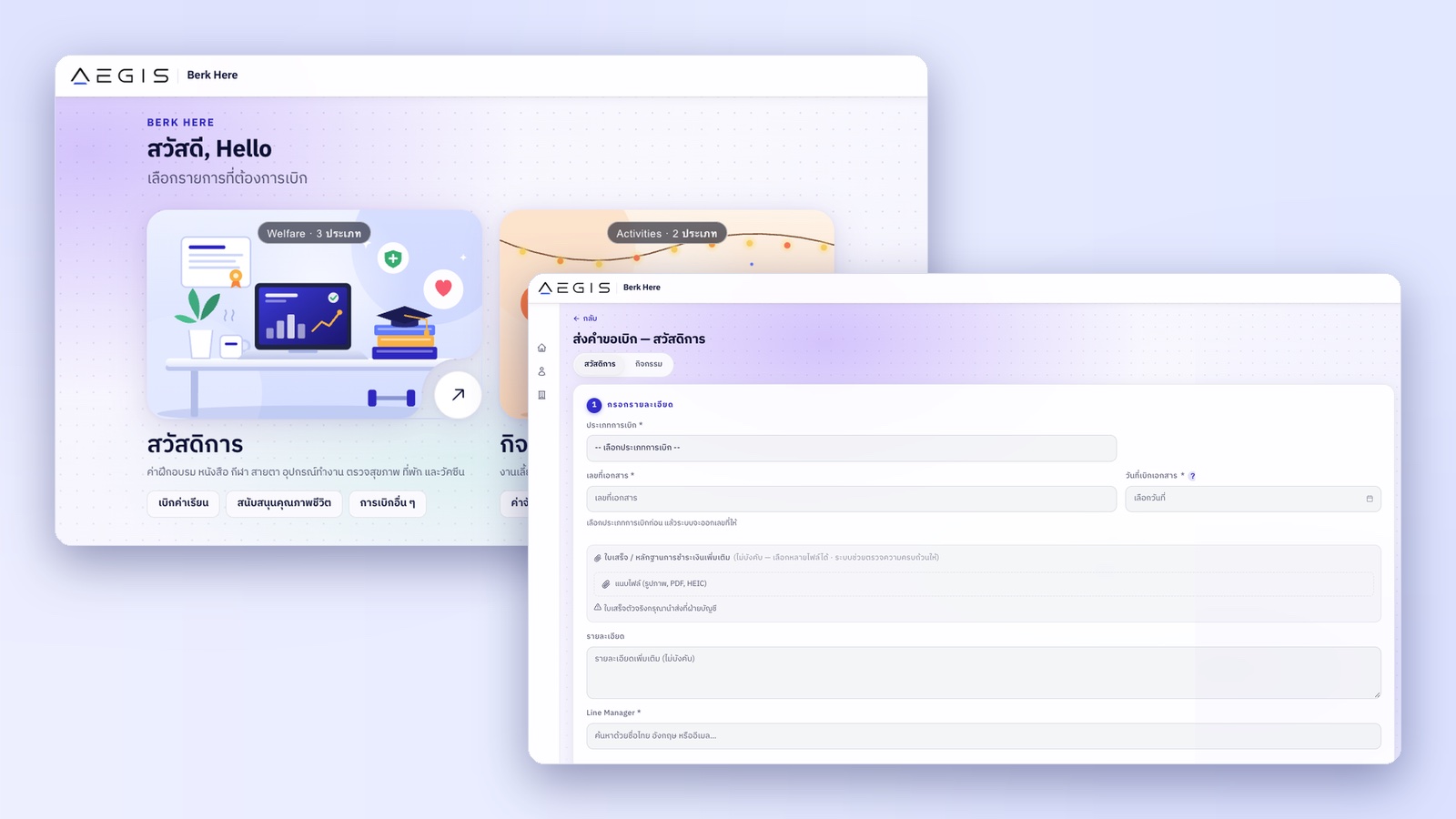
For example, requesting office supplies used to be tracked through messages and manual paperwork. The Procurement team solved that pain point by building an app themselves, and it is now used by employees across the whole organization. For reimbursements and benefits, the HR team built software that removes the manual steps and lets people track the status of every claim in one place.
2. The Organization Sees Its Real Problems Through What Employees Build
With all applications gathered on the Internal App Store, something happened that nobody planned: the organization got a “map of problems” more accurate than any opinion survey.
Each application shows what kind of work employees lose time on, the number of users shows how many people a problem affects, and repeat usage shows whether the tool actually solves it. For example, Eat Now, which helps with picking up lunch, is one of the applications with the most returning users, a sign that a problem that looks small can affect a lot of people every day. This data helps management decide more clearly which processes deserve further investment at the organizational level.
Put another way, the applications employees build work both as tools that solve problems and as signals telling the organization where to focus next.
3. One Tool Benefits Many Teams
Before there was a central space, a good tool built by one team was usually used only within a small group, because nobody else knew it existed, while another team might be solving the same problem their own way.
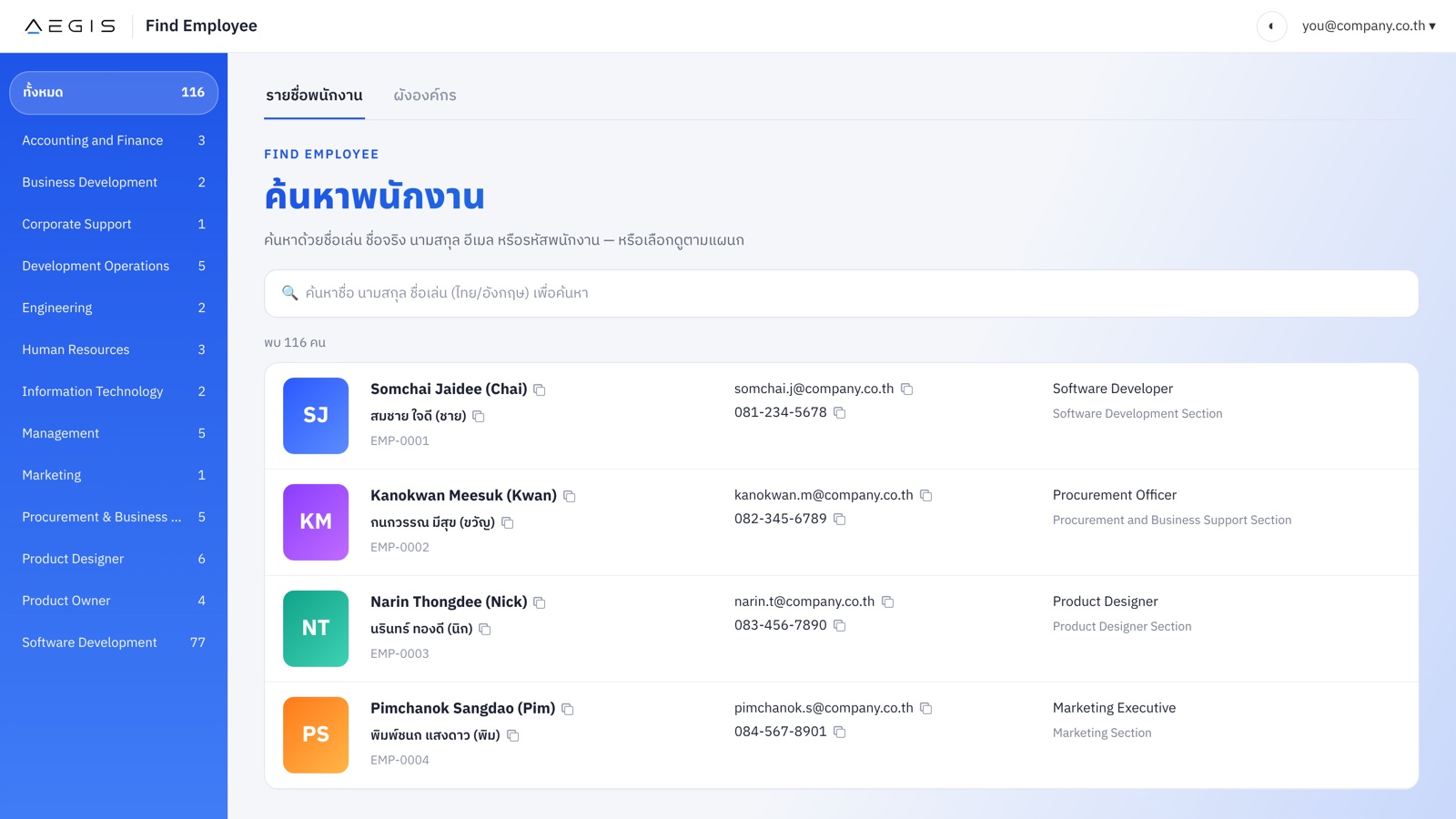
The Internal App Store changed that. When an employee needs a new tool, the first thing they can do is search to see whether someone has already built it. Many applications that started from the needs of just a few people are now used by dozens of employees across multiple teams, such as Find Employee, a tool for looking up colleagues’ contact details that now has more than 80 users, and Presentation God, a presentation-building tool that almost everyone who has to present in meetings now uses, because it’s easy and the slides come out better-looking than ones made in Google Slides, PowerPoint, or Canva.
The result is that the organization builds fewer duplicate tools, carries less maintenance burden for systems that do the same job, and lets the effort of a single employee create value for the whole organization.
4. Employees Gain the New Skills an AI-Era Organization Needs
Many organizations invest in workshops so their employees can use AI, but what we found is that the skills that grow fastest come from hands-on work solving one’s own real problems.
Building a single application forces an employee to think in systems: defining what the tool should do, who its users are, how data should flow, all the way to explaining what they need clearly enough for AI to understand. These skills aren’t only used when building an app; they shape how people work on everything.
We’ve seen a change in the questions employees ask. What used to be “who will build this system for me?” has become “how should we design this tool so it fits the need best?” People from Marketing, Finance, Procurement and Operations are no longer just users of technology; they’ve become the designers of how their own teams work. For example, the Marketing team built Social Media Workspace to bring content planning and performance tracking for every channel into one place, instead of pulling data together from multiple dashboards by hand.
5. Security Becomes Something Everyone Understands, Not Just IT
In many organizations, security policy is a document employees acknowledge without really understanding how it relates to their own work.
When every application has to pass through the Governance Pipeline before going live, the employees who build them learn first-hand why access rights need to be defined, why personal data needs to be protected, and why credentials shouldn’t be kept in code or chat. Every time the system flags something to fix, it’s a lesson they carry into their next piece of work.
What makes this learning stick is that every review happens on the employee’s own work, not on a hypothetical example in a training room. When the system points out a password or API key sitting in the code, or a screen that lets people who shouldn’t have access see data, and tells them exactly where to fix it, employees see right away what a risk actually looks like, and remember it far longer than they would after reading pages of policy.
Every time before submitting an application for review, the builder also has to state what types of personal data the app collects or uses, and must get admin approval before using additional capabilities, such as an AI model or data from another system. These steps turn questions like “does this app really need this data?” and “who should see which part of the data?” into things employees think about from the moment they start designing, which is the same principle that the PDPA and the idea of least privilege, giving only the access that’s necessary, emphasize.
As a result, employees started spotting risks themselves and fixing them before problems occurred, to the point that someone built LowKeys, a tool for storing the team’s API keys and passwords securely in one place, instead of sharing them through spreadsheets or chat.
This understanding doesn’t stop at building apps. Employees who have been through the review process tend to be more careful in other work too, whether that’s sharing files that contain customer data, passing data to another team, or choosing external AI tools, because they’ve already seen how easily small risks can happen and they know how to prevent them.
Governance like this isn’t just a checkpoint; it’s a process that gradually raises the standard of everyone in the organization.
6. IT Sees the Full Picture and Shifts into a Supporting Role
IT’s first worry when employees start building their own tools is an ever-growing number of systems that nobody maintains. But with every application on the same platform, the result was the opposite.
IT can see which applications exist, who owns them, who’s using them and how many resources they consume. IT’s own work has tools built on AEGIS too, such as CheckMac for the annual MacBook condition check. At the same time, requests to build small tools no longer all have to go through IT, because employees can solve them themselves under the standards IT defines.
The time freed up lets IT and the development team focus on work that genuinely needs their expertise: maintaining infrastructure, complex system integrations, and developing standards that help every builder work better. IT’s role has shifted from bottleneck to enabler, supporting builders from every team to create tools with confidence.
7. The Software Employees Build Truly Belongs to the Organization
When employees build applications on AEGIS and release them through the Internal App Store, every app is centralized in one place. The source code for all of that software lives on the organization’s own cloud servers, under a single standard, and the organization always knows what software exists, who maintains it, and where it runs.
No matter how much time passes, or whether the person who built it moves teams or leaves, the software stays a company asset, ready for others to improve, fix and keep building on, instead of starting over every time people change.
That’s very different from leaving employees to vibe code on their own without a platform behind them. They may be able to build tools, but the organization has little idea where those tools live. Each app might run on a different server with no shared standard, and when the builder leaves, the software can disappear along with them.
8. Company Culture Grows Stronger Through Tools Employees Build Themselves
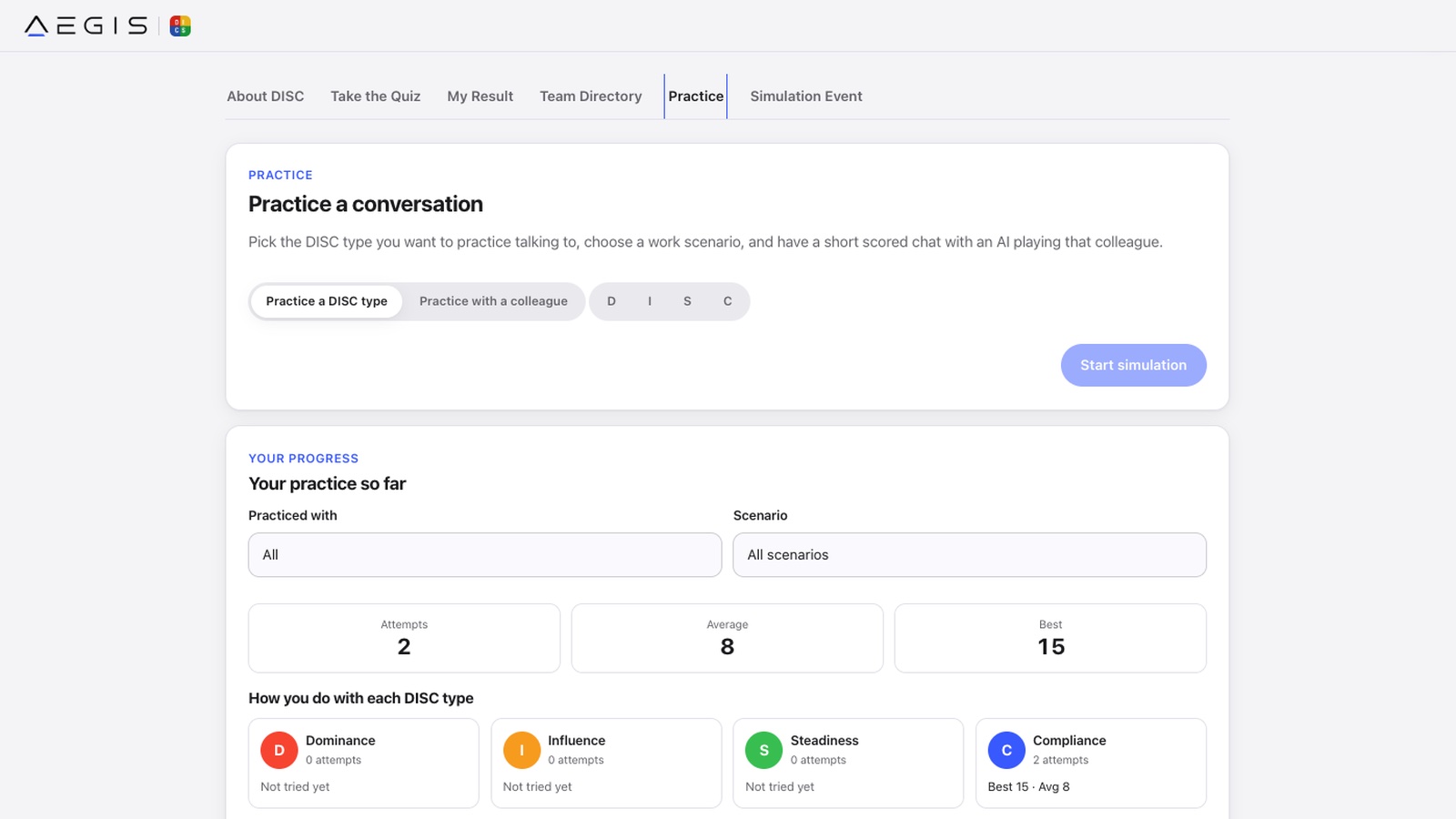
What we least expected was the impact on company culture. Quite a few applications weren’t built to boost productivity directly, but to make working together more fun and bring people closer: an app that shows each team’s results in company activities, one that turns learning into a competitive quiz, and another that helps people understand their teammates’ working styles.
These tools gave employees the confidence to try building something for the first time, because they start with something fun and low-risk. And when people see what their colleagues have built, inspiration keeps coming in a cycle: one person builds, many others use it, and the next person wants to try building too.
This kind of culture is something many organizations try to create through policies or activities. At Muze, it happened on its own once employees had the tools and a space safe enough to act.
9. The Organization Is Ready for Future AI Workflows
Another change that’s just beginning is that applications on AEGIS can let an AI assistant call some of their capabilities, under the permissions of that particular user, via MCP, and several apps already let an AI assistant call a number of their capabilities. Employees are starting to get work done by instructing AI directly, instead of opening multiple screens to complete a single task.
What keeps this connection safe is that the AI assistant doesn’t access the system with special privileges. It acts on behalf of one user at a time, and sees only the applications and data that user already has access to. Any capability opened up for AI to call has to be approved by an admin, and can be tested against test data before going live. The same principles used to govern applications are applied to AI as well.
As each app opens its capabilities to AI, work that used to mean switching back and forth between several systems starts to connect in a single instruction. For example, an employee can ask the AI to pull revenue figures from a revenue-tracking app and turn them into summary slides in a presentation app, without opening either system themselves. The applications employees build are no longer just screens for people to use; they become building blocks that AI can assemble into workflows.
With all internal tools on the same standard and already governed, connecting them to AI in the next step can be done with confidence. The organization doesn’t have to start from zero every time a new kind of AI technology arrives, because the infrastructure is already in place to support it.
For Muze, this is where the investment in governance starts paying off a second time. The standards put in place so employees could build apps safely have become the same foundation that makes the organization ready for an era where AI isn’t just an assistant that answers questions, but one that can actually do the work.
What Made These Results Possible?
None of these positive impacts came from AI alone, because AI coding tools are already widely available. What made Muze’s results different is the structure AEGIS puts in place to support it.
The Builder Kit lowers the barrier to getting started. Employees don’t have to decide on technology, data connections or a login system themselves, because the organization’s standards are already defined for them, so they can focus fully on solving the problem.
Governance gives the organization the confidence to open up. When every application has to pass the same review, the organization can let large numbers of people build tools without worrying about risks nobody can see.
The Internal App Store makes the work visible. A tool from one team is discovered and used by other teams, and becomes inspiration for the next person.
Every app has an owner the organization can see. Apps people build on their own also have someone who built them, but usually nobody knows who, until the day the system breaks or the builder moves teams. On AEGIS, the responsible owner’s name is recorded with the app from the day it goes live. Everyone in the organization can see who to contact, and when people change roles, responsibility can be handed over systematically. The tools keep being maintained instead of being abandoned halfway.
Without any one of these parts, the result might be nothing more than a pile of prototypes nobody actually uses, or tools so scattered that they become a burden on IT.
More Than Tools: An Organization That Learns and Adapts Faster
Looking back, what Muze got from AEGIS isn’t just a large number of applications that make work faster. It’s an organization where every employee has the chance to turn the problems they run into into tools, share those tools for others to use, and grow along with the new skills they gain by doing.
These experiences are what Muze has brought into designing AEGIS for other organizations, so that every organization can start down the same path.
If you’re interested and want your employees to try building tools with AI under the same standards and governance Muze uses, get in touch with the Muze team to try AEGIS. We’ll help you plan a starting point that fits your organization.