TechCut — Business / Product Strategy · ONESIAM Super App Project
When a large organisation starts building a Digital Platform, the first question that comes up is usually:
“What kind of app should we build?”
But there’s often a more important question underneath that one:
“What assets does this business have that would be hard for competitors to copy once they’re digital?”
Because if an organisation starts by trying to make an app that looks like everyone else’s, what they get is another digital channel competing in the same arena — on price, promotions, speed, or product range.
But if they start from assets that are genuinely their own, the platform has a chance to amplify existing advantages rather than fight for ground from scratch.
This is what makes ONESIAM Super App interesting — a project Muze designed and developed for Siam Piwat, owner of luxury shopping destinations Siam Paragon, ICONSIAM, and Siam Center.
Don’t Build a Platform That Competes on Someone Else’s Terms
At a glance, ONESIAM Super App might look like “a shopping mall’s online store.”
But if a premium retail destination builds an app to compete head-on with marketplaces, the questions that follow are immediately difficult:
- Can we sell cheaper?
- Can we deliver faster?
- Can we carry more products?
- Can we run more promotions?
This isn’t the game a shopping destination should choose to play.
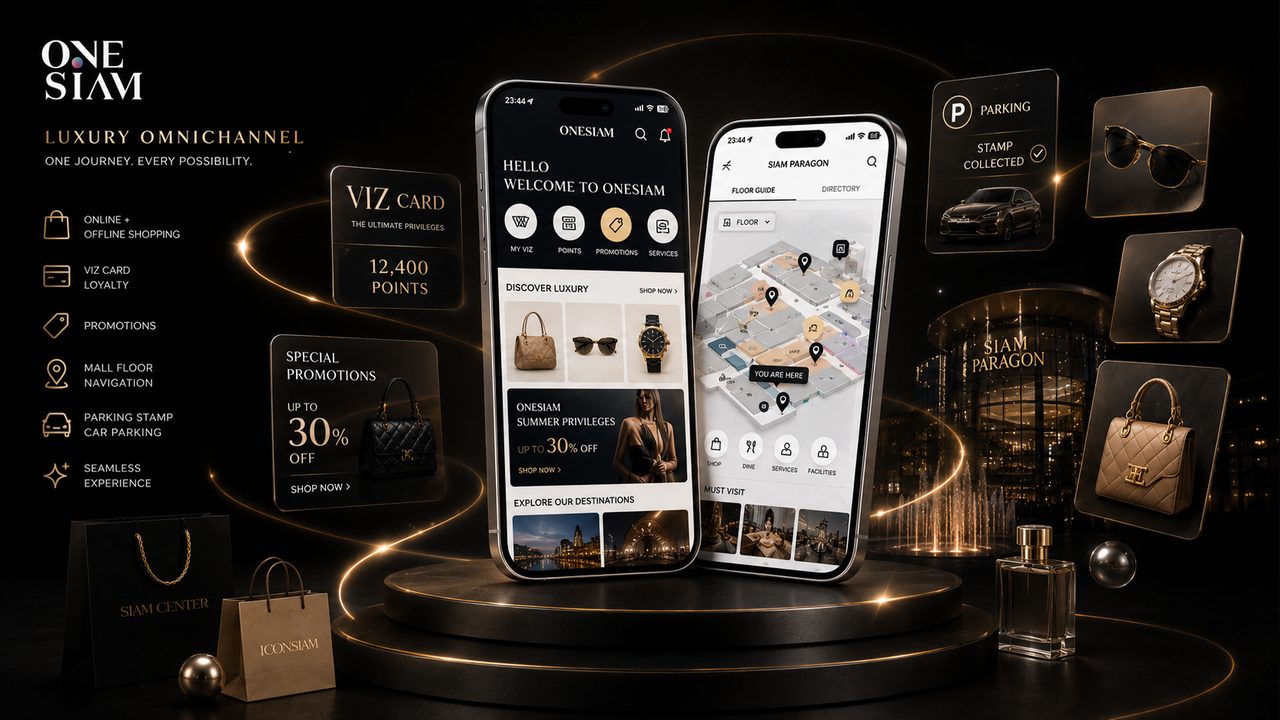
Because ONESIAM’s strength isn’t just having products. It’s the entire ecosystem around the customer experience — over 1,000 Luxury and Lifestyle brands, the VIZ Card membership system, exclusive privileges, parking services, content, events, and partner networks.
So the real question was never “how do we build E-commerce?” It was:
“How do we connect all the assets of this Ecosystem to customers through a Digital Platform?”
That’s the difference between building an app to “add a sales channel” and building a platform to “amplify the value of the business.”
Super App Doesn’t Mean More Features — It Means an Unbroken Journey
The term “Super App” tends to make people think about apps with a large number of features.
But in Product Strategy, the difficulty isn’t adding more items to the menu. The real challenge is making multiple features connect into a single Customer Journey.
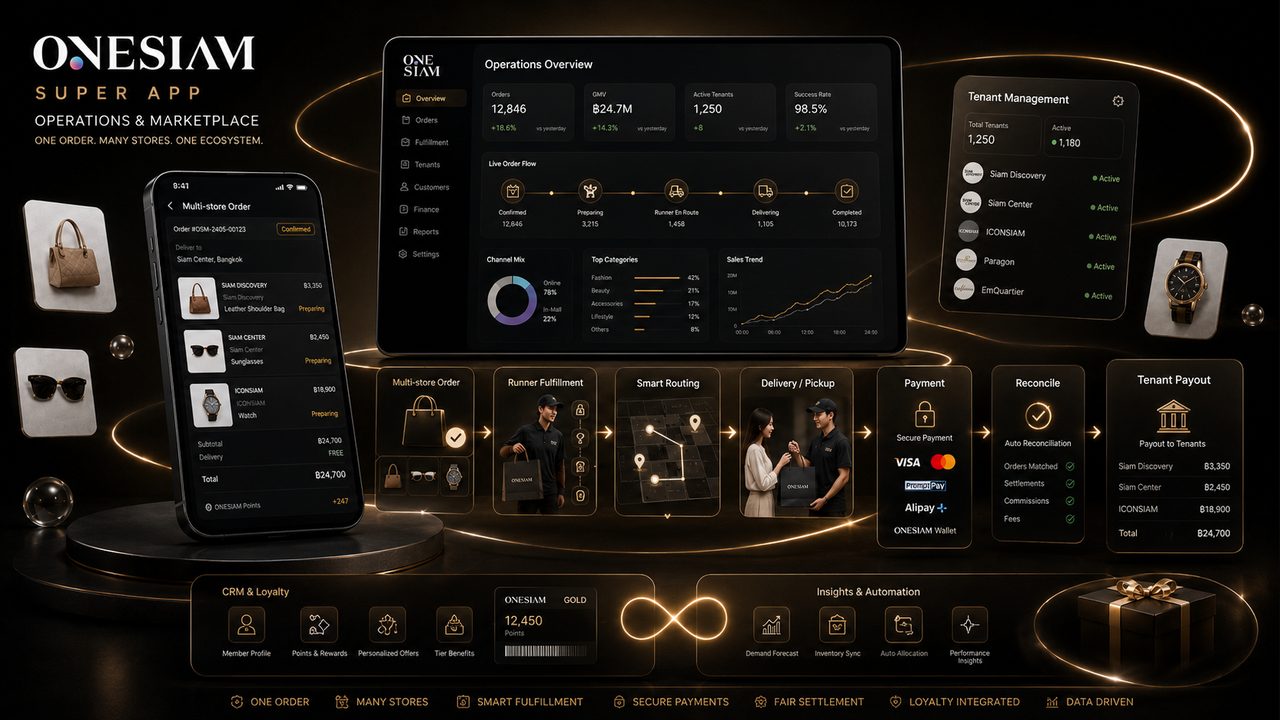
In ONESIAM Super App, the core features were designed to flow together as a continuous experience:
- Discover products, brands, or content
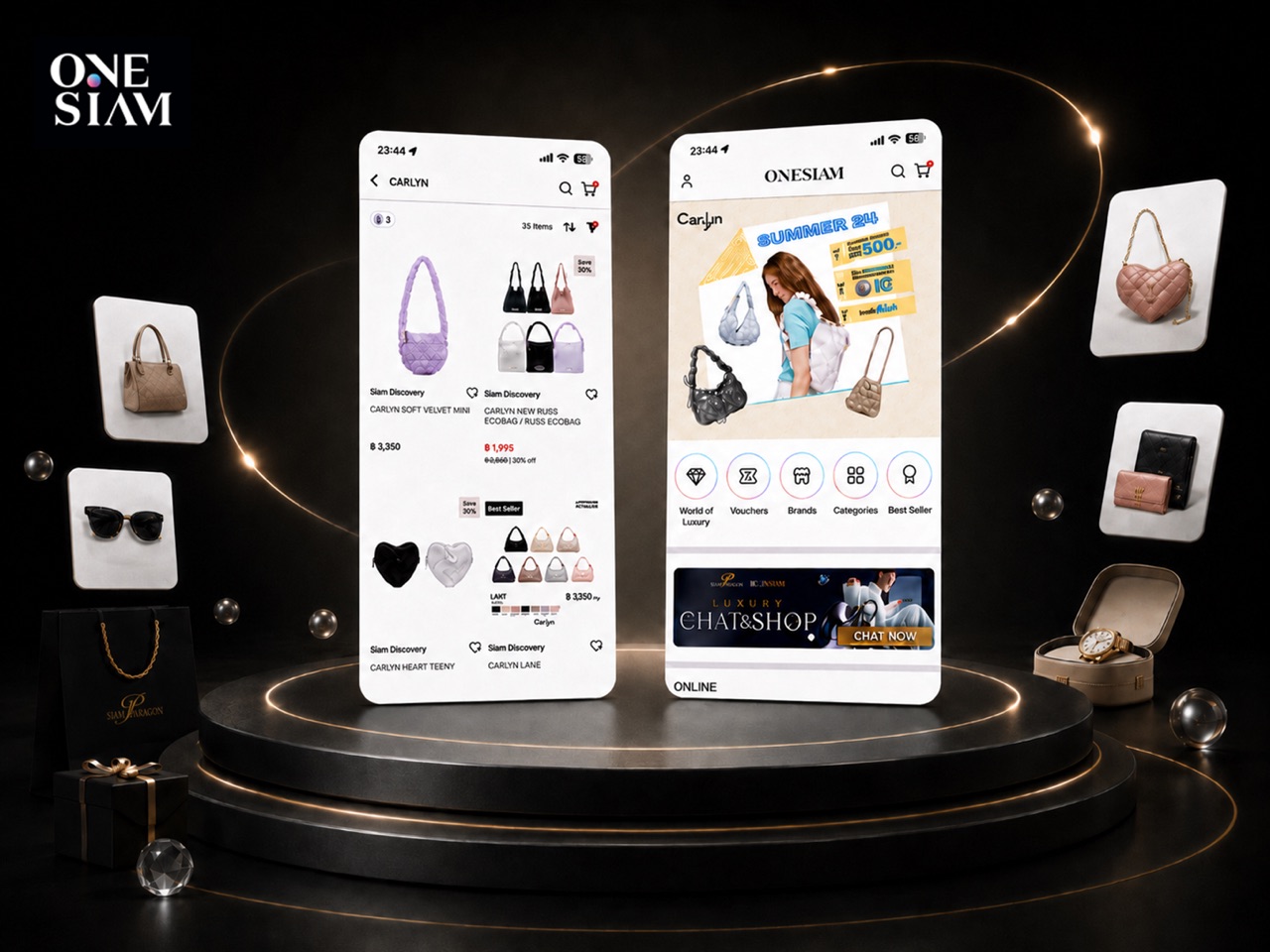
- Buy products or talk to stores through Chat to Shop
- Earn and spend VIZ Coins
- Use VIZ Card member privileges
- Connect with loyalty partners (TruePoint, bank partners)
- Use mall-integrated services like Parking Stamp
- Return to engage with new content, promotions, and activities
Individually, these look like separate sub-systems. Seen as a Journey, this is a design that lets customers move from Online to Offline and back again without interruption.
A good Super App isn’t the one with the most features — it’s the one where the customer’s journey never breaks.
The Small Feature That Becomes a Strategic Feature
Some features look minor technically but carry significant weight in terms of user behaviour.
The clearest example here is Parking Stamp.
On the surface, this looks like a small feature — just tapping to validate parking through the app. But in Platform Strategy terms, it means something more.
Parking Stamp is one of the key connectors between the Digital Platform and the Physical Experience of the mall. It means the app isn’t only useful when someone is buying online. It becomes part of the actual moment when a customer is physically in the mall.
This is something a general marketplace can’t easily replicate. A marketplace may be strong at transactions, but it doesn’t own the physical journey customers have in a real space.
A feature that looks small in the system can become a Strategic Feature if it connects to the real behaviour of customers in their everyday lives.
Loyalty Isn’t Just Points — It’s a Reason to Return

Another core asset in ONESIAM is its membership and benefits system.
Looked at simply, loyalty might just seem like an accumulation programme — earn points, redeem rewards, get discounts. But for an organisation’s platform, loyalty plays a much bigger role.
Because loyalty is the structure that keeps the relationship between brand and customer from ending after a single transaction.
- A Marketplace typically wins the game of transactions
- An Ecosystem Platform has to win the game of relationships
Integrating VIZ Card, VIZ Coins, member privileges, and partners (TruePoint, Citi, KBank, SCB) into the app isn’t just about completing a feature list. It’s about creating a Reason to Return.
Customers don’t come back to the app only when they want to buy something. They come back because the app is connected to benefits, relationships, and experiences that come with the whole Ecosystem.
Loyalty becomes the platform’s Retention Architecture — not just a points programme.
Good O2O Isn’t Just Online-Meets-Offline — It’s Each One Making the Other Better
Many organisations talk about O2O. But the real challenge isn’t having both an online and offline presence. The challenge is making them reinforce each other.
ONESIAM Super App wasn’t designed to replace the mall. It was designed to extend the mall experience beyond its physical walls.
- A customer might see content in the app, then go to use their benefit at a store
- Or visit the mall, then use the app to earn points, use a coupon, or manage parking
- Or buy online, then continue engaging with brands and benefits across the Ecosystem
This is O2O that has real value — not because it has both online and offline, but because online makes offline more valuable, and offline makes online different from any general platform.
The Hard Part Isn’t Building the App — It’s Connecting the Ecosystem
Building one app might not be the hardest part. Building a platform that connects multiple systems, multiple partners, multiple teams, and multiple customer journeys together is the real challenge.
In a project like this, what needs thinking through isn’t just the user’s screen. It includes backend systems, data management, partner integrations, multi-format benefit support, merchant workflows, and the ability to extend features in the future.
This is where Product, Business, and Technology have to work in close alignment.
5 Lessons from ONESIAM Super App
1. A good Digital Platform starts from the assets the organisation already has
The more important question is: what assets does this business have that competitors can’t easily copy, and how can they become a Digital Experience? For ONESIAM, those assets were brands, members, privileges, physical space, and a partner Ecosystem.
2. Don’t compete against large platforms on their own terms
If a platform is designed around the genuine strengths of the organisation, it doesn’t need to win on product count, lowest price, or heaviest promotion.
3. Good features need to be present in real customer moments
Parking Stamp, member privileges, loyalty points — these aren’t flashy features, but they’re what make the app worth opening in everyday life.
4. Loyalty is a relationship system, not just a points system
A loyalty programme that’s connected to real privileges, actual experiences, and customer behaviour becomes a Retention Architecture — far stronger than a standalone reward programme.
5. Super App success isn’t measured by number of features, but by journey continuity
When features are designed to support one journey — discover → engage → shop → earn → redeem → visit → return — the app starts to play a bigger role in customers’ lives.
For Organisations Building Their Own Digital Platform
Before starting to build an app or platform, the question shouldn’t just be “what should we do to match the competition?” It should be:
“What assets specific to our business, when made digital, will create long-term advantage?”
Muze believes a good platform has to connect three things:
- Business Strategy — understanding what the business’s real advantage is
- Product Experience — designing the Journey customers want to return to
- Scalable Technology — building systems that support the Ecosystem and long-term growth
Because ultimately, organisations shouldn’t build a Digital Platform just to “have an online channel.” They should build it to take assets that already exist and turn them into Digital Advantage that actually grows.