In the past, media businesses saw Content as their most important asset.
Whoever had the most popular dramas, the most-watched shows, or the most-sought-after broadcast rights held the strongest negotiating power.
But in the era of Streaming and Platform Economy, the question for media businesses has changed.
It’s no longer just “Do we have good enough Content?”
It’s now: “Do we still own the relationship with our audience?”
This is why major Thai players like CH3+ and TrueID made the decision to invest in their own platforms — not to compete head-on with Netflix, but because they refused to become mere “Content Suppliers” for someone else’s ecosystem.
The Market Is Still Growing — But Revenue Is Moving
Thailand’s Entertainment & Media industry isn’t disappearing. PwC forecasts the sector will be worth over 700 billion baht in 2025 and continue growing through 2029.
But the fastest-growing segments are not traditional media — they are OTT Video, Online Advertising, and Video Games.
OTT Video in Thailand is projected to grow 21% in 2025, reaching approximately 33.8 billion baht — a market roughly 6x larger than in 2020. Meanwhile, DataReportal reports that as of early 2025, Thailand has 65.4 million internet users, or 91.2% of the total population.
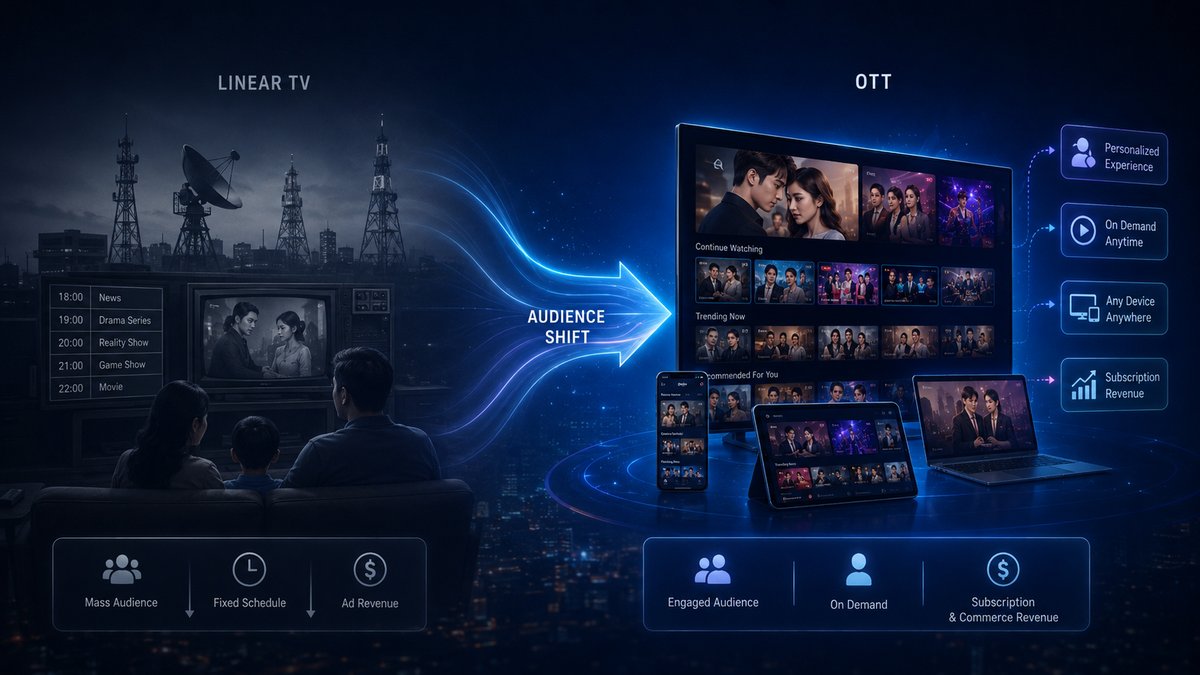
The audience isn’t disappearing. But their viewing habits, spending patterns, and advertising responsiveness are shifting from Linear TV to Digital Platforms.
The question is: will media businesses own those digital touchpoints, or let other platforms hold the audience relationship in their place?
License Model: Big Revenue Today, Hidden Cost Over the Next 5 Years
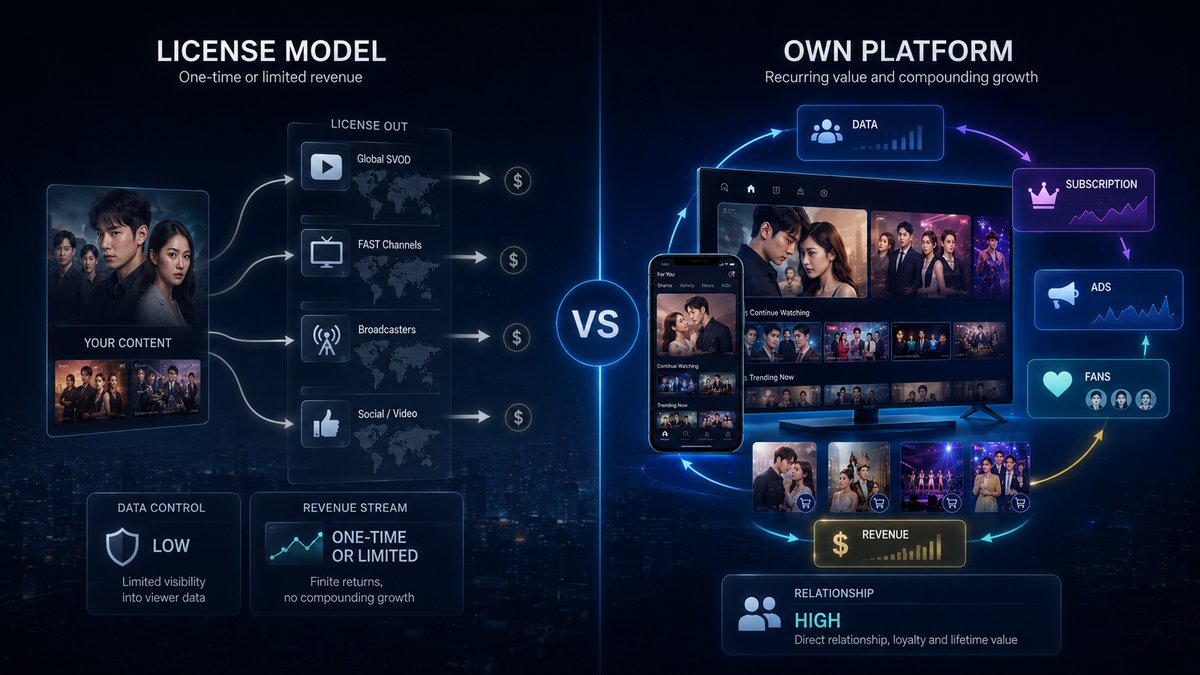
Licensing content to Global Platforms isn’t wrong — in many cases it’s a smart model. It delivers predictable revenue and gets content in front of large audiences quickly.
But the problem is what doesn’t come back.
When Content is watched on someone else’s platform:
- Data and audience behavior lives with that platform
- The recommendation engine lives with that platform
- Every opportunity to extend revenue lives with that platform
This hidden cost doesn’t show up in this year’s P&L. It shows up in business opportunities lost over the next 3–5 years.
If a company doesn’t know who watches its content, whether they finish it, which actors they follow, or what they’re likely to pay for — how does it build a modern media business?
Lessons from the Inside: CH3+ and TrueID Chose to Be Platform Owners
From Muze’s experience developing and upgrading platforms for CH3+ and TrueID, one thing is clear: the decision to build your own platform is not an IT project. It’s a strategic business decision that transforms how the business operates.
CH3+ had a strong broadcast audience but in the digital world, those viewers lived on other platforms. The decision to build CH3+ brought them back — and today CH3+ has more than 12 million monthly active users on its own platform. That audience data belongs to the channel, not to an external platform.
TrueID chose a broader model — an ecosystem combining Streaming, Music, Games, Sport, News and True Services under a single app. With more than 20 million monthly active users and live events like the World Cup drawing over 1 million concurrent viewers, TrueID demonstrates that a well-built platform is business infrastructure, not just a video app.
What Muze did in these projects wasn’t just write code. It was helping design Revenue Models and Engagement Strategies — mapping out how each platform would generate revenue from multiple streams, and what data and features each stream required.
Netflix Didn’t Win Because of Content Alone — It Won Because It’s a Platform
What makes Netflix different isn’t the volume of content. It’s that Netflix owns the full loop of its audience — from subscription sign-up through viewing, behavioral data collection, retention analysis, to the next content investment decision.
The difference between:
Content Business → asks “How much can we sell this Content for?”
Platform Business → asks “How does this Content increase our viewers’ lifetime value?”
For Thai media businesses, this doesn’t mean building a Thai Netflix. It means if you have an audience, a brand, talent, and shows people love — owning a platform is the structure that turns Content into an ecosystem generating revenue in multiple ways.
Revenue Models That Own Platform Unlocks — That License Model Can’t
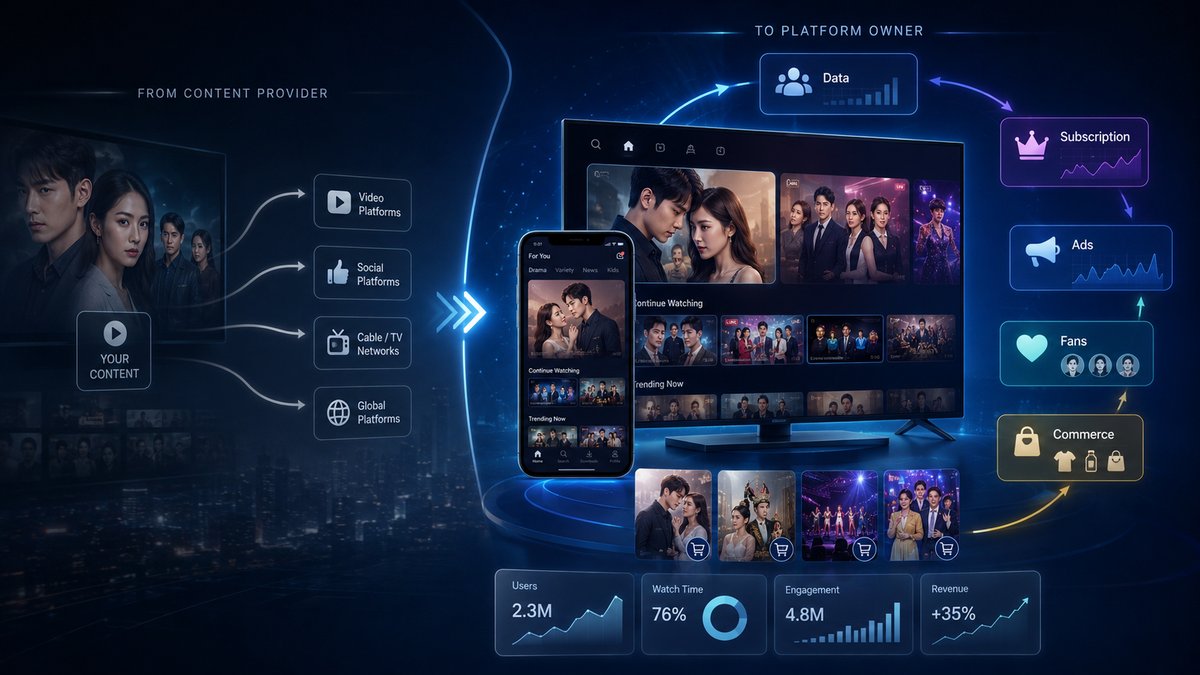
Most people assume OTT platforms only earn from subscriptions. But from Muze’s experience designing Revenue Models for real platforms, the best revenue often comes from multiple streams simultaneously.
AVOD — Free Content with Advertising Suitable for price-sensitive markets. When a platform has real audience data, ads can evolve from mass advertising to targeted advertising with significantly higher value.
SVOD — Premium Subscription Works best for audiences with high loyalty — followers of premium dramas, sport, or exclusive content unavailable elsewhere.
TVOD / Event-based Live events, concerts, special sport matches — one-time revenue with high margin, without forcing everything into a subscription model.
Fandom Economy — Revenue from Fans That Global Platforms Can’t Deliver This is the revenue model Muze sees as having the highest potential but being the most underutilized in Thai media.
CH3+ has a strong drama fan base — but if Content lives on someone else’s platform, where do those fans vote, participate, or buy exclusive content?
Owning a platform lets media businesses create:
- Voting systems for characters or contestants
- Exclusive fan content behind a subscription
- Digital collectibles or special access
- Commerce tied to Content and talent
The difference: this revenue comes back to the company in full — no platform cut.
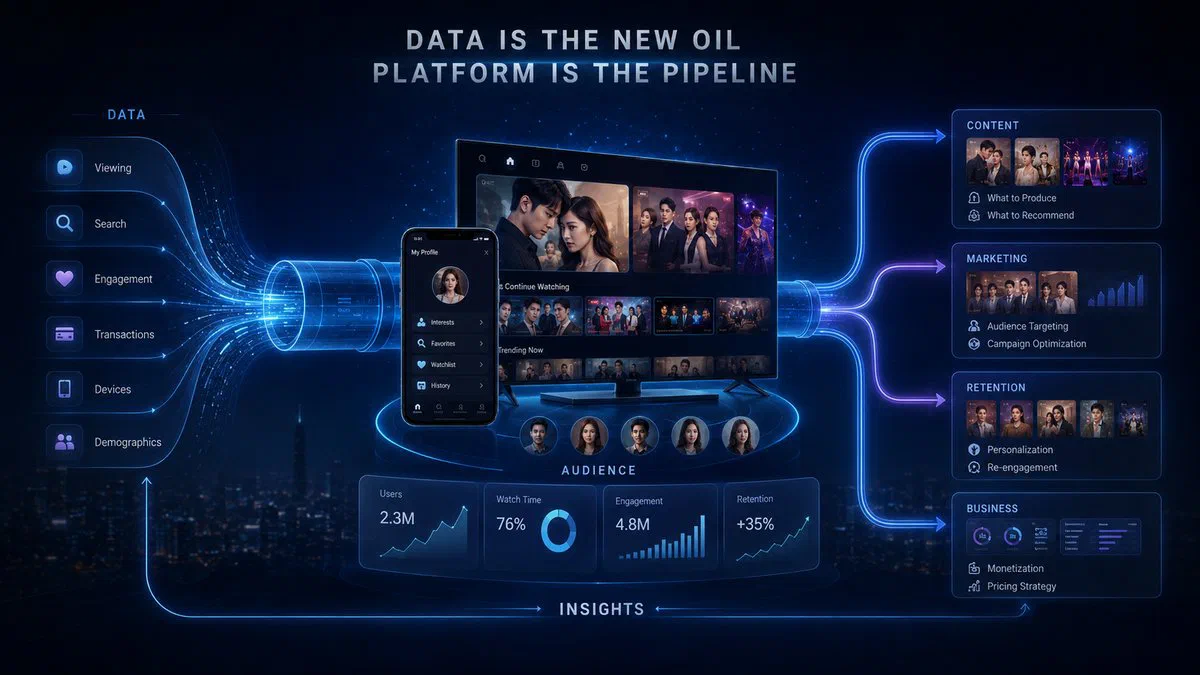
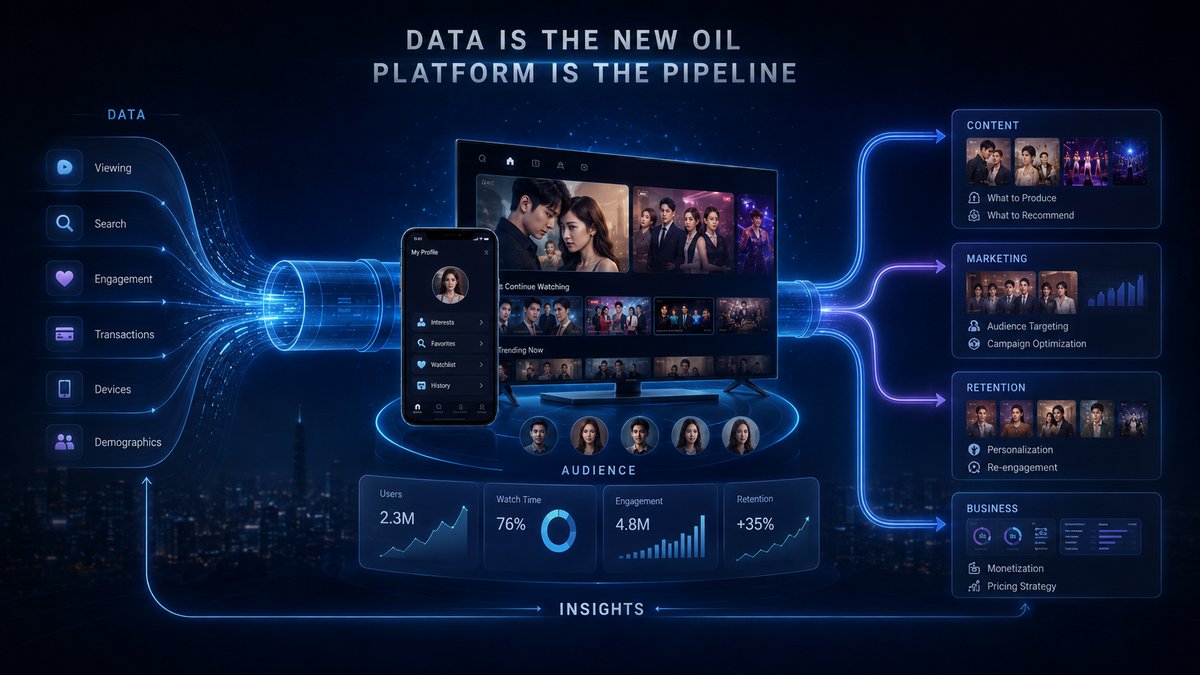
Data is the New Oil, But Platform is the Pipeline
Data Ownership has a precise meaning for media businesses. Data answers the business questions:
- Which viewers watch dramas to the end — and which only watch highlights?
- Which actors drive the highest engagement?
- What type of Content brings viewers back?
- Which users are likely to pay?
Without your own platform, these questions are nearly impossible to answer — because the company only sees aggregate view counts from external platforms, not the user journey deep enough to drive long-term content and revenue strategy.
Data is the new oil, but platform is the pipeline.
Having Data alone isn’t enough. Without a Platform that collects, connects, analyzes, and brings Data back to improve the viewer experience — the Data is just sitting there.
Social Media Is Important — But It’s Not Home Base
Social Platforms should be your acquisition and distribution channel — not the primary home for your business.
Because Social Platforms have constraints you can’t control:
- Algorithms change at any time
- Data you receive is typically not deep enough
- Monetization is determined by the platform owner
- Brand experience is confined to formats others define
The right strategy: use Social Platforms to capture attention, then use your Own Platform to build the relationship.
Peak Traffic Is the Real Moment of Truth
Media businesses have traffic patterns unlike any other industry — audiences spike during drama finales, major live events, or content that trends on social media.
In TrueID’s case, the World Cup was the clearest example — over 1 million concurrent viewers at the same moment. If the system wasn’t designed to handle this from day one, the impact isn’t just a technical failure. It’s brand damage measured in millions of people.
For OTT Platforms, peak traffic isn’t an edge case. It’s the moment of truth — because the period when the most people arrive is usually when the Content has the highest business value.
Muze’s Approach: Own the Core, Partner for the Rest
From experience helping build platforms for CH3+ and TrueID, one of the most important decisions is: what to own and what to partner for.
Own: Core Engine, Data, audience relationship, Revenue Model Partner: Certain infrastructure, CDN, Payment Gateway, third-party Analytics
The Core to own is what connects directly to data and audience relationship — because that’s what creates competitive advantage no one else can copy.
Questions CEO and CMO Should Answer Before Deciding
- What Content do we have that’s powerful enough to bring viewers to our own platform?
- What Revenue Model do we want: advertising, subscription, events, fandom, or commerce?
- What data do we need to make Content and marketing decisions?
- When does our Traffic peak, and what scale does the system need to handle?
- What’s the core we should own, and what should we partner for?
- How will we measure platform success — MAU, retention, watch time, ARPU, or fan engagement?
These questions matter more than a feature list. Because a great OTT Platform doesn’t start with “what features does the app need?” — it starts with “how does this business want to build revenue and relationship with its audience?”
Conclusion: Platform Is Not a Cost Center — It’s Revenue Infrastructure
Building an OTT Platform is not a digital transformation project. It’s a strategic business decision for media companies.
License Model is still necessary. Social Platforms still matter. Global Platforms are still valuable partners.
But Own Platform is what keeps media businesses from surrendering all leverage to someone else’s ecosystem.
See how Muze helped CH3+ and TrueID build their platforms →
Talk to the Muze team about OTT Strategy →
From Muze’s experience developing and upgrading OTT Platforms for leading Thai media businesses