As systems grow more complex, developers shouldn’t have to manage everything themselves. This is why Platform Engineering is gaining attention from Enterprise organizations worldwide.
Many organizations start with the same question: “If DevOps is already working, why do we need Platform Engineering on top of it?” The answer is that DevOps isn’t wrong.
In reality, DevOps is one of the most successful concepts in software development — breaking down the wall between development and operations teams, helping organizations deliver software faster, with higher quality, and better aligned to business needs.
But as organizations grow, systems become more complex, and the number of development teams keeps increasing, new challenges begin to emerge.
The problem is no longer about writing code. It’s about managing the complexity of all the systems that sit behind it.
This is where Platform Engineering begins.
The World of Software Development Is Changing
Ten years ago, many organizations had only a handful of systems and small development teams. Deploying once a week was perfectly normal.
Today, many organizations are managing:
- Tens or hundreds of Microservices
- Cloud Infrastructure across multiple Environments
- Multiple development teams working simultaneously
- Software releases multiple times per day
The faster a business needs to move, the more complex its systems become. Developers are no longer responsible only for the code they write — they also need to understand Infrastructure, Security, Monitoring, CI/CD, and Cloud Platforms. In many organizations, this complexity has become a significant obstacle to development velocity.
When Organizations Scale, DevOps Has to Scale With Them
The “You Build It, You Run It” philosophy works extremely well in small teams. Developers can own their systems end-to-end — from development and testing through deployment and post-production operations.
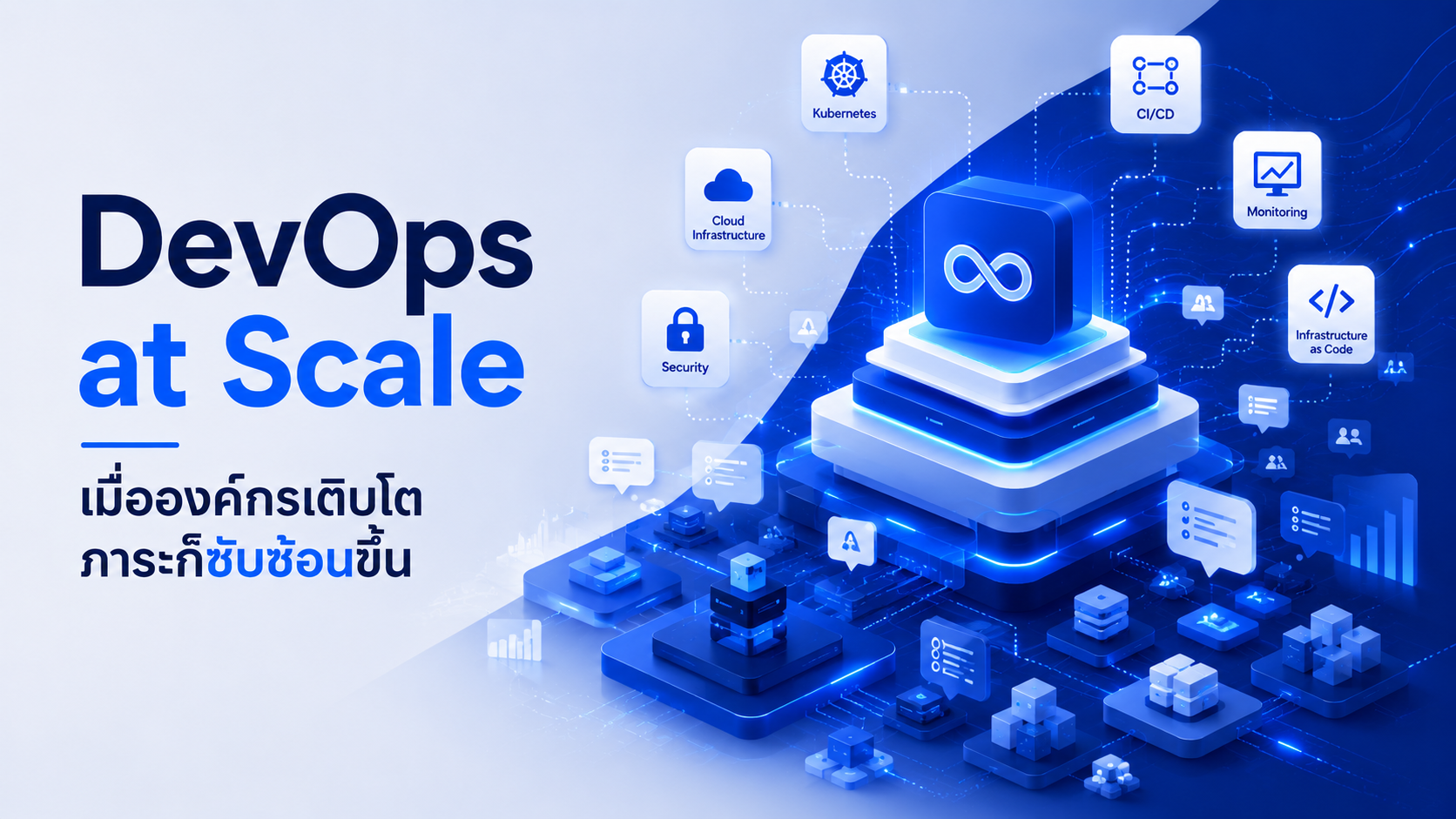
But once an organization has dozens or hundreds of developers, this approach starts generating increasing overhead. Developers today are expected to learn:
- Kubernetes
- Cloud Infrastructure
- CI/CD Pipelines
- Monitoring
- Security
- Infrastructure as Code
While all of this knowledge is important, not everyone should be spending the same amount of time on the same things.
The result is what’s known as Cognitive Overload — a state where development teams carry more responsibility than is necessary. Instead of spending time building new features or solving customer problems, they end up dealing with Environment configuration, Infrastructure management, and issues that have nothing to do with Business Logic.
When Too Many Tools Become the Problem
Another common challenge in large organizations is Tool Sprawl. When every team has the freedom to choose its own tools, one team might use GitHub Actions, another Jenkins, some use Kubernetes, others go Serverless, and each team monitors systems differently.
Even if every team is functional, as the organization grows, this diversity generates significant hidden costs:
- Systems become harder to maintain
- Onboarding new engineers takes longer
- Enforcing Security standards becomes difficult
- Knowledge becomes siloed across teams
All of this causes organizations to lose efficiency without realizing it.
What Is Platform Engineering?
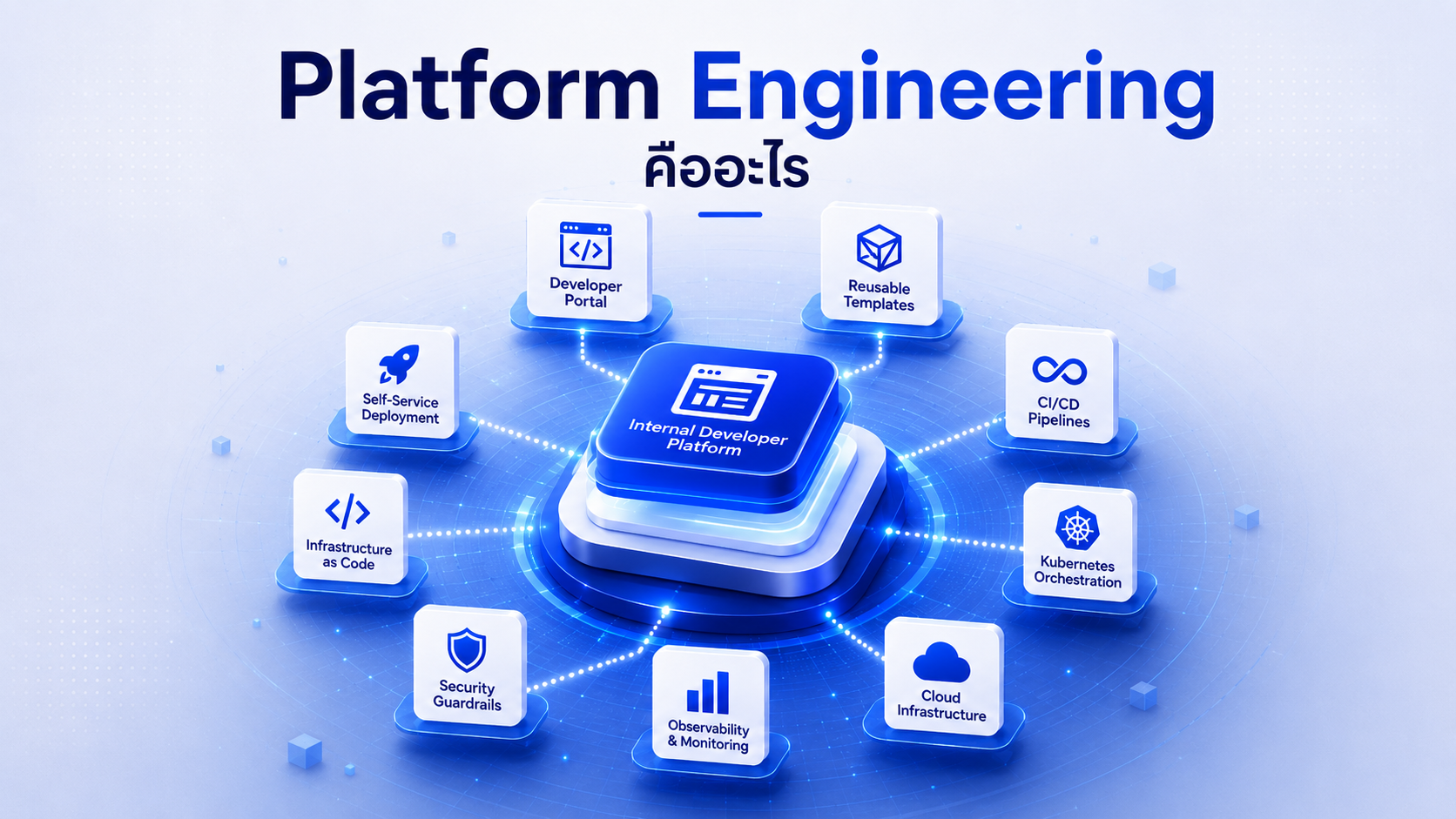
Platform Engineering is an approach to building a centralized platform for an organization’s development teams. A dedicated Platform Engineering team takes responsibility for developing an Internal Developer Platform (IDP).
The IDP serves as a central hub that brings together everything developers need in one place — such as:
- Environment Provisioning
- CI/CD Pipelines
- Infrastructure Templates
- Security Standards
- Monitoring Dashboards
- Service Catalog
Instead of every development team having to build or configure everything from scratch, they can access these services through a Self-Service system immediately.
A simple analogy: if DevOps is about teaching everyone how to build their own kitchen, Platform Engineering is about building a centralized kitchen — standardized, ready to use, and capable of serving every team. This lets developers focus more time on building the product.
Golden Path: Speed That Comes With Standards
One of the core concepts of Platform Engineering is the Golden Path — a standardized set of practices and tools that an organization prepares for development teams, rather than letting each team design its own Workflow from scratch. The organization defines paths that have already been vetted and approved, such as:
- Templates for creating new Services
- Standardized CI/CD Pipelines
- Reviewed Security Policies
- Ready-to-use Monitoring and Logging
Developers can start building immediately without reinventing the wheel. The result:
- Shorter development cycles
- Fewer errors
- Less burden on Security teams
- Less burden on Infrastructure teams
And it helps organizations maintain consistent standards across every team.
How Platform Engineering Differs From DevOps
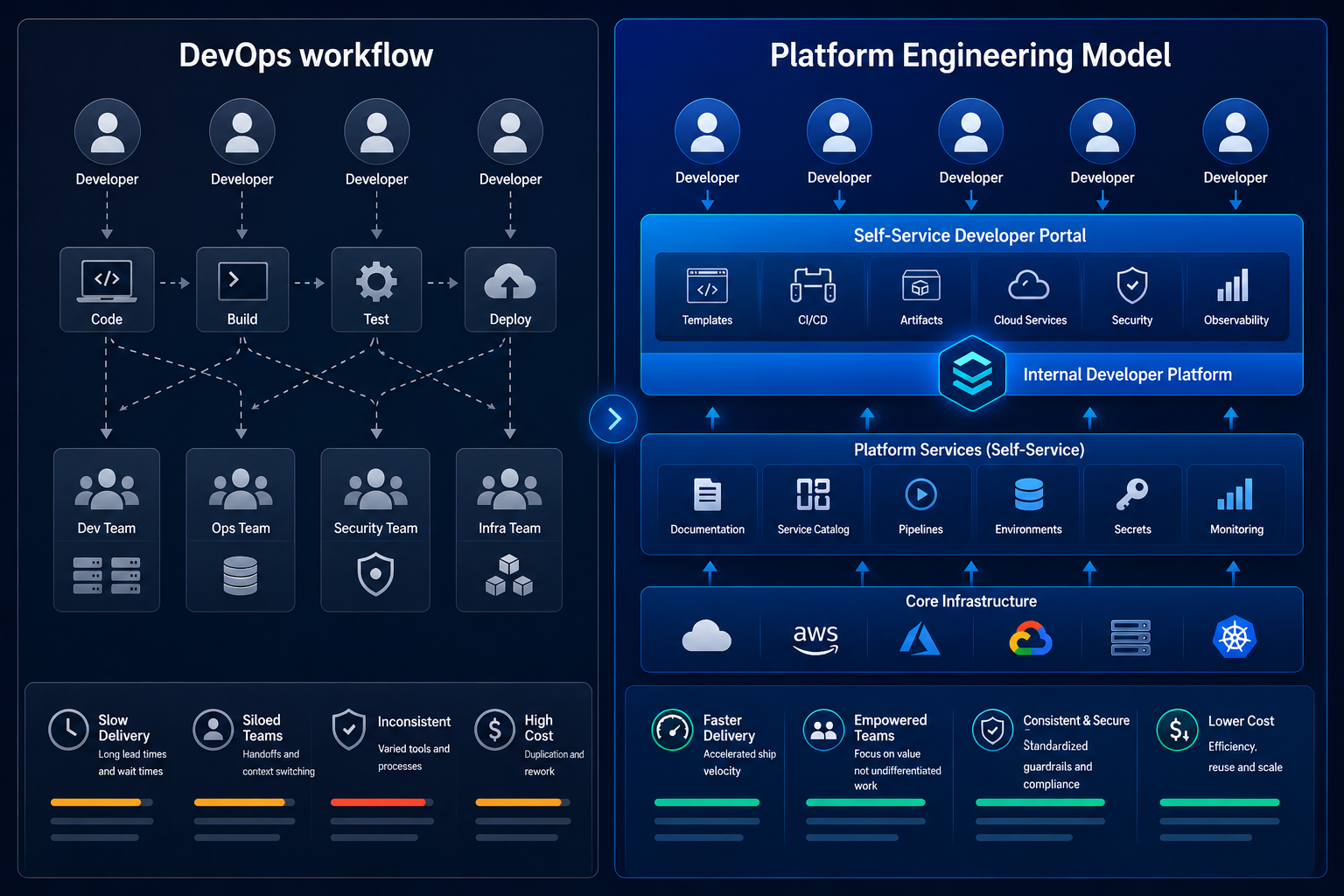
Many assume Platform Engineering is here to replace DevOps. In reality, the two concepts work together.
- DevOps is a working culture
- Platform Engineering is the system that makes that culture work at organizational scale
- DevOps answers: “How should teams collaborate?”
- Platform Engineering answers: “How do we make every team collaborate effectively?”
Platform Engineering isn’t the end of DevOps — it’s the natural evolution that occurs as organizations grow.
Why Large Organizations Invest in Internal Developer Platforms
Enterprise organizations are investing in IDPs because the business outcomes are clear.
1. Faster Onboarding
New developers can get up to speed faster — they don’t need to learn different systems and processes for each team.
2. Faster Deployment
Self-Service Platforms reduce ticket-opening and waiting on a central team.
3. Elevated Security and Compliance
Security standards can be embedded into the Platform from the start, ensuring every team works under the same requirements.
4. Higher Developer Productivity
Developers spend less time on Infrastructure and more time building Features that create business value.
Platform Engineering in the AI-Native Organization Era

In 2026, AI Coding Assistants and Agentic AI are helping development teams build software significantly faster than before. But writing code is no longer the bottleneck.
The new bottlenecks are Infrastructure, Environment, Security, Governance, and Deployment Process. Many organizations are discovering that AI can generate code in minutes — but getting that code into Production still takes days.
Platform Engineering is becoming the critical mechanism that allows organizations to translate AI speed into real business outcomes.
A Framework for Assessing Whether It’s Time to Start Platform Engineering
Ask yourself these three questions:
- Are developers spending a significant amount of time on Infrastructure rather than building the Product?
- Are different teams using tools and standards that are too varied to govern effectively?
- Does creating a new Environment or deploying a new system still require relying on a central team?
If the answer is “yes” to two or more of these, it may be a signal that your organization is entering a phase where building an Internal Developer Platform makes sense.
Conclusion
In the past, organizations competed on how many developers they had. Today, the advantage doesn’t come from having the largest team — it comes from enabling developers to deliver value to the business as fast as possible.
Platform Engineering isn’t just a new approach to software development. It’s becoming the critical foundation for organizations that want to grow in an era of AI and intensifying digital competition.