In an era where “AI”, “Software”, and “Solution” are used so interchangeably that they’ve lost meaning, TechCut cuts through the noise. Bee (Peeranat Thoonsaengngam) from Muze breaks down exactly what each term means — with real examples from actual projects — so every business can choose the right tool for its own context.
1. What Is Software? The Foundational Tool
“Software is like kitchen appliances — the right tool in the right hands produces better results, faster.”
Software is a foundational tool — designed with specific functions to accomplish specific tasks. Everyone can use the same Software, but the outcome depends on skill and how it’s applied.
More importantly: Software that doesn’t fit your organisation’s context is no different from having the right tool but being unable to use it.
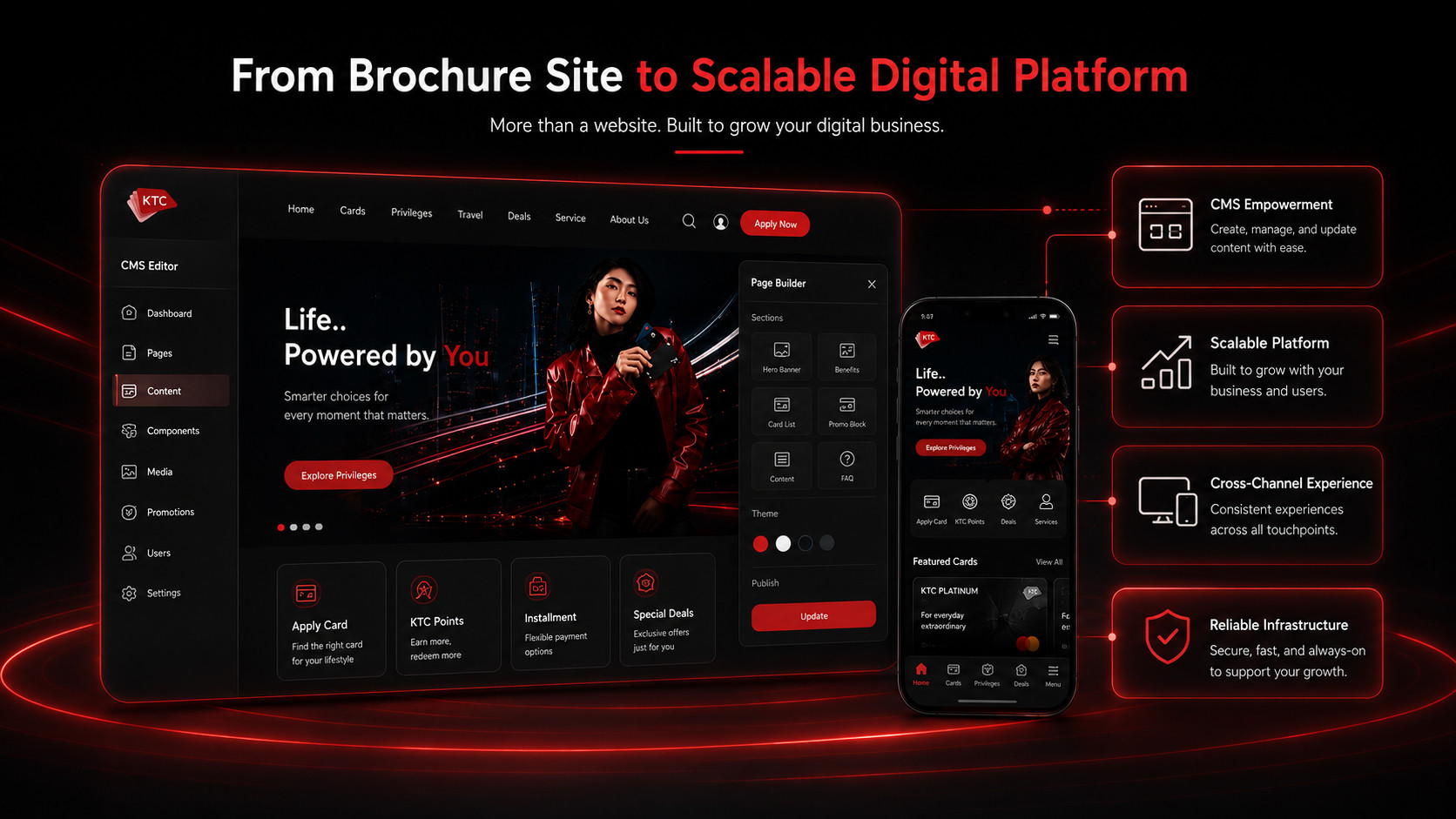
A real example from Muze: before KTC began working with Muze, their existing CMS was Magento — a powerful piece of software. But updating a promotion, adding a landing page, or adjusting a layout required the business team to wait for a developer every single time.
The software wasn’t wrong. It just didn’t fit the way KTC’s team actually needed to work. The result was a business that moved slower than it should have.
This is why understanding “which software fits whom” matters more than “which software is the best.”
2. What Is AI? The Intelligence Layer That Learns
AI goes beyond conventional Software because it learns from data and adapts — rather than simply following pre-programmed rules.
But AI isn’t a single thing — it’s a capability that can be embedded across many parts of a system. At Muze, AI appears in several distinct roles across different projects:
- Recommendation engine — analysing user behaviour on OTT platforms to surface the most relevant content
- Search intelligence — Elasticsearch at KTC helping users find the promotions and content most relevant to them
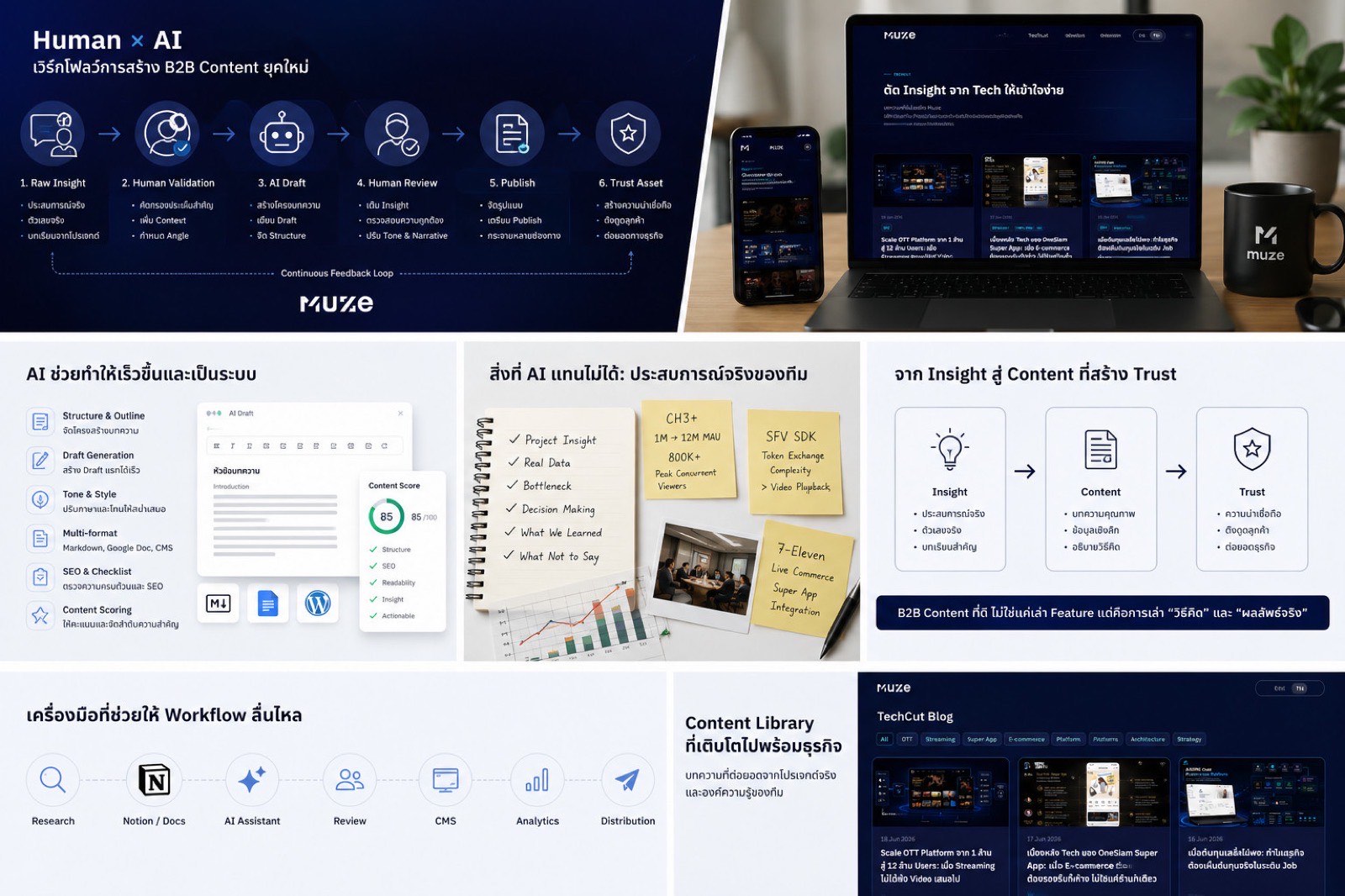
- Content workflow — AI acting as Content Strategist, Writer, and Quality Reviewer in Muze’s TechCut Blog workflow
- Analytics layer — processing real-time data so operations teams can make faster decisions
The next frontier researchers and leading technology organisations are actively working toward is AGI (Artificial General Intelligence) — systems that learn and solve problems across domains like humans do, without needing to be retrained each time.
3. What Is a Solution? A System Built for Your Business
A Solution isn’t just Software or AI in isolation — it’s an integrated system designed specifically to address a business’s needs.
A great Solution combines:
- Software as the backbone
- AI as the intelligence layer
- Process and People as the glue that holds everything together
The most common mistake is organisations searching for “the best tool” without designing how those tools will work together to solve an actual business problem.
Two examples from Muze that make this distinction clear:
CH3+ OTT Platform — viewed as software, it’s just a video player and content management system. But the real Solution needed to handle peak traffic of 800,000 concurrent viewers on hit drama nights — requiring CDN strategy, adaptive bitrate streaming, real-time load balancing, fallback systems, and operations processes ready for emergency scenarios. No single piece of software does all of this. It had to be designed as a Solution.
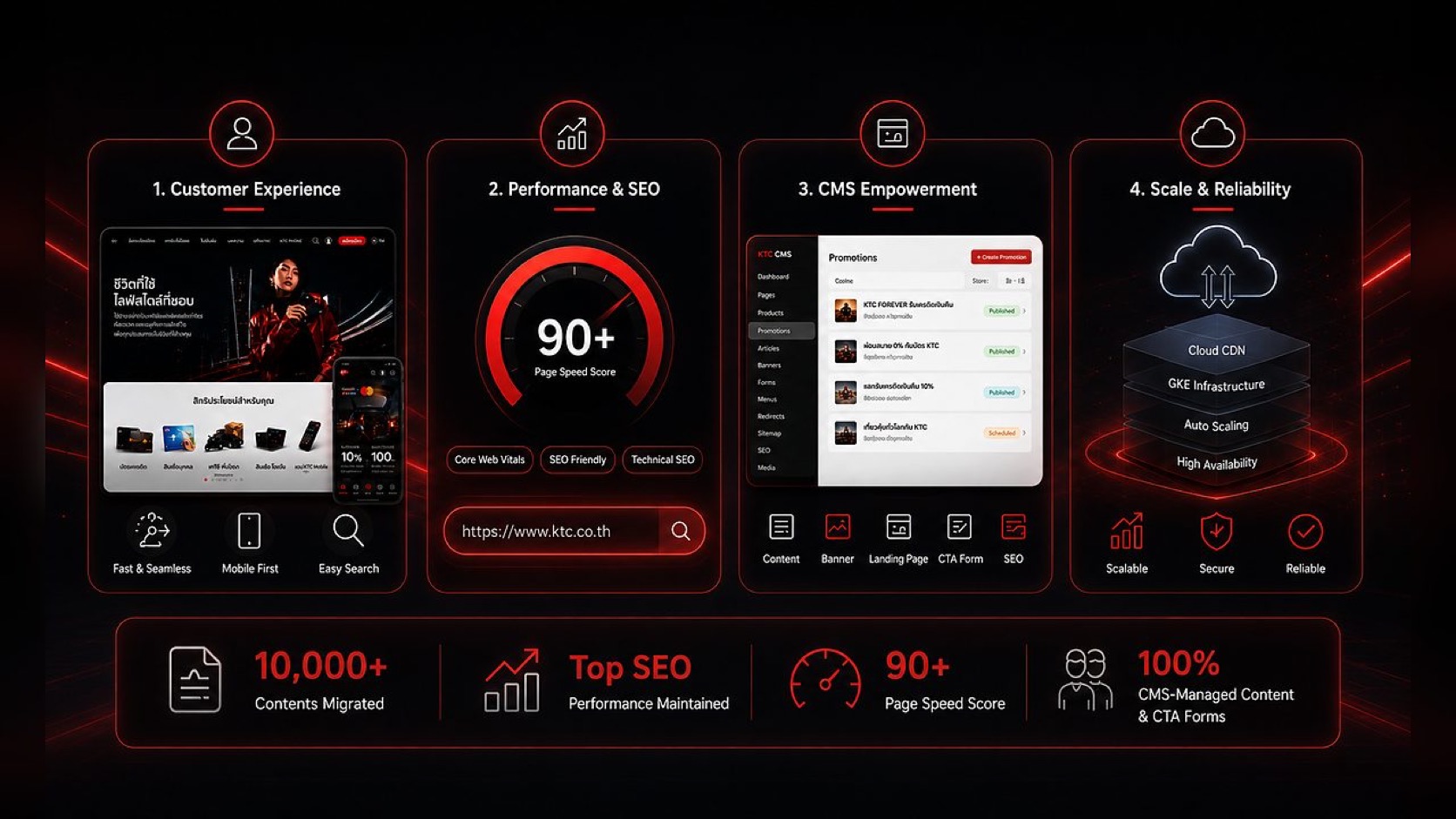
KTC Digital Platform — not just a new website. The Solution designed was a digital acquisition engine combining PayloadCMS + Elasticsearch + Next.js + Redis on GCP to achieve Page Speed 90+, enable business teams to manage content independently without waiting for developers, and migrate over 10,000 content items while preserving SEO equity — all designed for business outcomes, not just a tech stack.
4. The Critical Bridge: Between Tech Teams and Business
One of the biggest challenges in technology implementation is the gap between the tech team and business goals and the people who actually use the system.
The bridge must speak both languages:
- Technical language with the development team
- Business requirements translated into clear, actionable specifications
Without this bridge, even the most advanced technology never reaches the people it was built for.
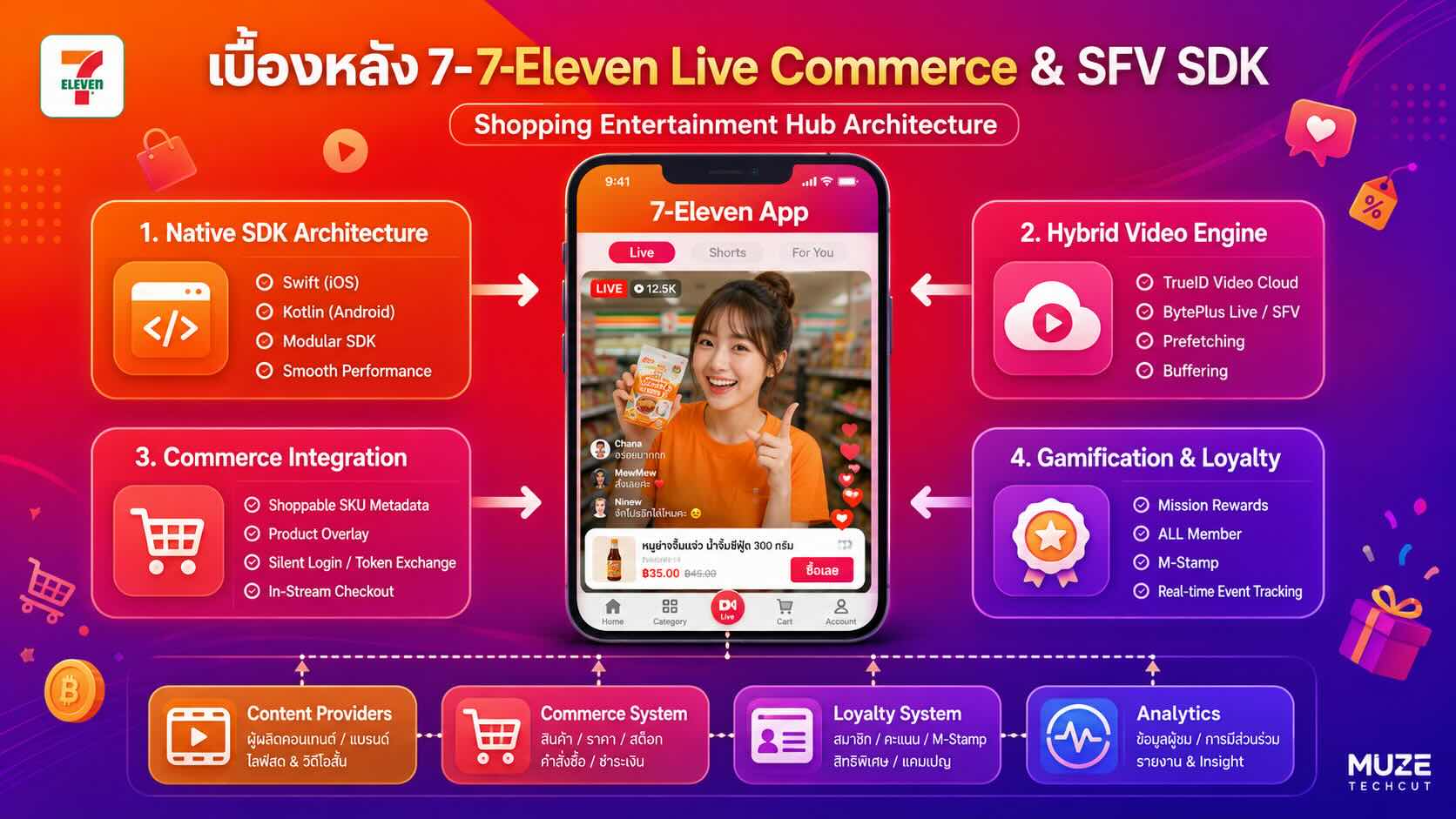
A clear example: the 7-Eleven Live Commerce project — embedding SFV SDK into a Super App with millions of users wasn’t just a technical challenge. It required understanding:
- The SDK must not affect the stability of the main app that tens of millions of people use daily
- Token exchange must be designed to work with the Super App’s existing authentication
- The shopping experience must be seamless enough that users don’t feel like they’re “leaving the app”
If the tech team only solved “make the video play,” features were delivered but business outcomes weren’t. Because what 7-Eleven needed was a seamless commerce experience — not just a video player.
This is Muze’s role as a tech partner that genuinely understands both sides.
5. Choosing Technology That Fits Your Organisation
There’s no universally “best” Solution. Choosing the right technology means considering:
- Team size and capability
- Budget and expected ROI
- Complexity of business processes
- Future growth plans
Advanced technology that doesn’t fit your context is like buying a sports car to drive down a narrow alley.
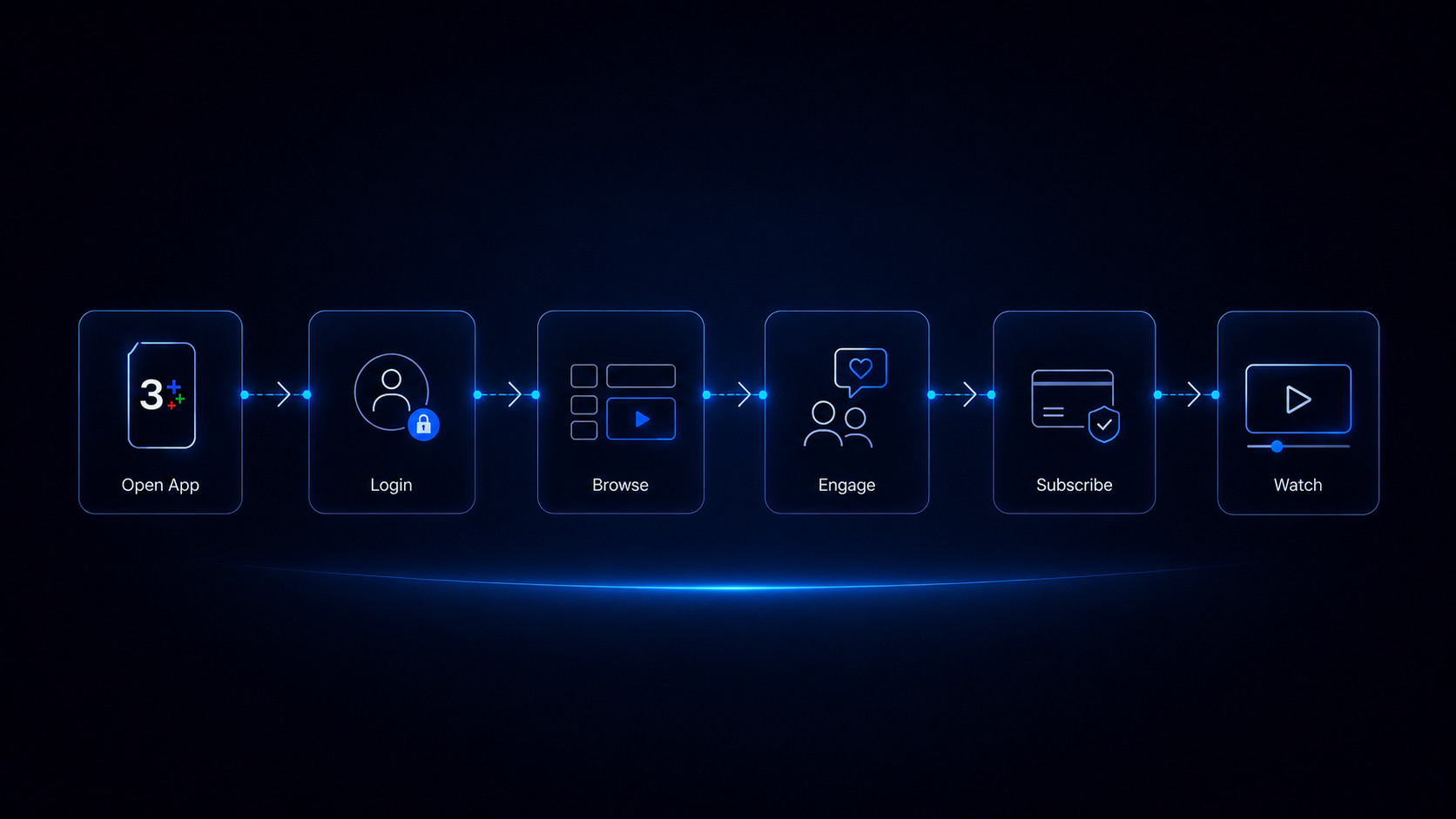
Common mistakes Muze sees in organisations choosing technology:
1 — Wanting AI when data infrastructure isn’t ready — AI works well when data is accurate and accessible. If data is scattered and unstructured, adding AI makes the problem more complex, not solved.
2 — Building custom when SaaS would serve better — Custom solutions offer maximum flexibility, but come with maintenance and scaling costs. Smaller organisations or those still validating use cases often benefit more from SaaS that allows faster iteration.
3 — Choosing technology because it’s trending, not because of business need — Choosing a good tech stack should start from the question “what does the business need?” — not “what technology is hot right now?”
For KTC, choosing PayloadCMS wasn’t because it was the “best” CMS on the market. It was because it answered what KTC actually needed — flexibility in managing content layouts and enabling the business team to work independently without waiting for developers every time.
Conclusion
Software, AI, and Solutions are not interchangeable terms — each has a distinct role and a context where it belongs.
Understanding this difference is the starting point for any technology investment that actually delivers returns — not just selecting the most advanced tool, but designing a Solution that answers your specific business problem.
Read more: Why KTC chose PayloadCMS as its core CMS →
Key insights from TechCut — “Software, AI & Solutions: The Business-Changing Tools Explained”