
Most projects don’t fail because of technology. They fail because problems are discovered too late.
When an organization decides to invest in building a system or Digital Product, the questions executives worry about are rarely technical. They’re direct business questions: “Are we investing in the right direction?” and “What happens if our requirements change along the way?”
These concerns have a solid basis. Many organizations still use a traditional delivery model: define all Requirements on day one, develop continuously for several months, then deliver everything at once when the project is complete. This approach looks orderly on paper — but the hidden risk is that the organization may discover that everything built doesn’t actually solve the real problem, after a significant investment of money and time has already been made.
What makes this more concerning is that problems discovered late are far harder and more expensive to fix than those caught early. Every Feature built on a flawed foundation has to be torn down and rebuilt entirely. Research in Software Engineering has found that the cost of fixing errors discovered after Launch can be 10–100 times higher than fixing them during the Design phase — making early problem detection not just an advantage, but a defining factor in project success or failure.
Beyond direct costs, there are invisible costs: business opportunities lost while waiting for the project to finish, team morale that drops when months of hard work turns out to be unused, and executive confidence in future technology investments that erodes quietly. None of these appear in a budget line — but all of them have a significant long-term impact on the organization.
How Sprint Differs from the Traditional Approach

Sprint-based Delivery divides development work into short cycles — each approximately 2–4 weeks long. In each cycle, the team delivers something tangible: not a progress report or a document, but a working portion of the system or a testable Prototype.
Think of it this way: traditional construction means waiting for the entire building to be finished before you can see whether you like it. With a Sprint approach, you get a “model room” every two weeks — which lets you make adjustments before the next floor is built.
What distinguishes Sprint from traditional progress reporting is that each Sprint delivers something real — something executives can actually use, test, and give feedback on immediately. Not a percentage on a slide that doesn’t tell you whether what was built is heading in the right direction.
Each Sprint also builds Momentum for the team. Everyone sees tangible results every two weeks, rather than working in the dark for months without knowing whether what they’re doing is correct. Executives gain genuine Confidence from seeing real Progress — not from reading reports.
The real goal of this approach isn’t speed. It’s creating a “review cycle” short enough that the business can make decisions based on real data at any point in the project.
The Real Risk Isn’t Slow Development — It’s Development in the Wrong Direction
Requirements defined on day one may not reflect what the business actually needs 3–6 months later. Markets shift. Customer behavior changes. Even the organization’s own strategy may evolve with circumstances.
If an organization waits until the entire project is complete before seeing any results, the cost of being wrong compounds — in money, in time, and in business opportunities lost while waiting.
Sprint-based Delivery reduces this risk by shortening the Feedback Loop. Every Sprint is a checkpoint: is the team building in the right direction, before the majority of the budget has been spent? A Pivot that happens after Sprint 3 costs far less than one that happens after Launch — in money, time, and team morale alike.
4 Dimensions of Risk That Sprint Helps Manage

From an executive’s perspective, Sprint-based Delivery doesn’t manage risk along just one dimension — it addresses four simultaneously.
Delivery Risk — Teams and executives can track progress throughout the project. Problems surface early, before they have a chance to impact the overall Timeline or budget.
Business Risk — Organizations can reprioritize what they need at any time. If the business situation changes, the Roadmap can be adjusted immediately.
Budget Risk — Investment is released incrementally, tied to results actually delivered. There’s no need to commit the entire budget upfront, which preserves flexibility in decision-making.
Delivery Risk — Teams and executives can track progress throughout the project. Problems surface early, before they have a chance to impact the overall Timeline or budget. Warning signals that used to be buried in reports become visible from the very first Sprints — and seeing the team’s actual Velocity makes delivery date estimates far more accurate than upfront guesswork.
Business Risk — Organizations can reprioritize what they need at any time. If the business situation changes, the Roadmap can be adjusted immediately — without waiting for a large quarterly project review.
Budget Risk — Investment is released incrementally, tied to results actually delivered. There’s no need to commit the entire budget upfront, which preserves flexibility in decision-making and creates an opportunity to pause or adjust Scope without spending money that hasn’t delivered value yet.
Product Risk — Real users can provide Feedback from the earliest stages. What gets built ends up far closer to actual needs than anything designed by guessing months in advance. The risk of launching a Product the market doesn’t respond to drops significantly, because every assumption is tested during development — not after Launch.
These four dimensions aren’t independent — they’re interconnected. When Delivery Risk decreases, the team has more focus for Business Value. When Business Risk is well-managed, Prioritization becomes more accurate. And when Product Risk decreases, the probability that budget gets spent on Features nobody uses decreases with it.
Sprint in Large Organizations: Challenges Often Overlooked
Many organizations start using Sprint but find the results don’t match expectations. The cause is usually not a flawed Framework — it’s implementation that lacks the context-fit the organization needs.
The first common problem is “Sprint in name, Waterfall in practice.” Many teams set up Sprints but still define all Scope upfront, never review actual results with Stakeholders in each cycle, and never open the door to Priority adjustment. The result is a Sprint that’s just a calendar interval — not a risk management mechanism.
The second problem is that Stakeholders don’t have time to attend Sprint Reviews. Busy executives delegate to representatives, but representatives don’t have the decision-making authority needed to redirect the work. The solution is to design Sprint Reviews to be tight and focused enough that executives can actually attend every cycle — in 30–60 minutes.
The third problem is an unwillingness to “let go” of original Requirements. Some organizations run Sprint but stay locked to the Spec written on day one, rather than using each Sprint’s information to adjust direction. Sprint run this way doesn’t reduce risk — it just creates a feeling of greater structure.
What helps Sprint work well in large organizations is establishing shared agreements upfront: what is each Sprint’s goal, who has decision-making authority, and when results fall short, how will the team escalate or adjust direction? These small process decisions aren’t about Agile Framework — they’re about designing how the development team and business team work together in a way that lets every Sprint deliver real value.
Case Study: True Digital Group and Enterprise-Scale Platform Transformation
True Digital Group (TDG), the Digital & Technology Arm of True Corporation, faced the kind of challenge that large organizations know well: developing multiple Digital Products simultaneously — spanning OTT Streaming, a Point Management System, and Digital Services supporting millions of users.
In that environment, waiting for systems to be fully complete before launching isn’t a viable business option. The Streaming and Digital Services market moves quickly. What’s designed today may need to change in three months.
What Muze and TDG built together through a Long-term Technology Partnership was a continuous Sprint-based delivery rhythm. At each Sprint, TDG’s business team could see real results, provide Feedback, and adjust the Priority of what to build next — rather than waiting to receive a finished deliverable on the last day.
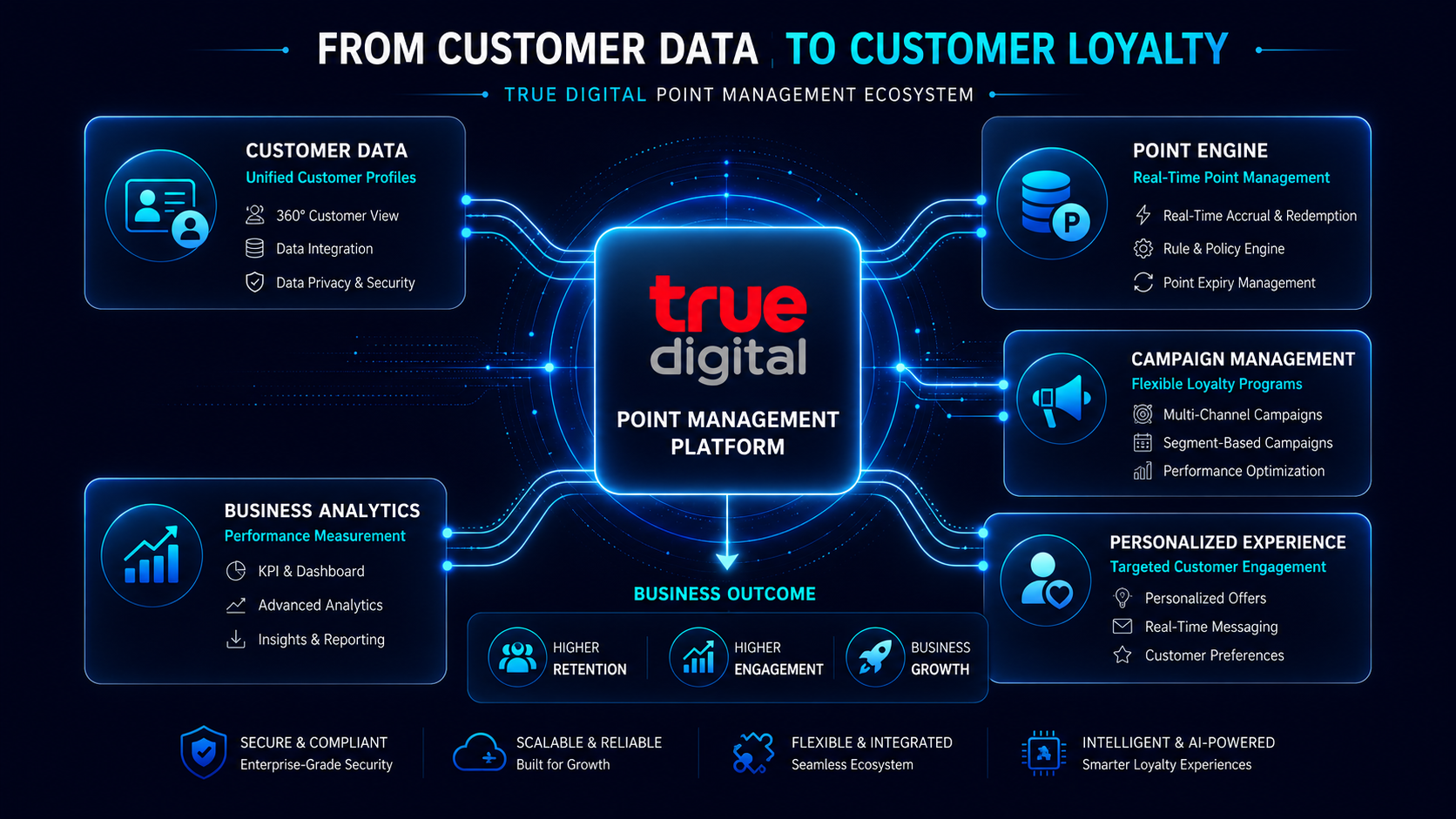
This approach proved especially important in high-complexity projects like the Point Management System, which needed to handle the accumulation and redemption of points across multiple service channels simultaneously. Waiting until the entire system was complete before testing would have created a high probability of discovering critical issues late — when fixing them is most expensive. By validating each component Sprint by Sprint, those issues were caught and resolved early.
The result was TDG’s ability to manage large-scale projects without assuming “everything will be right from day one” — instead using the Sprint process as a continuous mechanism for learning and course-correcting throughout. TDG’s Product team could Prioritize work based on real Business Value — not on a Spec written on day one when there wasn’t yet enough information to make those calls.
What makes a Long-term Partnership like this work is the trust built through a consistent track record of Sprint-by-Sprint delivery. When a Vendor delivers on time and to agreed quality across multiple consecutive Sprints, the relationship shifts from Vendor-Client to a Partnership where both sides are genuinely invested in each other’s success.
Where to Start?
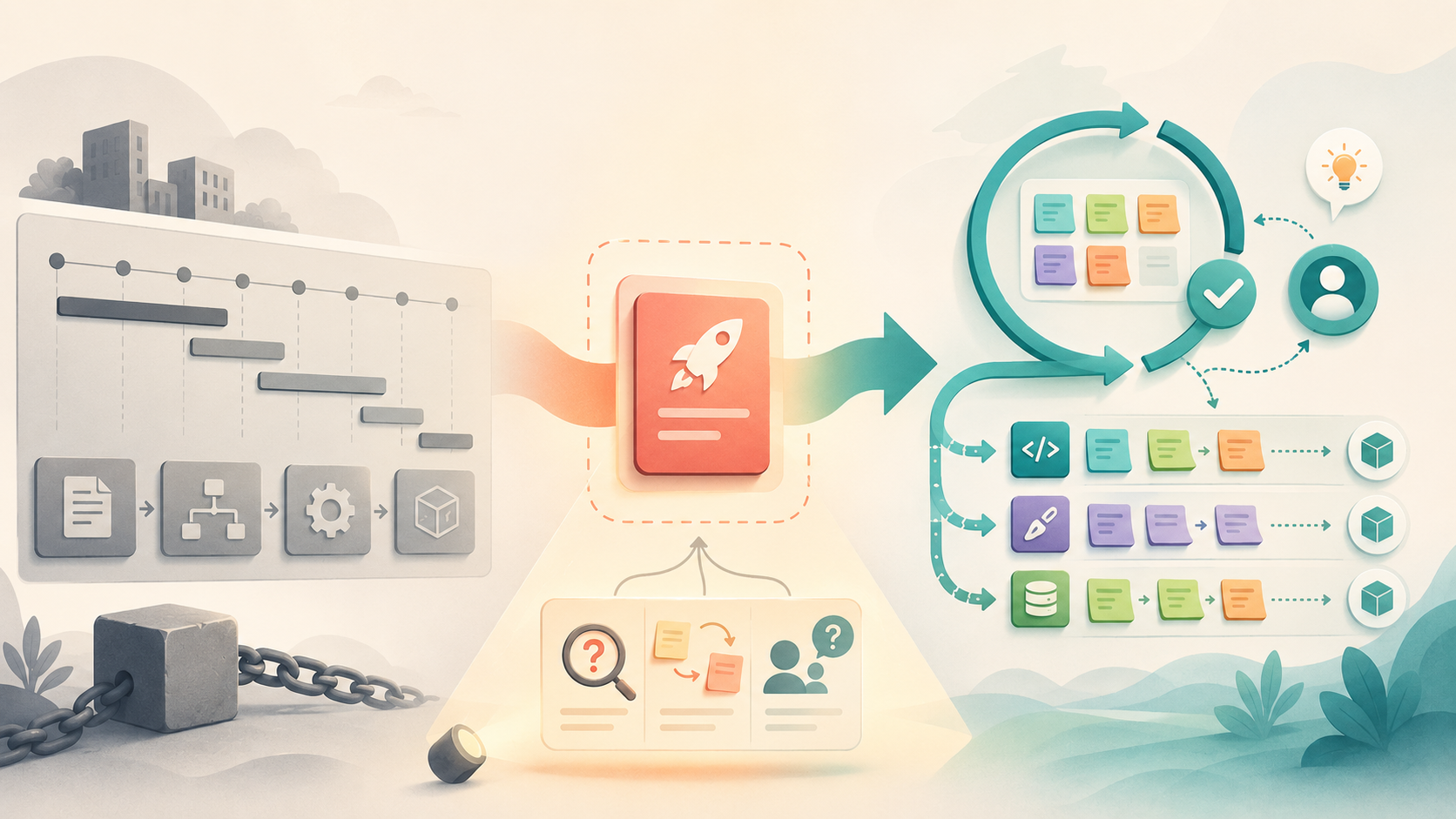
For organizations looking to shift from Traditional Delivery to Sprint-based Delivery, the best starting point usually isn’t changing everything at once. It’s choosing a project with high uncertainty as a first experiment. Projects well-suited for Sprint share several characteristics: Requirements that may shift based on results observed, a market or user base not yet 100% clear, or projects with multiple components that can be developed in parallel.
By contrast, projects with very clearly defined Requirements — like an Infrastructure migration or data transfer with fixed steps — may not benefit from Sprint as much as projects that need experimentation and learning. Choosing which projects should use Sprint and which should use other approaches is itself a strategic decision that must be made in context.
The first critical step is agreeing upfront on what Sprint Review means: who needs to attend, and at what level decisions about Priority can be made. Without that readiness, Sprint will be nothing more than a ceremony that doesn’t produce different outcomes.
What makes Sprint work better is having a clear Definition of Done for each Sprint — not just “code is developed” but Tested, Reviewed, and ready to Deploy or test with real users. Without a clear Definition of Done, risk accumulates from Sprint to Sprint and explodes at the end of the project — just like the traditional model you were trying to escape.
Over the long term, organizations that practice Sprint consistently will develop something more important than any Framework: a culture of making decisions on real data and an ability to adapt quickly — the skills most needed by organizations in an era of fast-moving markets.
The Best Strategy Is the One That Can Adapt Fastest
One lesson that organizations who have run Sprint across multiple projects frequently share is that Sprint doesn’t prevent problems from happening — it ensures that problems are discovered and fixed while they can still be addressed without major cost. Rather than waiting until the point where fixing something requires significant expense and damage to the relationship between the development team and the business. The ability to detect problems early and adjust direction in time is what makes Sprint an effective risk management tool in real-world practice.
Organizational Culture and Sprint: Two Things That Must Change Together
One reason Sprint doesn’t work in some organizations is treating it as a process change without changing the underlying mindset. The reality is that Sprint requires everyone to accept that uncertainty is part of the work — not a sign of failure.
In organizations with a blame culture, raising problems in Sprint Reviews is often perceived as failure — so teams avoid surfacing real issues and only report good news. What happens is that Sprint becomes a reporting ceremony, not a decision-making forum, which destroys the core value of the entire process.
Organizations that use Sprint effectively tend to have executives who send a clear signal that finding problems early is success, not failure. Because the goal of Sprint isn’t to deliver every Feature on the list — it’s to surface information that leads to better decisions.
Conclusion: The Best Risk Management Is Learning as Fast as Possible
Sprint-based Delivery isn’t just a framework for the development team. It’s an approach to managing business risk. The faster an organization receives Feedback, the more accurately it can make decisions. In a world where market needs and technology change faster every year, the ability to iterate quickly and learn from what actually happens is what separates organizations that grow continuously from those that stay stuck with plans that no longer work.
When Sprint is adopted, it requires changes to how work is done, how teams communicate, and how executives track projects. But what it returns is the ability to see and steer the direction of a project at any point — which is something every technology investment should have. Without having to wait for the project to be fully complete before knowing whether what was invested was worthwhile.
For organizations implementing Sprint for the first time, the most important thing isn’t executing every Sprint perfectly according to Agile principles. It’s building the habit of regularly reviewing real results — and making direction decisions based on what’s visible, rather than on assumptions written into the original plan.
Every Sprint where the team delivers real work and executives give real Feedback is an investment in the organization’s ability to adapt to future uncertainty. No matter which direction the market shifts, an organization with a strong Sprint Rhythm and a Culture ready to learn from every Sprint Review will always be in a position to adapt faster.
Ultimately, the goal of technology investment isn’t to deliver Software as quickly as possible. It’s to produce the right business outcomes. And Sprint-based Delivery is one of the most reliable ways to get there with confidence. Organizations that are ready to learn fast, adapt fast, and make decisions on real data are the ones that will build lasting competitive advantage.
In an era of rapid technological change and market uncertainty, organizations that wait for a perfect plan before acting consistently lag behind those that act and learn along the way. Sprint-based Delivery isn’t just a software development concept — it’s an organizational adaptability skill that must be built one Sprint at a time.