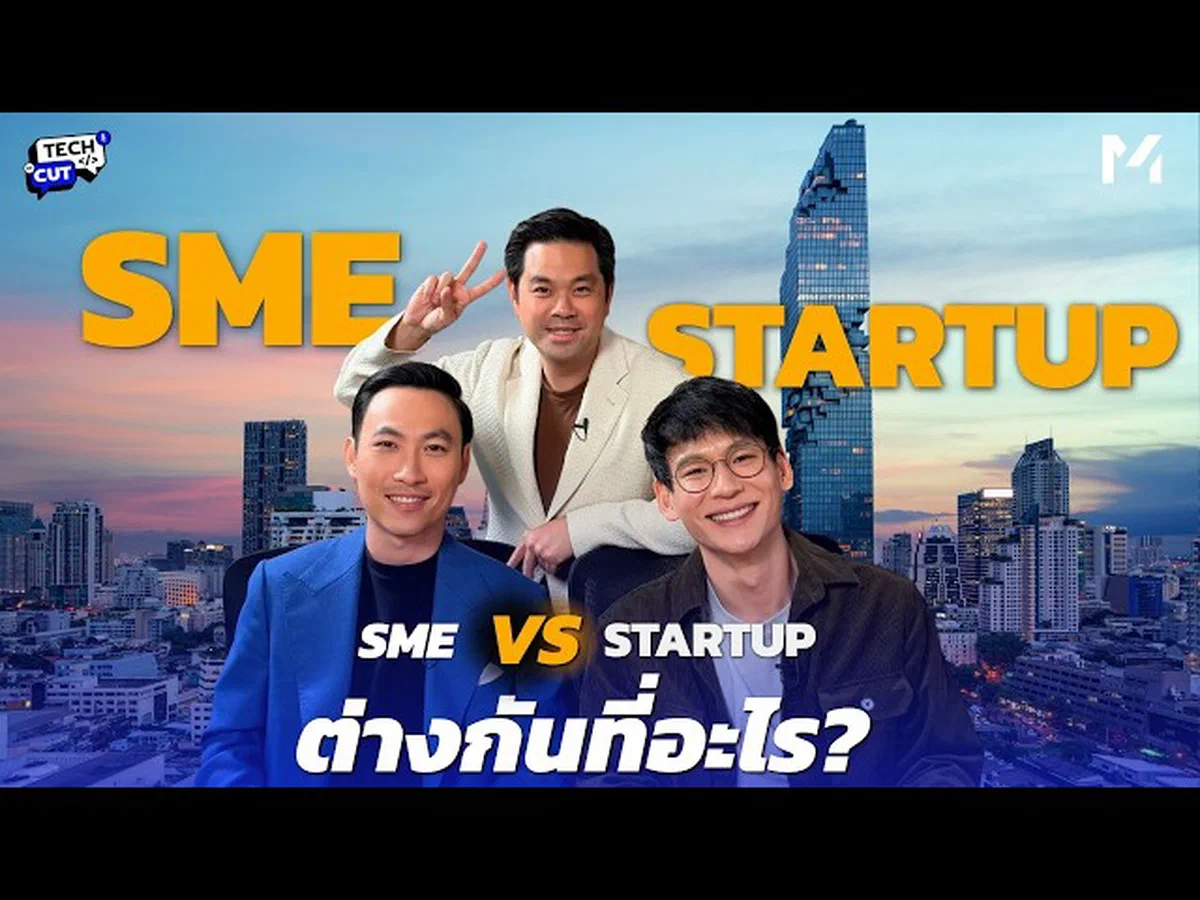
Many people use the words “Startup” and “SME” interchangeably — but in reality, the two have completely different DNA. In TechCut EP.8, Bee (Peeranat Thoonsaengngam) from Muze and Moo (Nattavudh Pungcharoenpong) break down exactly what sets them apart.
1. The Core Goal: Sustainable Profit vs Hypergrowth
SMEs prioritise profit and long-term sustainability from day one. The goal is stable revenue that can support employees and their families.
Startups chase Hyper-Growth — willing to operate at a loss in the early stages in order to expand their user base rapidly and solve a problem at a much larger scale.
2. The Growth Model: Linear vs Exponential
| SME | Startup | |
|---|---|---|
| To grow | Hire more people, open branches, add inventory | Scale without proportional cost increases |
| Example | A restaurant opening a new branch = new costs | Software sold to 1 user or 1 million users — marginal cost difference is minimal |
A startup needs a model where revenue can grow 10x without costs growing 10x alongside it.
3. Funding and Exit Strategy
SMEs rely on personal capital or bank loans. The dream is to pass the business down to the next generation.
Startups raise capital from Venture Capital to accelerate growth, with an exit target through M&A or IPO — returning value to investors.
4. Technology Is an Enabler, Not an Advantage
The sharpest insight from this conversation:
“Technology is just a tool — not a unique selling point.”
In an era where everyone has equal access to the same technology, real competitive advantage comes from:
- Deep customer understanding
- Agility to adapt
- Ability to execute
A weak business model will drag down even the most advanced technology.
Conclusion: Which Business Are You Building?
There’s no right answer about which is better — but know which one you’re building before choosing your strategy.
If your goal is sustainable profit → think like an SME
If your goal is 10x scale → think like a Startup
Key insights from TechCut EP.8 — “Startup vs SME: What’s the Difference?”